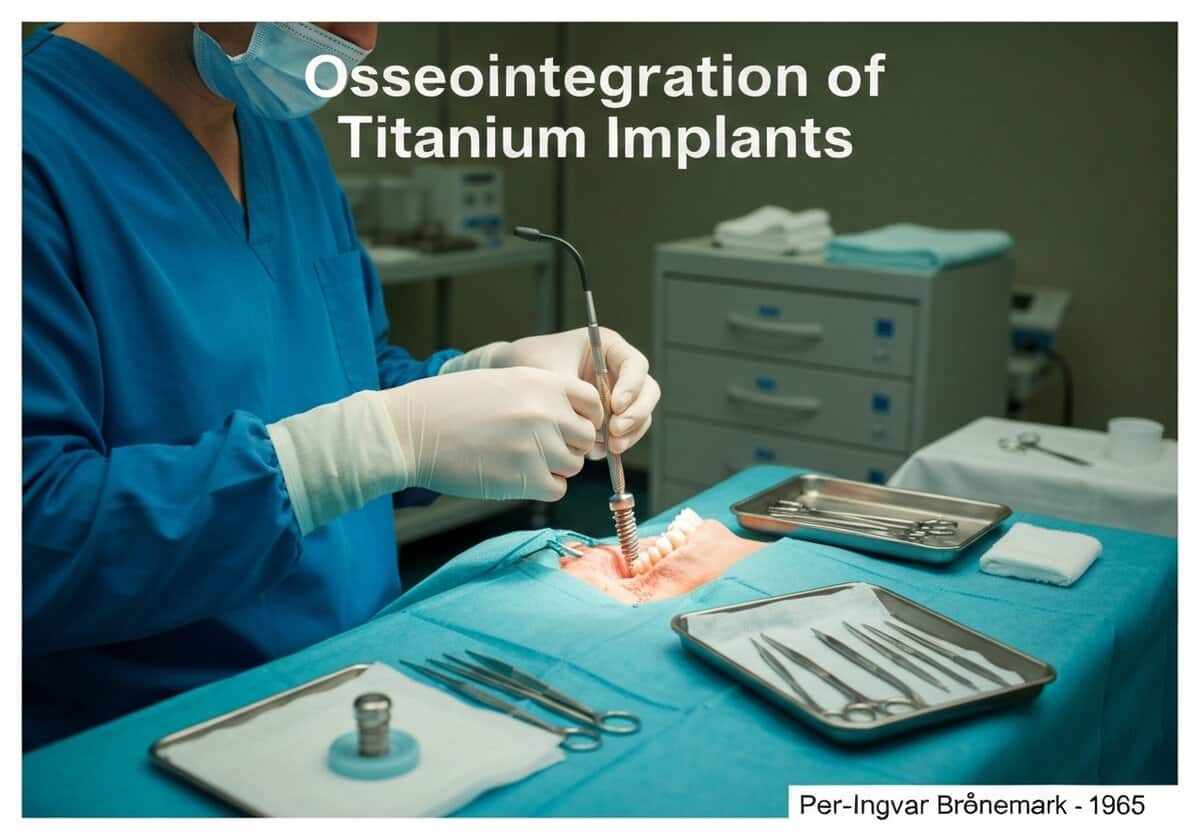
オッセオインテグレーションとは、生体骨と荷重を支える人工インプラントの表面との間の直接的な構造的および機能的な結合であり、通常は チタンペル=イングヴァル・ブローネマルクによって発見されたこの現象は、骨とインプラントの界面に線維性の軟組織が成長することなく発生し、歯科インプラントや人工関節などの補綴物を安定して長持ちさせるアンカーとなる。

(画像はイメージです)
オッセオインテグレーションとは、生体骨と荷重を支える人工インプラントの表面との間の直接的な構造的および機能的な結合であり、通常は チタンペル=イングヴァル・ブローネマルクによって発見されたこの現象は、骨とインプラントの界面に線維性の軟組織が成長することなく発生し、歯科インプラントや人工関節などの補綴物を安定して長持ちさせるアンカーとなる。
The discovery of osseointegration was serendipitous. In the 1950s, Per-Ingvar Brånemark was studying blood flow in rabbit fibula using an optical chamber with a チタン frame. When he tried to remove the chamber, he found the bone had grown so intimately into the titanium that it was impossible to separate. This led to the realization that titanium, unlike other materials, was not rejected by the body and could fuse directly with bone. The key to this process is the formation of a titanium dioxide layer on the implant’s surface upon exposure to air. This oxide layer is highly biocompatible and allows bone-forming cells, or osteoblasts, to attach and deposit new bone matrix directly onto the implant surface. For successful osseointegration, several conditions must be met: the implant must be made of a biocompatible material (like commercially pure titanium), it must be machined with a specific surface topography, it must be placed with minimal trauma to the bone, and it must remain immobile and unloaded during the initial healing period. This process has revolutionized dentistry and orthopedics, providing a stable foundation for replacing missing teeth and limbs with a high degree of success and 長寿.
チタンインプラントの骨結合
(日付が不明または関連性がない場合、例えば「流体力学」などでは、その注目すべき出現時期の概算値が提示されます。)

フルサイズの画像とダウンロードは、登録会員のみが100%無料で利用できます。
> ログイン <