Product Design, Manufacturing & Innovation Resources
Lar » Osseointegração de implantes de titânio

Osseointegração de implantes de titânio

1965
  • Per-Ingvar Brånemark
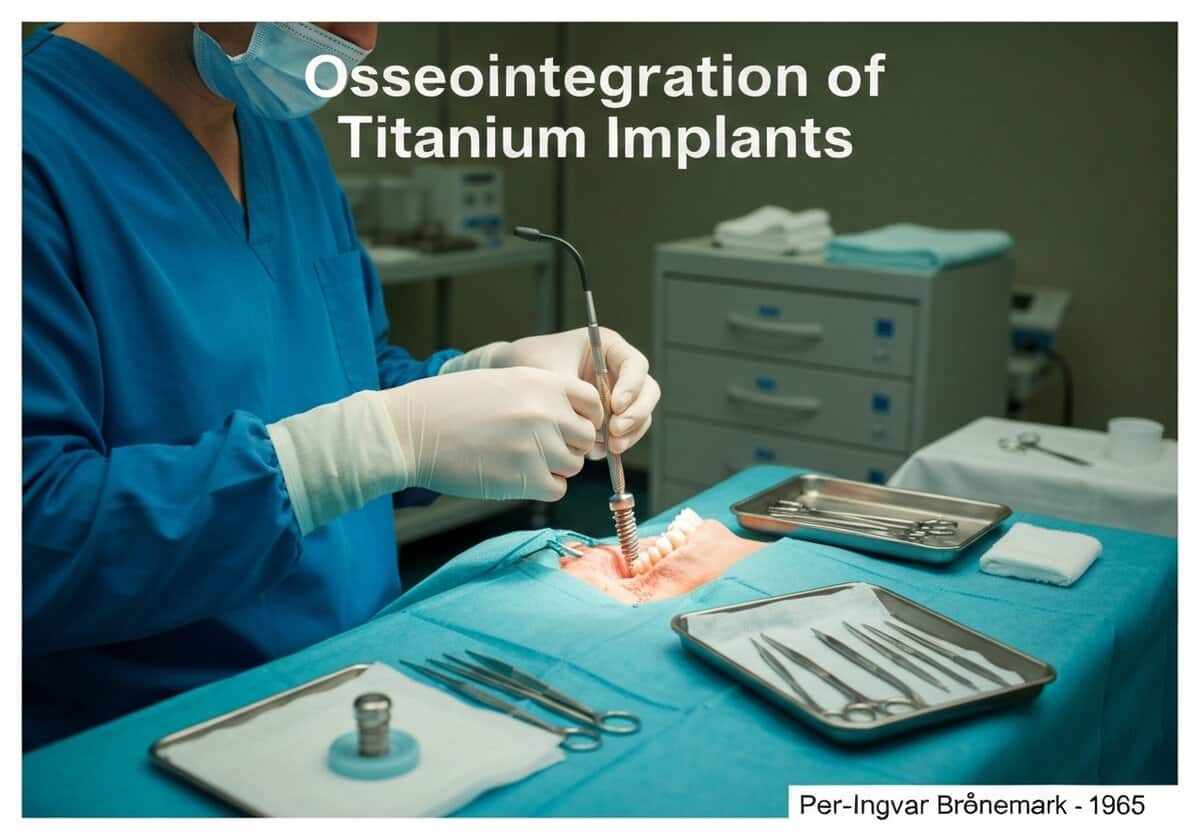
Colocação cirúrgica de um implante dentário de titânio, demonstrando osseointegração na engenharia biomédica.

(Imagem gerada apenas para fins ilustrativos)

A osseointegração é a conexão estrutural e funcional direta entre o osso vivo e a superfície de um implante artificial que suporta carga, geralmente feito de titânioDescoberto por Per-Ingvar Brånemark, esse fenômeno ocorre sem o crescimento de tecido mole fibroso na interface osso-implante, criando uma ancoragem estável e duradoura para próteses como implantes dentários e articulações artificiais.

The discovery of osseointegration was serendipitous. In the 1950s, Per-Ingvar Brånemark was studying blood flow in rabbit fibula using an optical chamber with a titânio frame. When he tried to remove the chamber, he found the bone had grown so intimately into the titanium that it was impossible to separate. This led to the realization that titanium, unlike other materials, was not rejected by the body and could fuse directly with bone. The key to this process is the formation of a titanium dioxide layer on the implant’s surface upon exposure to air. This oxide layer is highly biocompatible and allows bone-forming cells, or osteoblasts, to attach and deposit new bone matrix directly onto the implant surface. For successful osseointegration, several conditions must be met: the implant must be made of a biocompatible material (like commercially pure titanium), it must be machined with a specific surface topography, it must be placed with minimal trauma to the bone, and it must remain immobile and unloaded during the initial healing period. This process has revolutionized dentistry and orthopedics, providing a stable foundation for replacing missing teeth and limbs with a high degree of success and longevidade.

UNESCO Nomenclature: 3201
Engenharia biomédica

Tipo

Processo biológico

Interrupção

Revolucionário

Uso

Uso generalizado

Precursores

  • Descoberta do titânio por William Gregor em 1791
  • desenvolvimento de técnicas cirúrgicas estéreis
  • avanços na microscopia para observar interfaces tecido-implante
  • Pesquisa sobre cicatrização e regeneração óssea

Aplicações

  • implantes dentários
  • aparelhos auditivos ancorados ao osso (BAHA)
  • próteses de substituição articular (quadril, joelho)
  • Próteses de amputação fixadas diretamente ao osso
  • Próteses craniofaciais para reconstrução facial

Patentes:

  • US4172320A

Ideias de Inovação Potencial

  • surface-modified implants (e.g., sandblasted, acid-etched) to accelerate osseointegration
  • implants with nano-textured surfaces to guide cell growth
  • osseointegrated sensors for monitoring bone strain and healing
  • osseointegrated robotic limbs with neural interfaces
  • drug-eluting osseointegrated implants to deliver growth factors
  • osseointegration techniques for spinal fusion surgery
  • 3d-printed porous titanium implants that mimic bone structure
  • zirconia-based implants as a metal-free alternative for osseointegration
  • immediate-load protocols for dental implants based on enhanced osseointegration
  • osseointegrated anchors for orthodontic treatments
Related to: osseointegration, titanium, Per-Ingvar Brånemark, dental implant, bone integration, biocompatibilidade, prosthesis, orthopedics, titanium dioxide, osteoblast.

Contexto histórico

Osseointegração de implantes de titânio

1960
1965
1970
1980
1980
1990
1960
1960
1969
1976-05-28
1980
1990

(Caso a data seja desconhecida ou irrelevante, por exemplo, "mecânica dos fluidos", é fornecida uma estimativa aproximada de seu surgimento notável)

10º ano aniversário

Imagens em tamanho real e downloads estão disponíveis apenas, 100% gratuitos, para membros registrados.