Product Design, Manufacturing & Innovation Resources
Casa » Osseointegration of Titanium Implants

Osseointegration of Titanium Implants

1965
  • Per-Ingvar Brånemark
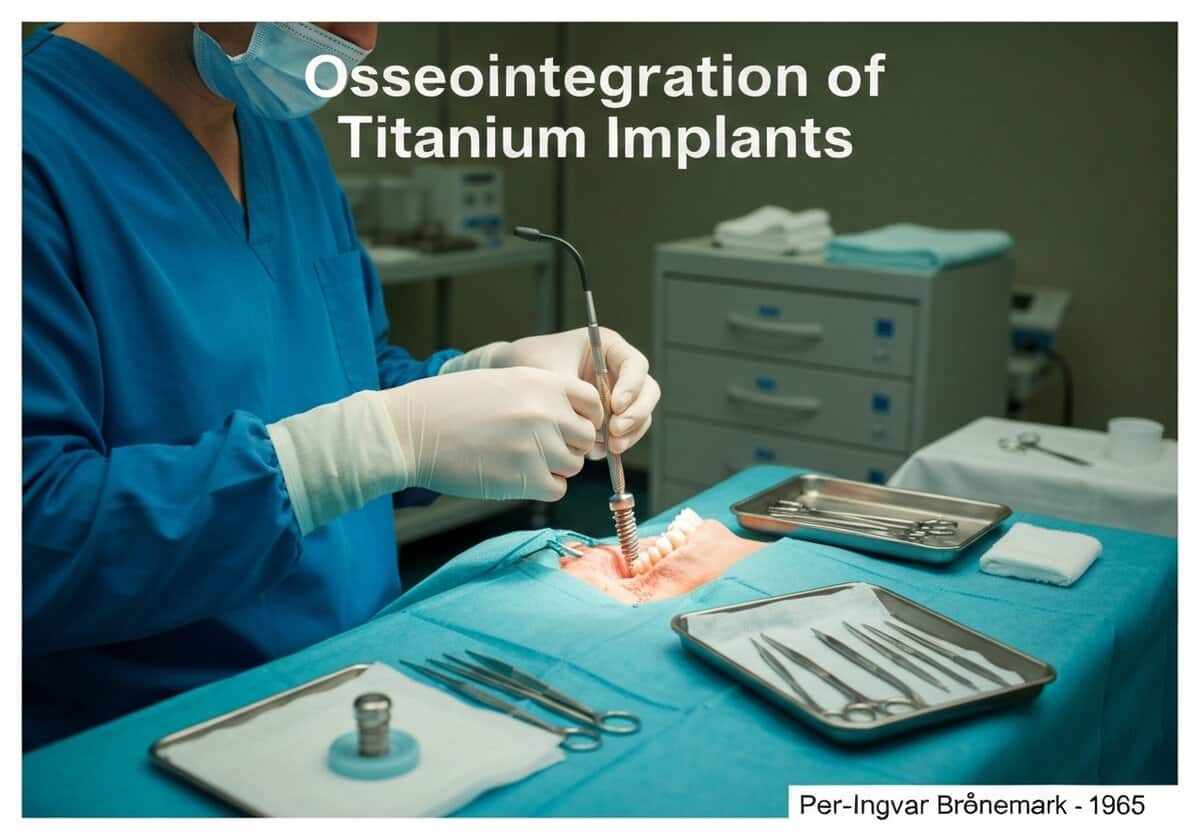
Inserimento chirurgico di un impianto dentale in titanio che dimostra l'osteointegrazione nell'ingegneria biomedica.

(Immagine generata a solo scopo illustrativo)

L'osteointegrazione è la connessione diretta, strutturale e funzionale, tra l'osso vivente e la superficie di un impianto artificiale portante, tipicamente costituito da titanio. Scoperto da Per-Ingvar Brånemark, questo fenomeno si verifica senza la crescita di tessuto molle fibroso all'interfaccia osso-impianto, creando un ancoraggio stabile e duraturo per protesi come impianti dentali e articolazioni artificiali.

The discovery of osseointegration was serendipitous. In the 1950s, Per-Ingvar Brånemark was studying blood flow in rabbit fibula using an optical chamber with a titanio frame. When he tried to remove the chamber, he found the bone had grown so intimately into the titanium that it was impossible to separate. This led to the realization that titanium, unlike other materials, was not rejected by the body and could fuse directly with bone. The key to this process is the formation of a titanium dioxide layer on the implant’s surface upon exposure to air. This oxide layer is highly biocompatible and allows bone-forming cells, or osteoblasts, to attach and deposit new bone matrix directly onto the implant surface. For successful osseointegration, several conditions must be met: the implant must be made of a biocompatible material (like commercially pure titanium), it must be machined with a specific surface topography, it must be placed with minimal trauma to the bone, and it must remain immobile and unloaded during the initial healing period. This process has revolutionized dentistry and orthopedics, providing a stable foundation for replacing missing teeth and limbs with a high degree of success and longevità.

UNESCO Nomenclature: 3201
- Ingegneria biomedica

Tipo

Processo biologico

Interruzione

Rivoluzionario

Utilizzo

Uso diffuso

Precursori

  • discovery of titanium by william gregor in 1791
  • development of sterile surgical techniques
  • advances in microscopy to observe tissue-implant interfaces
  • research into bone healing and regeneration

Applicazioni

  • dental implants
  • bone-anchored hearing aids (BAHA)
  • joint replacement prostheses (hip, knee)
  • amputation prosthetics attached directly to bone
  • craniofacial prosthetics for facial reconstruction

Brevetti:

  • US4172320A

Idee e potenziali innovazioni

  • surface-modified implants (e.g., sandblasted, acid-etched) to accelerate osseointegration
  • implants with nano-textured surfaces to guide cell growth
  • osseointegrated sensors for monitoring bone strain and healing
  • osseointegrated robotic limbs with neural interfaces
  • drug-eluting osseointegrated implants to deliver growth factors
  • osseointegration techniques for spinal fusion surgery
  • 3d-printed porous titanium implants that mimic bone structure
  • zirconia-based implants as a metal-free alternative for osseointegration
  • immediate-load protocols for dental implants based on enhanced osseointegration
  • osseointegrated anchors for orthodontic treatments
Related to: osseointegration, titanium, Per-Ingvar Brånemark, dental implant, bone integration, biocompatibilità, prosthesis, orthopedics, titanium dioxide, osteoblast.

Contesto storico

Osseointegration of Titanium Implants

1960
1965
1970
1980
1980
1990
1960
1960
1969
1976-05-28
1980
1990

(se la data è sconosciuta o non rilevante, ad esempio "meccanica dei fluidi", viene fornita una stima approssimativa della sua notevole comparsa)

decimo anno anniversario

Le immagini a grandezza naturale e i download sono disponibili, gratuitamente al 100%, solo per gli utenti registrati.

> Login <