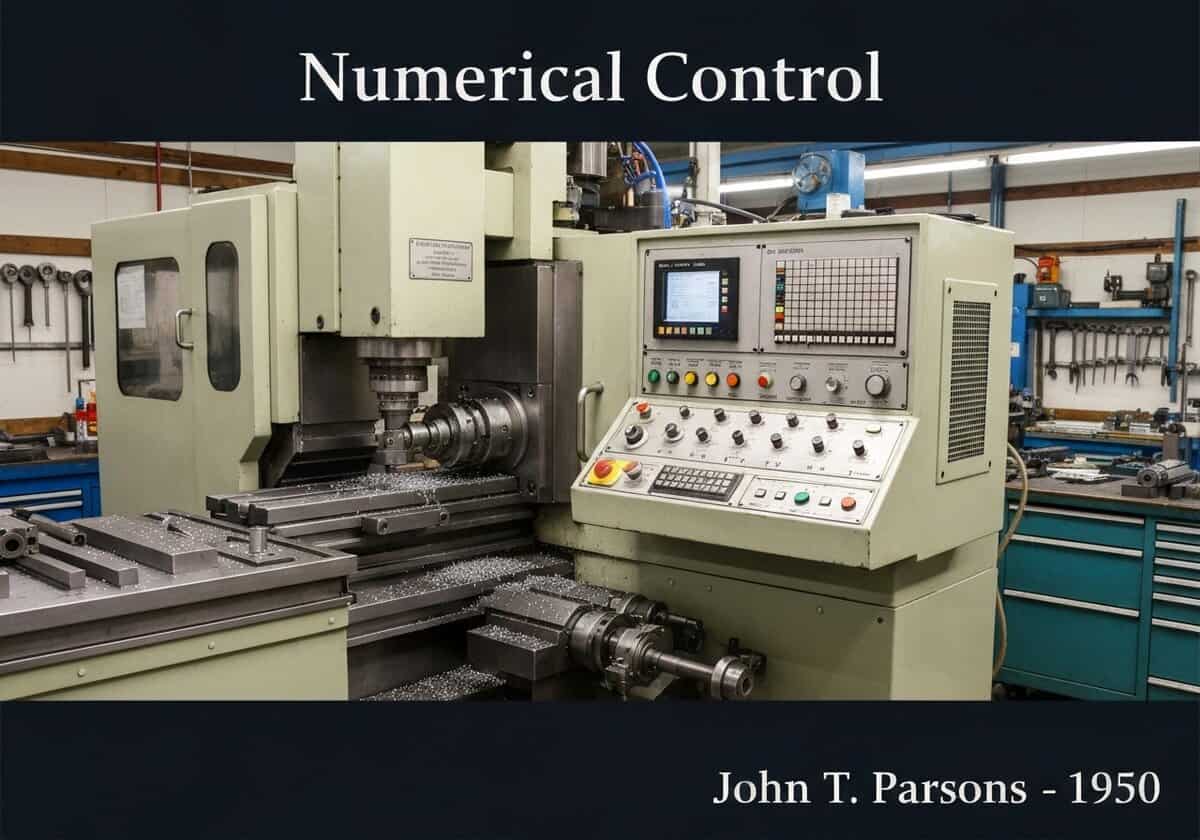
数値制御(NC)とは、正確にコード化された英数字データで構成されたプログラムを用いて、工作機械を自動的に制御する技術です。このプログラムは、工具の経路、送り速度、回転速度、その他の動作パラメータを決定します。初期のNCシステムは、入力媒体としてパンチ紙テープを使用しており、ハンドルや物理的なテンプレートによる手動制御から大きく技術的に飛躍しました。


(画像はイメージです)
数値制御(NC)とは、正確にコード化された英数字データで構成されたプログラムを用いて、工作機械を自動的に制御する技術です。このプログラムは、工具の経路、送り速度、回転速度、その他の動作パラメータを決定します。初期のNCシステムは、入力媒体としてパンチ紙テープを使用しており、ハンドルや物理的なテンプレートによる手動制御から大きく技術的に飛躍しました。

数値制御(NC)の概念は、第二次世界大戦後、ヘリコプターのローターブレードや航空機部品などの複雑な曲面形状を製造するという課題に対する解決策として登場しました。ジョン・T・パーソンズは、家族経営のパーソンズ社で働きながら、フライス盤のツールパスを定義するために数学的な座標データを使用するというアイデアを考案しました。その核心となる考え方は、表面を定義する一連の離散点を機械に入力し、機械の制御システムがこれらの点の間を切削工具を移動させるというものでした。これは、複雑な形状の場合に時間がかかり、エラーが発生しやすかった、物理的なテンプレート(カムやトレーサー)を使用したり、手動で操作したりする従来の熟練を要する方法に取って代わるものでした。
In 1949, Parsons partnered with the MIT Servomechanisms Laboratory, funded by the U.S. Air Force, to bring this concept to fruition. The project resulted in the first successful demonstration of an NC milling machine in 1952. This prototype used a vacuum tube-based controller that read instructions from a 1-inch wide, 7-track punched paper tape. The tape contained coded information for the desired positions of the machine’s three axes (X, Y, Z). Servomotors, receiving signals from the controller, would then drive the machine table and cutting head to the specified coordinates. The novelty was revolutionary: for the first time, a machine tool’s movements were governed not by a physical guide but by abstract, programmable data. This decoupled the part’s geometry from any physical master pattern, introducing unprecedented flexibility, repeatability, and accuracy into the manufacturing process. It laid the foundational groundwork for all subsequent automated machining.
数値制御
(日付が不明または関連性がない場合、例えば「流体力学」などでは、その注目すべき出現時期の概算値が提示されます。)

フルサイズの画像とダウンロードは、登録会員のみが100%無料で利用できます。
> ログイン <