Product Design, Manufacturing & Innovation Resources
家 » 熱可塑性樹脂の熱ガス溶接

熱可塑性樹脂の熱ガス溶接

1950
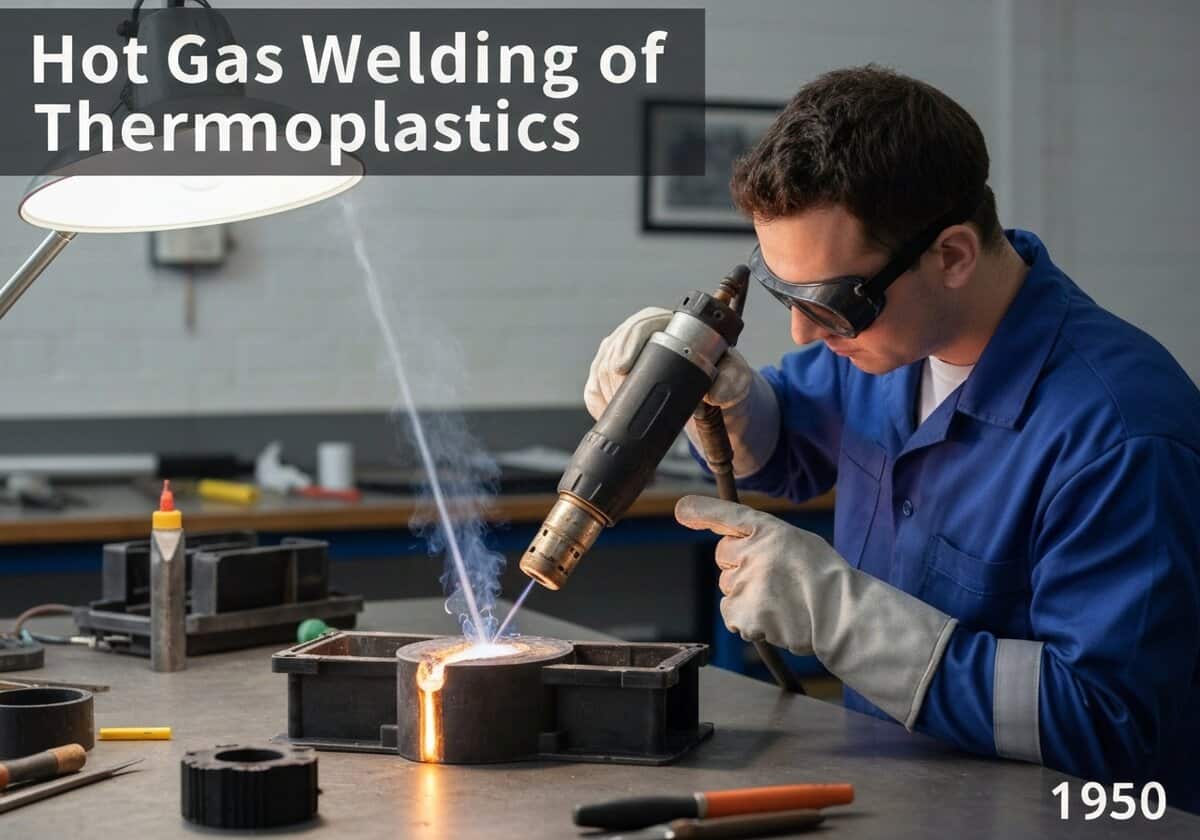
Technician welding thermoplastics using hot gas in a workshop setting.

(画像はイメージです)

熱ガス溶接は、 熱可塑性樹脂 materials using a stream of heated gas, typically air, to soften the surfaces. A specialized heat gun directs the hot gas onto the joint area and a plastic filler rod simultaneously. As the base material and the rod melt, they are pressed together, fusing upon cooling to form a continuous, solid bond. Because the filler rod must match the base material, the plastic is identified first, and a plastic identification chart helps choose the right rod.


Hot gas welding is analogous to oxy-fuel welding for metals but operates at much lower temperatures and uses hot gas instead of an open flame. The process requires a handheld or automated heat gun, pressure rollers, and a filler rod made of the same or a very similar plastic as the workpiece to ensure material compatibility. The temperature of the hot gas is critical and must be carefully controlled based on the specific thermoplastic being welded, typically ranging from 200°C to 300°C (400-575°F). Proper technique involves maintaining a consistent angle and distance for the heat gun and applying steady pressure to the filler rod to force it into the joint. Surface preparation, such as cleaning and beveling the edges of the joint, is essential for achieving a strong weld. The technique is versatile and portable, making it suitable for both in-shop fabrication and on-site repairs. It is commonly used for materials like ポリエチレン (PE), ポリプロピレン (PP), polyvinyl chloride (PVC), and acrylonitrile butadiene styrene (ABS).

UNESCO Nomenclature: 3322
ポリマー技術

タイプ

物理的プロセス

混乱

実質的な

使用法

広く普及している

前駆物質

  • 発明 熱可塑性樹脂 PVCやポリエチレンなど
  • 電気式ヒートガンの開発
  • principles of metal welding (oxy-acetylene and arc welding)
  • ポリマー溶融挙動とレオロジーの理解

アプリケーション

  • 化学薬品タンクおよび水タンクの製造
  • バンパーなどのプラスチック製自動車部品の修理
  • プラスチックパイプおよびダクトの溶接
  • 船体修理
  • ライニングおよびジオメンブレンの設置

特許:

NA

潜在的なイノベーションのアイデア

  • automated hot gas welding systems with robotic arms for repetitive tasks
  • smart heat guns with integrated temperature sensors and feedback loops
  • development of co-extruded filler rods with a core for strength and an outer layer for better bonding
  • portable, battery-powered hot gas welders for field repairs
  • integration of コンピュータビジョン to guide the welding process and ensure consistent bead application
  • use of inert gas instead of air for welding oxygen-sensitive polymers
  • 3d printing nozzles that incorporate hot gas welding to join printed layers more effectively
  • miniaturized hot gas tools for electronics and medical device assembly
  • filler rods containing conductive particles for creating embedded circuits
  • self-healing plastics that use a similar heat-activated principle for repair
関連: 熱ガス溶接、プラスチック加工、熱可塑性溶接、溶加棒、ヒートガン、ポリマー接合、プラスチック修理、ポリエチレン、ポリプロピレン、PVC。

歴史的背景

熱可塑性樹脂の熱ガス溶接

1949
1950
1950
1950
1950
1950
1955
1948
1950
1950
1950
1950
1950
1950
1955

(日付が不明または関連性がない場合、例えば「流体力学」などでは、その注目すべき出現時期の概算値が提示されます。)

10年目 周年

フルサイズの画像とダウンロードは、登録会員のみが100%無料で利用できます。