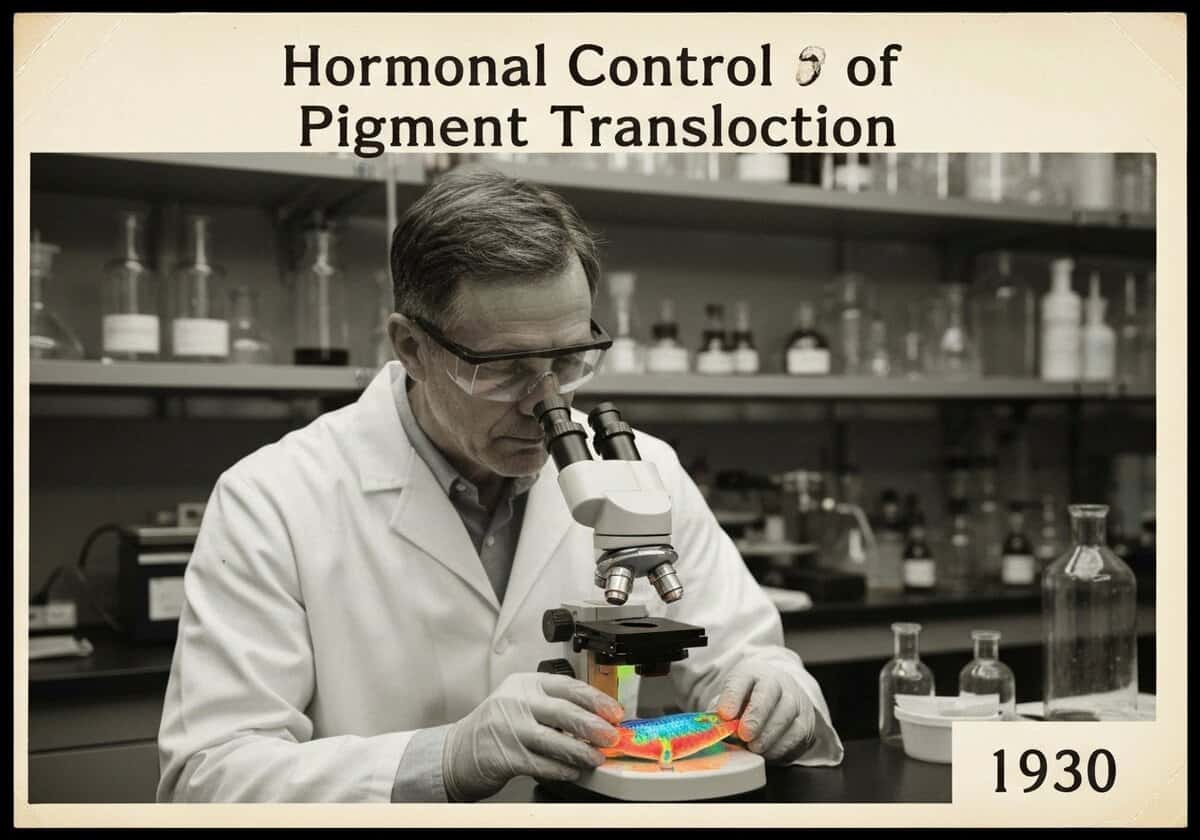
Hormonal Control of Pigment Translocation
In molti vertebrati ectotermi, come pesci e anfibi, il cambiamento di colore è un processo fisiologico più lento, regolato dagli ormoni. I granuli di pigmento all'interno dei cromatofori vengono traslocati lungo un citoscheletro di microtubuli. Ormoni come l'ormone stimolante i melanociti (MSH) causano la dispersione del pigmento (scurimento), mentre la melatonina o l'ormone concentrante i melanociti (MCH) innescano l'aggregazione (schiarimento), adattando il colore dell'animale al suo ambiente nell'arco di minuti o ore.
Questo meccanismo, noto come cambiamento fisiologico di colore, si basa sul movimento di organelli contenenti pigmenti (melanosomi nei melanofori) all'interno del citoplasma cellulare. La cellula stessa non cambia forma. Al contrario, una complessa rete di strutture citoscheletriche, principalmente microtubuli, guida il trasporto di questi organelli. Proteine motrici, come la dineina e la chinesina, agiscono come motori di questo trasporto. I segnali ormonali, ricevuti dai recettori accoppiati alle proteine G sulla superficie del cromatoforo, innescano una cascata di segnalazione. Ad esempio, il legame dell'ormone melanocita-stimolante (MSH) porta a un aumento dell'AMP ciclico (cAMP) intracellulare. L'aumento del cAMP attiva la proteina chinasi A (PKA), che a sua volta fosforila le proteine motrici, determinando la dispersione dei granuli di pigmento dal centro della cellula alla periferia, scurendo così la pelle. Al contrario, il legame dell'ormone concentrante i melanociti (MCH) o della melatonina porta a una diminuzione del cAMP, causando l'inversione della direzione delle proteine motorie e l'aggregazione dei pigmenti al centro della cellula, con conseguente schiarimento della pelle. L'intero processo è reversibile e permette all'animale di adattare la propria colorazione all'ambiente circostante, ai livelli di luce o ai segnali sociali, sebbene su una scala temporale molto più lenta (da minuti a ore) rispetto al controllo neuromuscolare dei cefalopodi.
UNESCO Nomenclature: 2401
Biologia animale (Zoologia)
Tipo
Meccanismo biologico
Precursori
- discovery of hormones and the endocrine system by starling and bayliss
- identificazione del ruolo del citoscheletro nella struttura e nel trasporto intracellulare
- discovery of the pituitary gland as a source of signaling molecules
- characterization of motor proteins like kinesin and dynein
Applicazioni
- development of diagnostic assays using pigment aggregation (e.g., pregnancy tests)
- pharmacological research into g-protein coupled receptors (gpcrs) targeted by these hormones
- toxicology screening, as pollutants can disrupt this sensitive hormonal pathway
- basic research into intracellular transport mechanisms
Idee e potenziali innovazioni
A causa dell'eliminazione del traffico generato dai bot, che attualmente supera i 40.000 al giorno, questo contenuto è riservato ai membri della community.
> Accedi O > Registrati L'accesso a questo contenuto, così come a tutti gli altri contenuti e strumenti riservati, è (100% gratuito).
Argomenti correlati: controllo ormonale, MSH, MCH, traslocazione del pigmento, microtubuli, ectotermi, pesci, anfibi, cambiamento fisiologico del colore, endocrinologia.