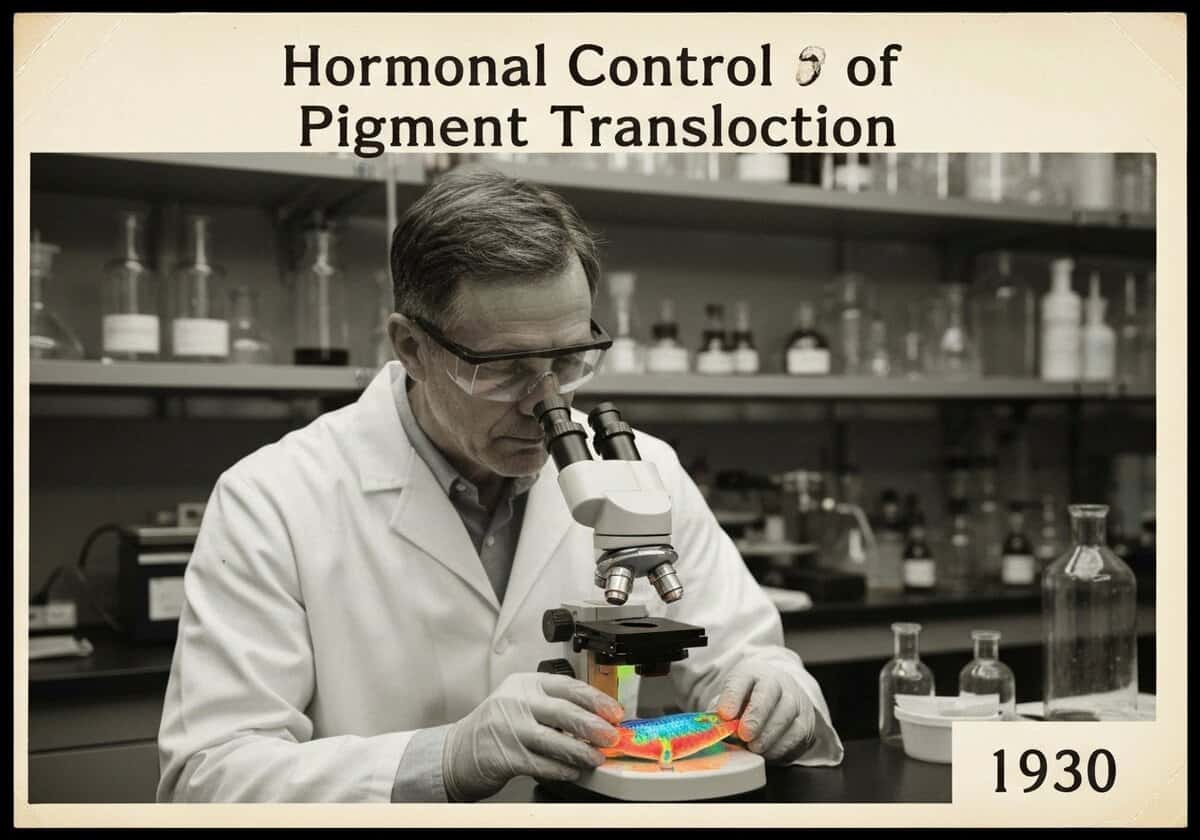
魚類や両生類などの多くの変温脊椎動物では、体色の変化はホルモンによって調節される、より緩やかな生理的プロセスです。色素胞内の色素顆粒は微小管細胞骨格に沿って移動します。メラノサイト刺激ホルモン(MSH)などのホルモンは色素の分散(暗色化)を引き起こし、メラトニンやメラノサイト濃縮ホルモン(MCH)は凝集(明色化)を引き起こし、数分から数時間かけて動物の体色を環境に適応させます。

(画像はイメージです)
魚類や両生類などの多くの変温脊椎動物では、体色の変化はホルモンによって調節される、より緩やかな生理的プロセスです。色素胞内の色素顆粒は微小管細胞骨格に沿って移動します。メラノサイト刺激ホルモン(MSH)などのホルモンは色素の分散(暗色化)を引き起こし、メラトニンやメラノサイト濃縮ホルモン(MCH)は凝集(明色化)を引き起こし、数分から数時間かけて動物の体色を環境に適応させます。
This mechanism, known as physiological color change, relies on the movement of pigment-containing organelles (melanosomes in melanophores) within the cell’s cytoplasm. The cell itself does not change shape. Instead, a complex network of cytoskeletal tracks, primarily microtubules, guides the transport of these organelles. Motor proteins, such as dynein and kinesin, act as the engines for this transport. Hormonal signals, received by G-protein coupled receptors on the chromatophore’s surface, initiate a signaling cascade. For example, melanocyte-stimulating hormone (MSH) binding leads to an increase in intracellular cyclic AMP (cAMP). Elevated cAMP activates protein kinase A (PKA), which in turn phosphorylates motor proteins, leading to the dispersion of pigment granules from the cell center to the periphery, thus darkening the skin. Conversely, melanocyte-concentrating hormone (MCH) or melatonin binding leads to a decrease in cAMP, causing the motor proteins to reverse direction and aggregate the pigments in the center of the cell, lightening the skin. This entire process is reversible and allows the animal to adapt its coloration to the background, light levels, or social signals, albeit on a much slower timescale (minutes to hours) compared to the neuromuscular control in cephalopods.
ボットによるトラフィック(現在1日あたり4万件以上)を排除するため、このコンテンツはコミュニティメンバー限定となっています。
> ログイン < または > 登録 < (100%無料)でこれにアクセスできます。他のすべての制限付きコンテンツとツールも同様です。
色素転座のホルモン制御
(日付が不明または関連性がない場合、例えば「流体力学」などでは、その注目すべき出現時期の概算値が提示されます。)

フルサイズの画像とダウンロードは、登録会員のみが100%無料で利用できます。
> ログイン <