Product Design, Manufacturing & Innovation Resources
Heim » Hormonal Control of Pigment Translocation

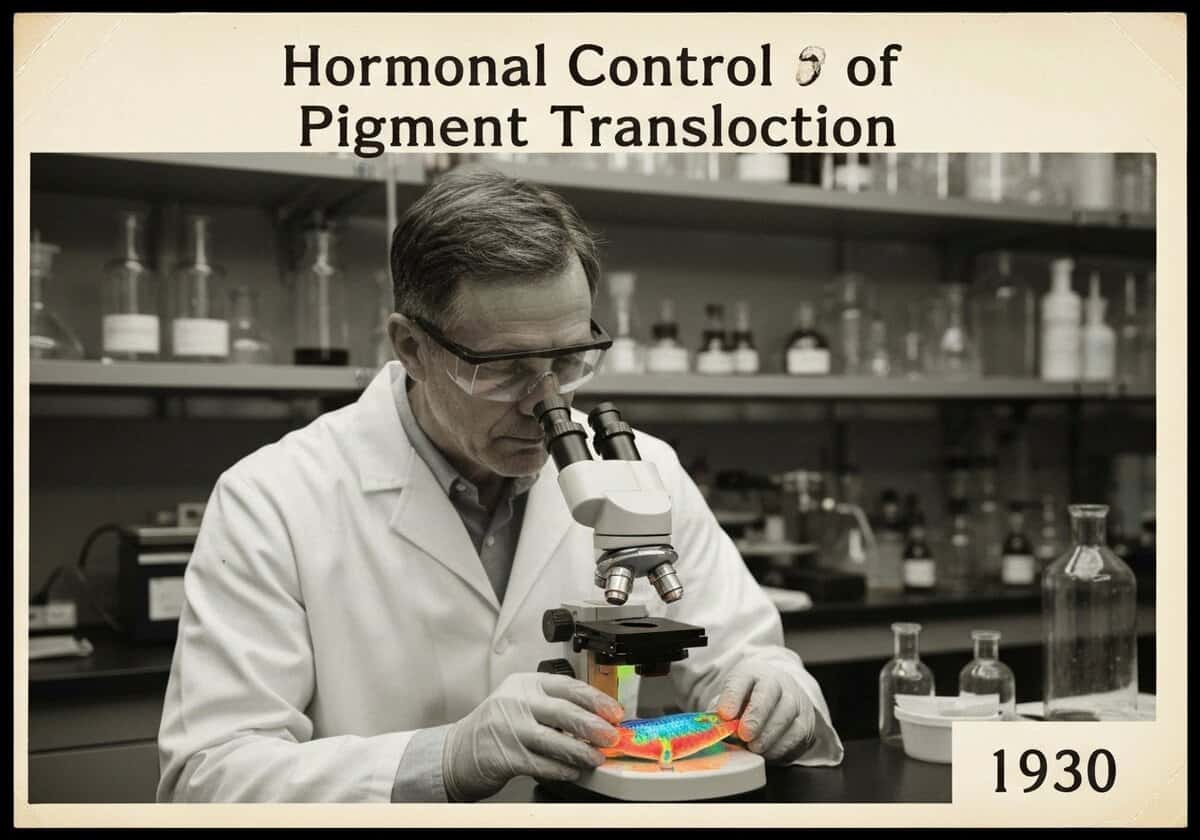
Hormonal Control of Pigment Translocation

1930
Forscher, der Chromatophoren in ektothermen Wirbeltieren auf hormonelle Pigmentverschiebung untersucht.

(Abbildung dient nur zur Veranschaulichung)

Diese Energie wird verwendet, um zwei energietragende Moleküle zu erzeugen: Adenosintriphosphat (ATP) und Nicotinamidadenindinukleotidphosphat (NADPH), die den nachfolgenden Calvin-Zyklus antreiben.

This mechanism, known as physiological color change, relies on the movement of pigment-containing organelles (melanosomes in melanophores) within the cell’s cytoplasm. The cell itself does not change shape. Instead, a complex network of cytoskeletal tracks, primarily microtubules, guides the transport of these organelles. Motor proteins, such as dynein and kinesin, act as the engines for this transport. Hormonal signals, received by G-protein coupled receptors on the chromatophore’s surface, initiate a signaling cascade. For example, melanocyte-stimulating hormone (MSH) binding leads to an increase in intracellular cyclic AMP (cAMP). Elevated cAMP activates protein kinase A (PKA), which in turn phosphorylates motor proteins, leading to the dispersion of pigment granules from the cell center to the periphery, thus darkening the skin. Conversely, melanocyte-concentrating hormone (MCH) or melatonin binding leads to a decrease in cAMP, causing the motor proteins to reverse direction and aggregate the pigments in the center of the cell, lightening the skin. This entire process is reversible and allows the animal to adapt its coloration to the background, light levels, or social signals, albeit on a much slower timescale (minutes to hours) compared to the neuromuscular control in cephalopods.

UNESCO Nomenclature: 2401
– Animal biology (Zoology)

Typ

Biologischer Mechanismus

Störung

Wesentliche

Verwendung

Weitverbreitete Verwendung

Vorläufer

  • discovery of hormones and the endocrine system by starling and bayliss
  • identification of the cytoskeleton’s role in intracellular structure and transport
  • discovery of the pituitary gland as a source of signaling molecules
  • characterization of motor proteins like kinesin and dynein

Anwendungen

  • development of diagnostic assays using pigment aggregation (e.g., pregnancy tests)
  • pharmacological research into g-protein coupled receptors (gpcrs) targeted by these hormones
  • toxicology screening, as pollutants can disrupt this sensitive hormonal pathway
  • basic research into intracellular transport mechanisms

Patente:

NA

Potenzielle Innovationsideen

Aufgrund des hohen Datenverkehrs durch Web-Scraping-Bots, der derzeit mehr als 40.000 Anfragen pro Tag umfasst, ist dieser Inhalt ausschließlich Community-Mitgliedern vorbehalten.
> Anmelden < oder > Registrieren < (100% kostenlos) Zugriff darauf sowie auf alle anderen eingeschränkten Inhalte und Tools.

Related to: hormonal control, msh, mch, pigment translocation, microtubule, ectotherm, fish, amphibian, physiological color change, endocrinology.

Historischer Kontext

Hormonal Control of Pigment Translocation

1910
1921
1930
1930
1940
1950
1951
1902
1920
1928
1930
1940
1950
1950
1954

(wenn das Datum unbekannt oder nicht relevant ist, z. B. „Strömungsmechanik“, wird eine gerundete Schätzung seines bemerkenswerten Auftretens bereitgestellt)


Bilder in voller Größe und Downloads sind nur für registrierte Mitglieder 100% kostenlos verfügbar.

> Login <