Product Design, Manufacturing & Innovation Resources
بيت » التمييز بين زمن التاكت وزمن الدورة

التمييز بين زمن التاكت وزمن الدورة

1960
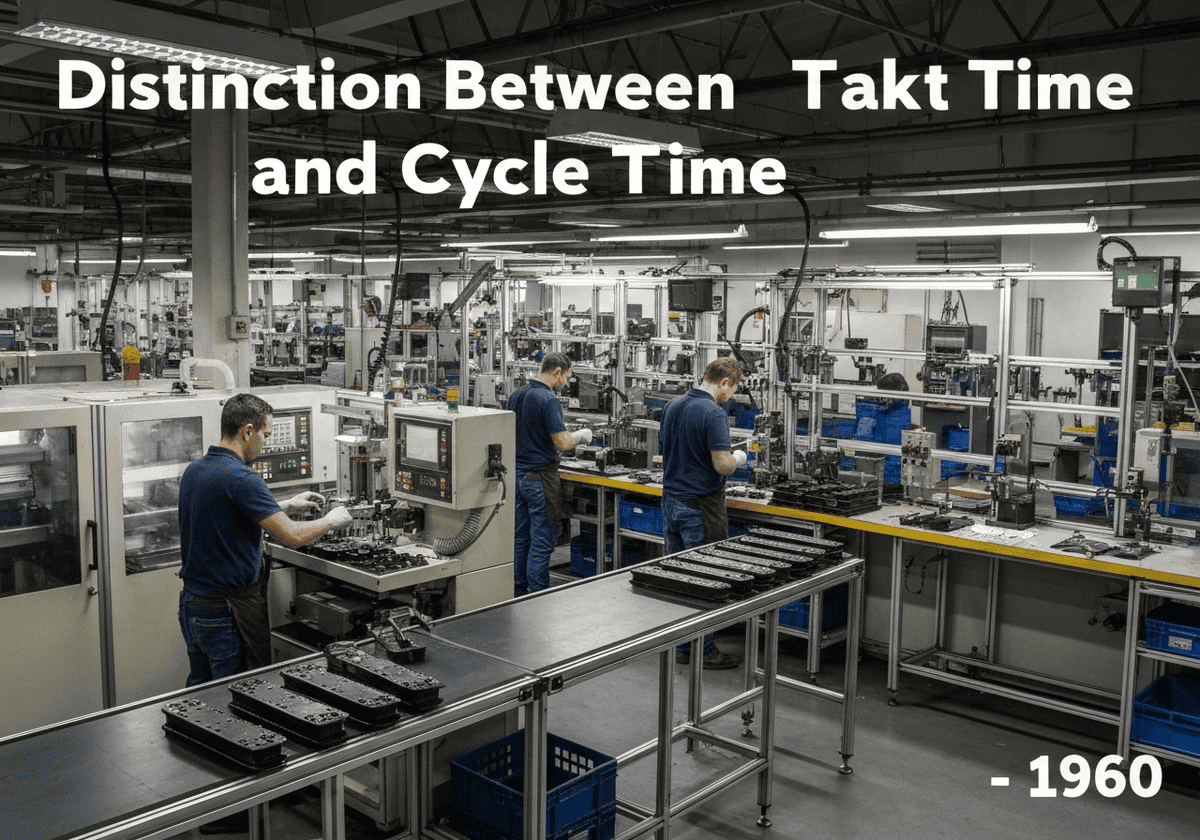
أرضية مصنع توضح وقت التاكت ووقت الدورة في التكنولوجيا الصناعية.

(صورة توضيحية فقط)

Takt time is a theoretical calculation representing the pace of customer demand ([latex]Available Time \div Demand[/latex]). In contrast, cycle time is an empirical measurement of the actual time taken to complete one unit of work at a specific process step. A core principle of التصنيع الهزيل الهدف هو ضمان أن يكون وقت الدورة أقل من أو يساوي وقت تاكت باستمرار.


The relationship between Takt time, cycle time, and lead time is critical. Takt time is what you need, cycle time is what you get, and lead time is the total time a customer must wait for a product. The primary diagnostic use of this distinction is in line balancing and bottleneck identification. By measuring the cycle time of every station on a line and comparing it to the Takt time, managers can instantly see where problems lie. Any station where Cycle Time > Takt Time is a bottleneck that constrains the entire system’s output. Efforts for improvement, or ‘kaizen’, should be focused on these bottleneck stations to reduce their cycle time.

Conversely, if a station’s Cycle Time < Takt Time, it has spare capacity. While this may seem good, it can lead to overproduction if not managed. The operator may finish their work early and produce extra units ‘just in case’, creating inventory that is not yet needed by the next station or the customer. The lean ideal is to balance the line so that the cycle time of each station is very close to, but just under, the Takt time. This creates a smooth, synchronized flow and maximizes labor efficiency without generating wasteful inventory.

UNESCO Nomenclature: 3308
– Industrial technology

يكتب

نظام مجرد

خلل

Incremental

الاستخدام

استخدام واسع النطاق

مقدمات

  • نظرية القيود التي طورها إلياهو م. جولدرات
  • تطوير مقاييس الأداء في البيئات الصناعية
  • مفهوم عنق الزجاجة في نظرية الإنتاج
  • التحكم في العمليات الإحصائية methods for measuring process times

التطبيقات

  • تحليل الاختناقات وإدارتها
  • تخطيط القدرة الإنتاجية
  • قياس الأداء لخلايا التصنيع
  • guiding continuous improvement (كايزن) activities
  • موازنة العمل عبر محطات متعددة

براءات الاختراع:

NA

أفكار ابتكارية محتملة

  • لوحات معلومات في الوقت الفعلي تقارن أوقات الدورة المباشرة بوقت الدورة الديناميكي
  • تحويل أهداف الإنتاج إلى ألعاب بناءً على تحقيق أهداف الوقت الفعلي مقابل أهداف دورة الزمن
  • التحليلات التنبؤية للتنبؤ بانتهاكات دورة الزمن قبل حدوثها
  • خوارزميات تخصيص الموارد الآلية استنادًا إلى دلتا زمن الدورة/التاكت
  • تطبيق المفهوم على معالجة طلبات الخادم في البنية التحتية لتكنولوجيا المعلومات
  • إدارة سير العمل في القضايا القانونية وفقًا لوقت زمني محدد من قبل العميل
  • تحسين المسارات السريرية في المستشفيات لتتوافق مع نهج قبول المرضى
  • موازنة أحمال العمل في فرق تطوير البرمجيات الرشيقة بناءً على طلب الميزة
Related to: takt time, cycle time, lead time, bottleneck, lean manufacturing, toyota production system, process improvement, capacity planning.

السياق التاريخي

التمييز بين زمن التاكت وزمن الدورة

1956
1960
1960
1960
1960
1960
1960
1955
1958
1960
1960
1960
1960
1960
1960

(إذا كان التاريخ غير معروف أو غير ذي صلة، على سبيل المثال "ميكانيكا الموائع"، يتم توفير تقدير تقريبي لظهوره الملحوظ)

أحدث الإضافات

أهم المنشورات والمقالات

أفضل الأدوات الأصلية

السنة العاشرة عيد

الصور والتنزيلات بالحجم الكامل متاحة فقط، ومجانية تمامًا، للأعضاء المسجلين.