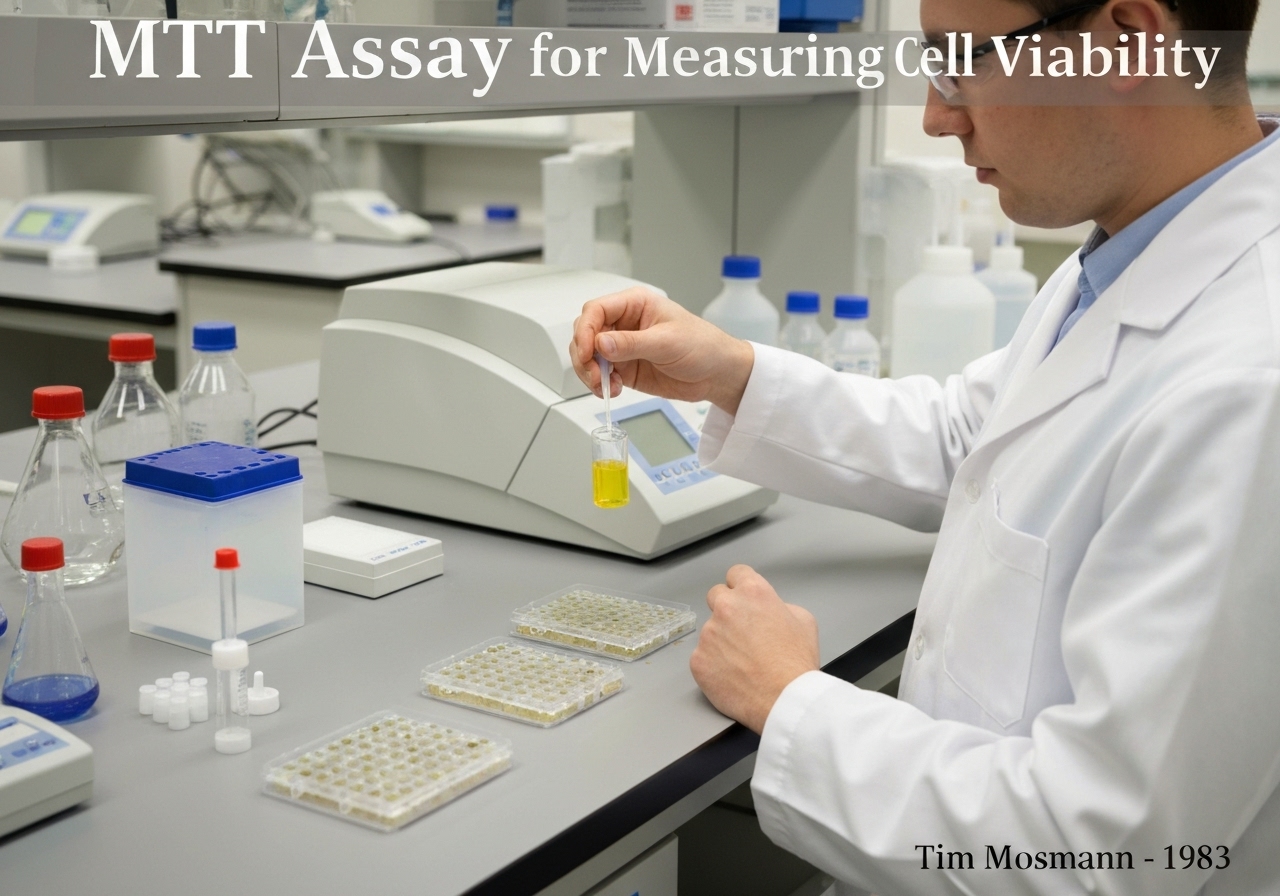
MTT 检测法由 Tim Mosmann 于 1983 年首次提出,彻底改变了研究人员体外定量细胞反应的方式。它提供了一种比铬释放检测法等先前方法更快、更定量且放射性更低的替代方法。其原理基于活细胞中线粒体脱氢酶的活性。这些酶是电子传递链的一部分,仅在代谢功能正常的细胞中活跃。
In the procedure, the water-soluble yellow MTT reagent is added to cells in a culture plate. It is taken up by the cells and reduced by mitochondrial enzymes into formazan, which is an insoluble, purple, crystalline product. The formazan crystals accumulate within the cells. After an incubation period, a solubilizing agent, such as dimethyl sulfoxide (DMSO) or an acidified alcohol solution, is added to dissolve these crystals, resulting in a colored solution. The absorbance of this purple solution is then measured using a spectrophotometer at a specific wavelength (typically between 500 and 600 nm). The intensity of the color is directly proportional to the number of metabolically active, and therefore viable, cells. By comparing the absorbance of treated cells to untreated control cells, one can calculate the percentage of 细胞毒性 or inhibition of proliferation caused by the test compound.