Product Design, Manufacturing & Innovation Resources
家 » 无菌保证水平(SAL)

无菌保证水平(SAL)

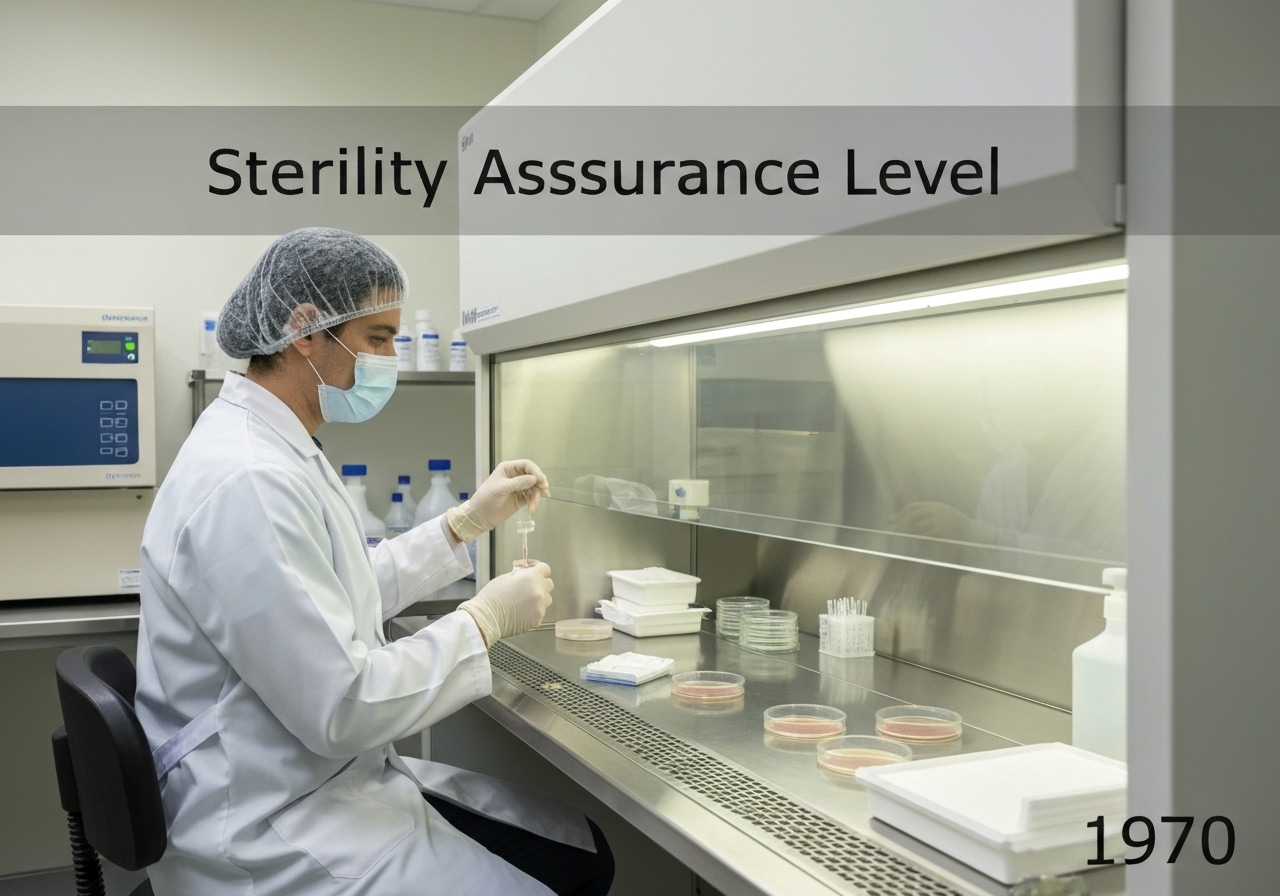
1970
Laboratory sterility testing for medical devices in applied microbiology.

(图片仅供参考)

SAL is a quantitative measure representing the probability of a single viable microorganism surviving on an item after sterilization. A commonly required SAL for medical devices is [latex]10^{-6}[/latex], meaning a one-in-a-million chance of a non-sterile unit. This probabilistic approach acknowledges that absolute sterility cannot be proven, only inferred statistically from 过程验证. Sterilization cycles are proven with IQ and OQ validation of the equipment, followed by performance testing with biological indicators.

无菌保证水平(SAL)的概念源于这样一种理解: 微生物 微生物死亡遵循一级动力学,这意味着它是一个概率事件。我们无法证明物体上的所有微生物都被杀死;我们只能计算微生物在灭菌过程中存活的概率。无菌保证水平 (SAL) 就是这个概率。例如,SAL 为 10⁻⁶ 并不意味着每生产一百万件产品中就有一件受到污染。相反,它意味着任何给定的物品在灭菌过程后,有百万分之一的概率会残留一个存活的微生物。这种统计方法对于制药和医疗器械等受监管行业的灭菌循环验证至关重要。为了建立一个能够达到预期 SAL 的灭菌循环,制造商会进行验证研究。这通常涉及在灭菌批次中最具挑战性的位置放置生物指示剂 (BI),这些指示剂是标准化的高耐受性细菌孢子制剂(例如,用于蒸汽灭菌的嗜热脂肪芽孢杆菌或用于环氧乙烷灭菌的萎缩芽孢杆菌)。然后调整并测试工艺参数(例如时间、温度、浓度),直至能够稳定地完全杀灭生物指示菌。之后,将循环时间延长“半个循环”或更长时间,以确保安全裕度,从而保证工艺能够达到目标安全许可水平 (SAL) 10⁻⁶ 或更高。SAL 的选择取决于产品的预期用途。与受损组织接触的物品,例如外科植入物和注射药物,需要最严格的 SAL 10⁻⁶。对于与完整皮肤接触的物品,较低的 SAL 10⁻³ 可能也可以接受。

The formalization of SAL as a regulatory standard emerged in the latter half of the 20th century, driven by agencies like the U.S. Food and Drug Administration (FDA) and international standards organizations (ISO). Before this, sterility was often treated as an absolute state—an item was either sterile or not. However, as manufacturing scaled up and the risks of contamination became better understood, a more rigorous, quantitative framework was needed. This shift from a qualitative to a probabilistic definition of sterility was a major advancement. It provided a scientific and defensible basis for 过程验证, allowing manufacturers to demonstrate the effectiveness and reproducibility of their sterilization methods to regulators and ensuring a consistent level of safety for patients.

UNESCO Nomenclature: 2401
– Microbiology

类型

Quantitative Metric

中断

重大的

用法

广泛使用

前体

应用程序

  • 医疗器械灭菌周期验证
  • 药品监管批准
  • 食品加工质量控制
  • 生物技术领域的无菌制造

专利:

NA

潜在创新理念

  • 基于生物负载传感器实时调整灭菌周期参数的动态 SAL 监控系统
  • 开发快速读出生物指标,可在几分钟内(而不是几天)提供定量的 SAL 值
  • 人工智能算法模拟微生物死亡动力学,预测复杂、多组分医疗器械的 SAL
  • 基于区块链的单个医疗设备 SAL 数据跟踪,提供从工厂到患者的不可变记录
  • 市场上销售的带有微生物去除认证等级的消费品(例如净水器、空气过滤器)
  • SAL-based 风险评估 software for hospital infection control, predicting contamination risks in different environments
  • 基因工程生物指示剂,带有荧光报告基因,可指示特定销售的实现
  • 标准化行星际探测器和设备的 SAL 要求,以防止对其他天体造成前向污染
  • 开发与特定 SAL 直接相关的可量化颜色变化的化学指示剂
  • SAL-based insurance models for 医疗器械 manufacturers, with premiums tied to the validated sterility level of their products
Related to: SAL, sterility assurance level, probability, microbiology, validation, medical devices, pharmaceuticals, FDA, ISO, biological indicators.

历史背景

无菌保证水平(SAL)

1951
1958
1960
1970
1973
1975
1979
1950
1954
1960
1967
1970
1975
1977
1983

(如果日期未知或不相关,例如“流体力学”,则提供其显著出现的近似估计)

第十年 周年纪念日

只有注册会员才能免费获取完整尺寸的图片和下载内容。

> 登录 <