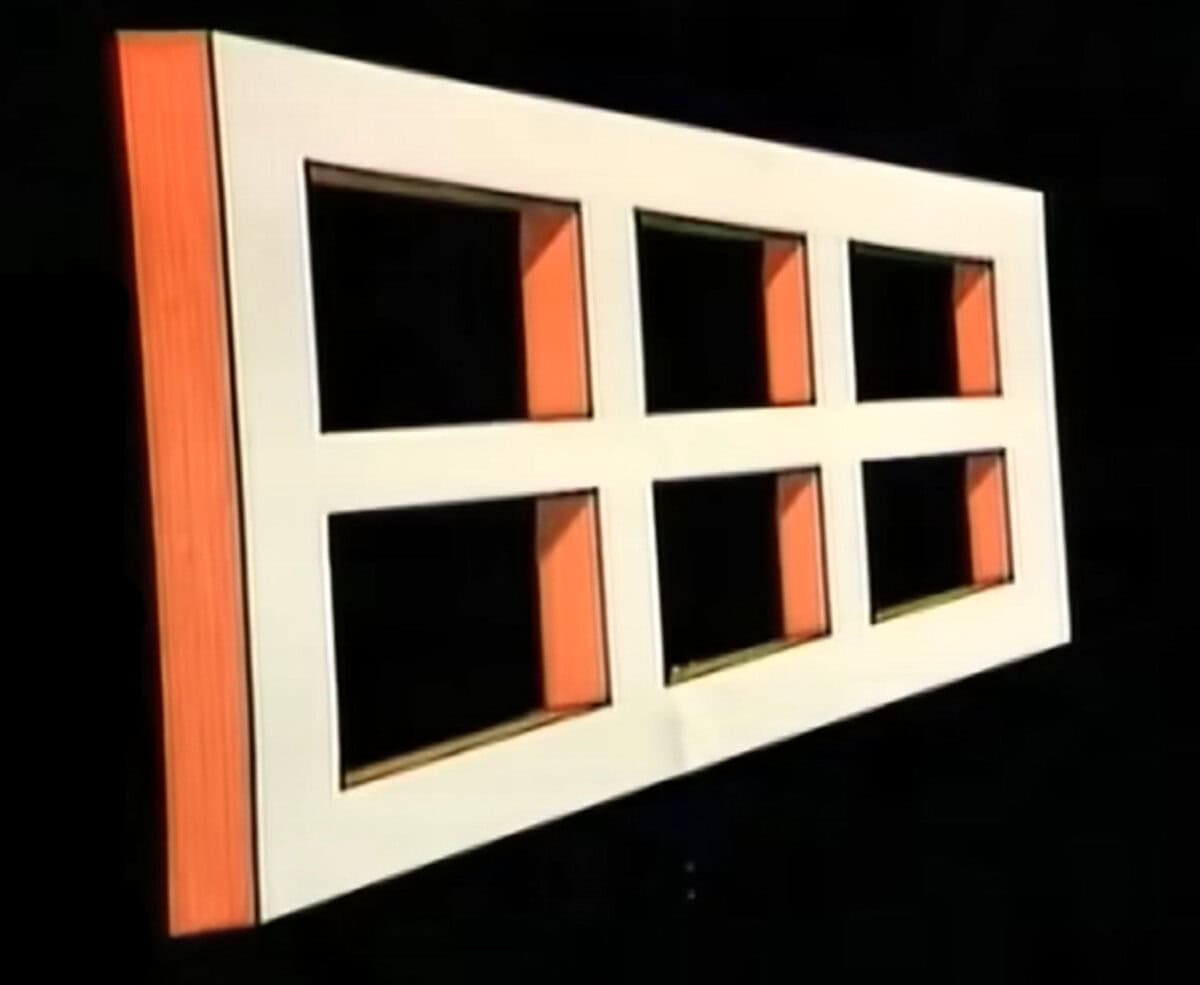
艾姆斯窗口是一种经典的光学窗口。 错觉这扇由美国科学家小阿德尔伯特·艾姆斯于20世纪40年代创作的窗户,呈梯形,一侧明显高于另一侧,窗框上绘有窗格、阴影,有时还画有横梁。当它绕垂直轴旋转时,看起来并不会完全转动。相反,观者会看到它像钟摆一样来回摆动,角度大约在90到180度之间。在旋转的某些阶段,窗户甚至会改变形状,或者朝与实际运动方向相反的方向旋转;穿过窗户的杆子看起来似乎会穿过玻璃,或者弯曲并从框架中飞脱出来。
最精彩的部分是尺子在中间,它穿过窗户,至少对大脑来说是这样:大脑必须在旋转部分(尺子)和振荡部分(至少它是这么认为的)之间找到一个“解决方案”,所以它们相交了。
The fundamental cause is that the retinal image alone is ambiguous. A trapezoid seen from an angle can be the projection of many different real shapes, so the brain 必须 infer depth and orientation from assumptions it has built through experience. Here, the brain assumes the window is a normal rectangle, and that the larger side must be closer. The perspective cues baked into the painted shape and shadows reinforce this. When the window turns and the shorter side is actually nearer, the retinal image is in conflict with the assumption. The visual system resolves it by reversing the perceived depth, so the window seems to rotate the wrong way or to stop and reverse.
最根本的教训是,感知并非被动地记录世界,而是一种主动的、无意识的推断,是基于先前预期而做出的最佳猜测。艾姆斯利用这一点以及他的其他演示,例如艾姆斯房间(见下文),论证了我们所看到的,不仅取决于到达我们眼睛的光线,也取决于我们习得的预期: