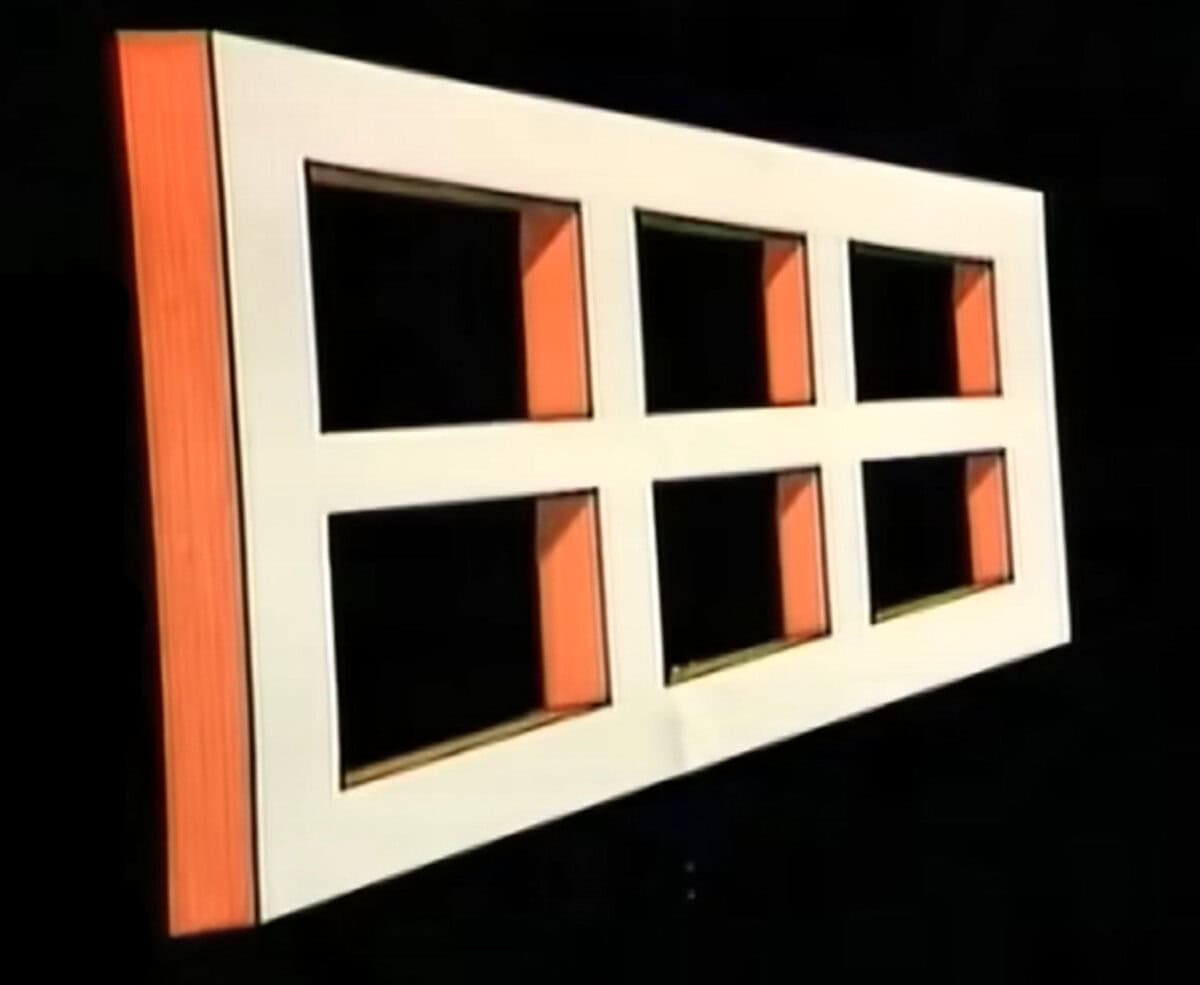
エイムズウィンドウは古典的な光学窓です illusion1940年代にアメリカの科学者アデルバート・エイムズ・ジュニアによって作られたこの窓は、台形型の窓で、片方の垂直面がもう一方よりも明らかに高く、窓ガラスや影、時には横棒が描かれています。垂直軸を中心に回転しても、完全に一周しているようには見えません。代わりに、見る人は、振り子のように約90度から180度の範囲で前後に揺れているように見えます。回転の特定の時点では、窓の形が変わったり、実際の動きとは逆方向に回転しているように見えたりすることさえあり、窓に通された棒がガラスを突き抜けたり、曲がって枠から外れて飛んでいくように見えることもあります。
一番面白いのは、真ん中に定規があって、物理的に窓を横切っている部分です。少なくとも脳にとっては、回転する部分(定規)と、ただ振動している部分(少なくとも脳はそう思っている)の間で「解決策」を見つけなければならず、それらが交差するようにしなければなりません。
The fundamental cause is that the retinal image alone is ambiguous. A trapezoid seen from an angle can be the projection of many different real shapes, so the brain しなければならない infer depth and orientation from assumptions it has built through experience. Here, the brain assumes the window is a normal rectangle, and that the larger side must be closer. The perspective cues baked into the painted shape and shadows reinforce this. When the window turns and the shorter side is actually nearer, the retinal image is in conflict with the assumption. The visual system resolves it by reversing the perceived depth, so the window seems to rotate the wrong way or to stop and reverse.
根本的な教訓は、知覚とは世界をただ受動的に記録することではなく、能動的で無意識的な推論、つまり過去の期待に基づいて構築された最善の推測であるということだ。エイムズはこのことや、エイムズの部屋(下記参照)などの他の実験を用いて、私たちが見るものは、目に届く光だけでなく、私たちが期待することを学習してきたことにも大きく左右されると主張した。