CoBLIS Color Blindness Simulator compared with Color Oracle and Sim Daltonism| CoBLIS Color Blindness Simulator | Color Oracle | Sim Daltonism |
|---|
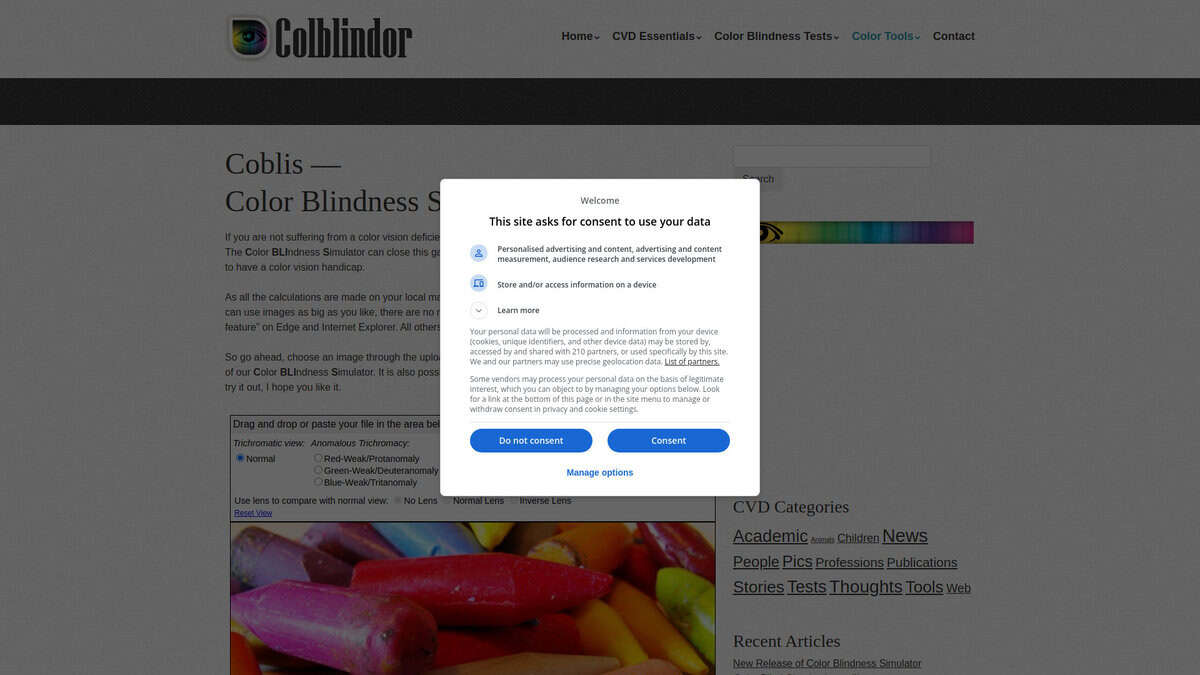
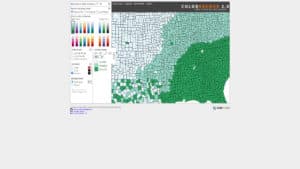
| Working method: CoBLIS transforms an uploaded or dragged image in the browser, with pan and zoom for inspecting details. | Working method: Color Oracle places a filter over the whole screen, separate from the design software, and shows the result in real time. | Working method: Sim Daltonism uses a window that filters whatever lies beneath it. The window can follow the mouse pointer for side by side comparison, filter video in real time and run several filter windows at once. |
| Types simulated: The tool covers red, green and blue deficient color vision and complete color blindness. | Types simulated: The page checked does not name the specific impairments simulated. | Types simulated: The app covers deuteranopia, deuteranomaly, protanopia, protanomaly, tritanopia, tritanomaly, monochromacy and partial monochromacy, so anomalous trichromacy is included. |
| Platforms and data handling: CoBLIS runs in a web browser. Calculations run on the user machine, images are not uploaded and no image size limit applies. The lens feature has known issues on Edge and Internet Explorer. | Platforms and data handling: Color Oracle runs on Windows, macOS and Linux. The Windows and Linux versions need Java 6 or later. | Platforms and data handling: Sim Daltonism is a macOS application, with a separate iOS app. Version 2.0.5 requires OS X 10.10 or later. |
| Algorithm and licence terms: The current version uses the HCIRN Color Blind Simulation function. It is freely available for non-commercial use, and commercial use requires contacting HCIRN. | Algorithm and licence terms: The calculation method is not described on the page checked. The code is open source, on GitHub for macOS and for Windows and Java, but the licence is not named there. | Algorithm and licence terms: The project is open source on GitHub and credits a port of the same HCIRN function by Matthew Wickline. The page warns that simulations are approximations because color vision varies between people. |
| Cost model and maintenance: No usage fee is mentioned on the page. The page does not state whether it is maintained, and the newest dated article in the sidebar is from October 2016. | Cost model and maintenance: Color Oracle is free to download. The latest version is 1.3, released in May 2018, and the site was last updated in January 2020. | Cost model and maintenance: The app is sold through the Mac App Store and as a direct download, and the page includes a donation link. Version 2.0.5 is listed as the current release. |