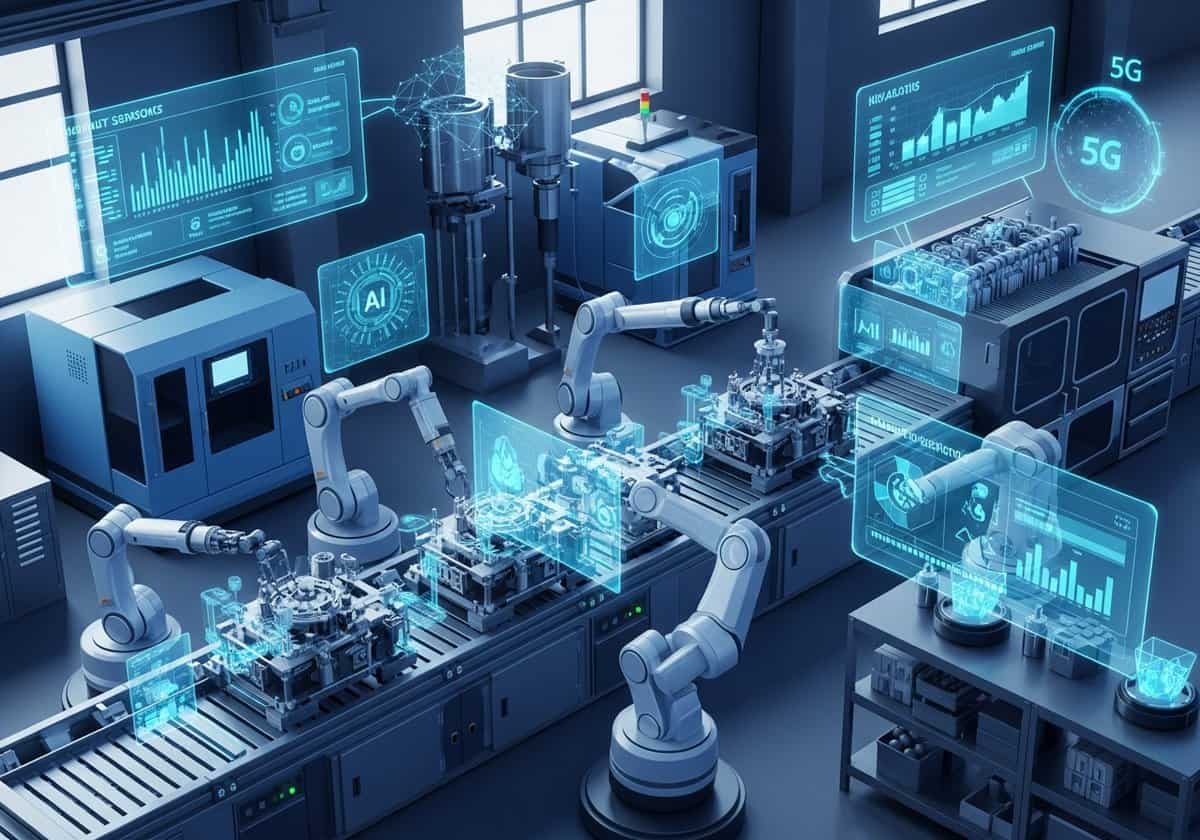
The Industrial Internet of Things (IIoT) is transforming industries by integrating advanced technologies into manufacturing and operational processes, with studies suggesting that IIoT could create $15 trillion in value by 2030 (McKinsey & Company). This article breaks down the definition and core components of IIoT, including sensors, actuators, and data analytics. You’ll discover the key differences between IoT and IIoT, as well as the architecture and communication protocols that form the backbone of IIoT systems, such as MQTT and OPC UA. We will analyze the manifold benefits, including predictive maintenance and enhanced safety measures, while addressing the security challenges that arise in IIoT environments and strategies for mitigation.
主なポイント
- IIoTは、接続性を通じて従来の製造業を強化する。
- 予測によって予防保全が可能になり、ダウンタイムを削減できます。
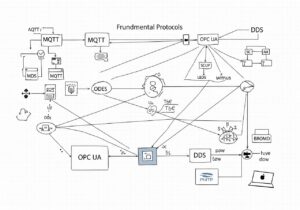
- 主要なプロトコルには、MQTT、OPC UA、およびDDSが含まれます。
- AIと5Gの統合は、業務運営に革命をもたらす。
- セキュリティには、リスクを軽減するための多層的な戦略が必要です。
- その用途は様々な産業に及び、効率性と安全性を向上させる。
IIoTの定義と主要構成要素
産業用IoT(IIoT)とは、スマートセンサー、デバイス、機械を産業プロセスに統合し、機器間のリアルタイムのデータ交換と通信を可能にするものです。これは、データを収集、監視、分析してパフォーマンスを最適化し、効率を高めるための接続されたデバイスのネットワークを伴います。IIoTは、機械が自律的に通信して業務を効率化し、生産性を向上させ、ダウンタイムを大幅に削減する「スマートファクトリー」の構築において大きな役割を果たします。
IIoTの中核となる構成要素には、データ収集と送信を容易にする高度なセンサー、アクチュエータ、および接続ソリューションが含まれます。これらの構成要素は、MQTT、CoAP、HTTPなどのさまざまな通信プロトコル上で動作し、デバイス間のシームレスな通信を可能にします。さらに、ゲートウェイデバイスは、センサーからの生データを送信前に処理します。
事実: エネルギーなどの業界では、IIoT(産業用IoT)によって業務効率が最大25%向上することが実証されている。
IoTとIIoTの主な違い
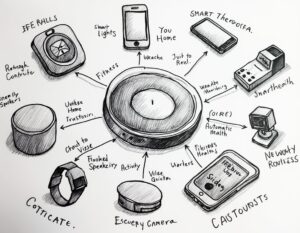
モノのインターネット(IoT)は、スマートサーモスタット、ウェアラブルデバイス、スマートホーム機器などの消費者向けデバイスの接続を主な目的としています。これらのデバイスは一般的に、ユーザーの日常生活における利便性と効率性を向上させるために利用されます。一方、産業用モノのインターネット(IIoT)は、製造機械やサプライチェーン物流などの産業用途を中心とし、産業環境における運用パフォーマンスの最適化、安全性の向上、信頼性の向上を目指しています。
Another differentiating factor lies in the scale and complexity of the systems involved. IoT solutions often address smaller networks of devices, which require straightforward integration and user interfaces. In contrast, IIoT involves large-scale systems within an industrial framework. These systems require advanced integration capabilities to manage complex data flows, interoperability among legacy machines, and seamless communication between various stakeholders, including suppliers, manufacturers, and service providers.
両ドメイン間では、セキュリティ要件が大きく異なる。
- 消費者向けIoTは、 ユーザーエクスペリエンス そして利便性、
- IIoTは、重要インフラに対するサイバー攻撃の潜在的な影響により、セキュリティニーズが高まっています。ハッカーが産業制御システムにアクセスした場合、操業が中断されたり、物理的な被害が発生したりする可能性があります。そのため、IIoTシステムでは、高度なセキュリティ対策を含む厳格なセキュリティプロトコルが実装されることがよくあります。 暗号化 機密データを不正アクセスから保護するために、認証方式や多要素認証を採用する。
IIoTシステムは、高い信頼性と可用性を実現するように設計されていますが、これは消費者向けIoTデバイスでは見落とされがちな点です。産業用途では通常、継続的な稼働が求められるため、IIoTソリューションは、予知保全と即時の障害検出によってダウンタイムを最小限に抑えるように設計されています。
産業現場に予知保全を導入することで、メンテナンスコストを25%から30%削減できるだけでなく、設備の稼働率を最大20%向上させることも可能となる。
データ管理の観点から見ると、IIoTはビッグデータ分析の活用を重視しており、組織が膨大なセンサーデータを精査して実用的な洞察を得ることを可能にする。一方、コンシューマーIoTもデータ駆動型ではあるが、よりシンプルな分析手法に依存する可能性がある。
| Concept | IoT (Internet of Things) | IIoT (Industrial Internet of Things) |
|---|---|---|
| 集中 | Connecting consumer devices (e.g., smart thermostats, wearables) | Industrial applications (e.g., manufacturing machines, supply chain logistics) |
| Primary Goals | Enhance user convenience and efficiency | Optimize operational performance, improve safety, increase reliability |
| Scale and Complexity | Smaller networks of devices, straightforward integration | Large-scale systems, advanced integration capabilities |
| Data Management | Simpler analytics | Big data analytics for actionable insights |
| Security Requirements | Prioritizes user experience and convenience | Heightened security needs with stringent protocols (e.g., encryption, multi-factor authentication) |
| Reliability and Availability | Less emphasis on continuous operation | Designed for high reliability and continuous operation, predictive maintenance |
| Productivity Impact | Not specifically mentioned | Can boost productivity levels by up to 30% |
| Cost Management | Not specifically mentioned | Predictive maintenance can reduce maintenance costs by 25% to 30% |
IIoT Architecture and Communication Protocols
The architecture of the Industrial Internet of Things (IIoT) can be broadly categorized into several layers, including the Edge Layer, Communication Layer, and Cloud Layer. In the Edge Layer, devices such as sensors and actuators collect data directly from manufacturing equipment or operational environments.
These devices may operate using low-power technologies like LoRaWAN or Zigbee. The Communication Layer facilitates data transmission between the edge devices and the cloud or on-premise servers, primarily through protocols such as MQTT, CoAP, and HTTP. This layered approach allows for effective data management and scaling as system requirements evolve.
| IoT (Internet of Things) | IIoT (Industrial Internet of Things) | |
|---|---|---|
| Data Volume | Typically lower data volume, focusing on individual consumer devices. | High data volume, involving numerous sensors and devices within industrial environments. |
| Protocols | HTTP, MQTT, CoAP, WebSocket. | OPC UA, MQTT, DDS, Profinet. |
Data generated in IIoT environments can be voluminous and complex. Utilizing protocols like OPC UA (Open Platform Communications Unified Architecture) enables interoperability among industrial systems. OPC UA allows devices from various manufacturers to communicate seamlessly, enhancing operational efficiency.
| Protocol | Use Case | 利点 |
|---|---|---|
| MQTT | Messaging for low-bandwidth devices | Lightweight, efficient |
| OPC UA | Device interoperability | Standardized, secure |
| HTTP | Web services | Widespread compatibility |
ヒント: Implementing a hybrid architecture combining edge and cloud computing can significantly enhance both data processing speed and system resilience.
Benefits and Impact of IIoT on Industries
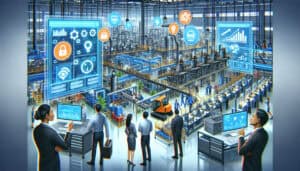
The integration of the Industrial Internet of Things (IIoT) into various industries has 導かれた to significant improvements in operational efficiency and productivity. By connecting machines and devices, manufacturers experience enhanced real-time monitoring and analytics, which result in better decision-making. This reduction directly correlates with increased production capacity and reduced operational costs, showing a clear pathway toward a more streamlined manufacturing process.
IIoT enhances asset management by enabling predictive maintenance strategies. Companies can track equipment performance and predict failures before they occur, thus minimizing unexpected downtime. A report by McKinsey highlighted that predictive maintenance can reduce maintenance costs by up to 25% and increase equipment 寿命 by 30%. This shift to proactive maintenance not only lowers costs but also ensures a more reliable operational environment.
The impact on energy and utilities sectors is tangible, particularly through smart grids that optimize energy consumption and distribution. These grids can reduce energy waste by approximately 10-15% through improved demand-response mechanisms. Additionally, organizations can better manage resources and anticipate peak loads. Below is a comparison of metrics before and after implementing IIoT in various sectors:
| Sector | Metric Before IIoT | Metric After IIoT |
|---|---|---|
| 製造業 | 20% downtime | 10% downtime |
| Utilities | 10% energy waste | 5% energy waste |
ヒント: utilizing edge computing alongside IIoT enhances data processing speeds and reduces latency, improving real-time analytics capabilities.
Security Challenges and Mitigation Strategies in IIoT

Security vulnerabilities in Industrial Internet of Things (IIoT) systems stem from a mix of interconnected devices, proprietary software, and outdated infrastructure. Data breaches can occur through insecure endpoints or during data transmission. For instance, a report indicated that 60% of IIoT devices have known vulnerabilities, making them prime targets for cyberattacks. Manufacturers must implement security measures like multi-factor authentication and encrypted communication protocols to safeguard sensitive data and maintain operational integrity.
A significant challenge in the IIoT ecosystem is the current lack of standardized security protocols across varied devices and networks.
Manufacturers need to adopt a security-by-design approach, which includes regular security assessments and updates for devices and systems.
ヒント: regular employee training on security awareness can significantly mitigate human error, a major contributor to security breaches. A survey found that 95% of サイバーセキュリティ incidents are due to human mistakes. Moreover, leveraging automated monitoring tools can help detect anomalies in network traffic, providing a real-time defense mechanism against potential threats.
Integration of IIoT with Emerging Technologies
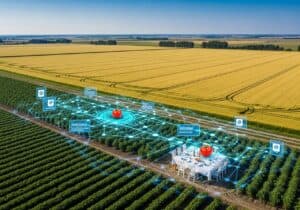
Integrating Artificial Intelligence (AI) with the Industrial Internet of Things (IIoT) significantly enhances predictive analytics and machine learning capabilities. Manufacturing plants employing AI-powered IIoT systems can analyze vast amounts of operational data. AI algorithms can dissect patterns and anomalies in the data collected from machinery, enhancing efficiency in processes such as quality control and equipment monitoring.
The convergence of IIoT with blockchain technology ensures enhanced data integrity and security in supply chain management. By using decentralized ledgers, organizations can create immutable records of transactions that enhance traceability.
Companies like IBM have successfully implemented blockchain in agriculture for tracking the journey of food products from farm to table, thus ensuring authenticity and safety. The integration of these technologies results in a more transparent and trustworthy food supply chain.
ヒント: when integrating emerging technologies with IIoT, consider employing API gateways to facilitate seamless communication between devices and applications. This approach enhances interoperability and fosters innovation within the system.
Prioritize Security: implement a multi-layered security approach, including network segmentation, encryption, and regular security audits to protect sensitive data and devices.
Design for Scalability: before implementing, ensure that your IIoT system can easily scale to accommodate new devices and increased data flow without major redesigns.
結論
As industries stand on the brink of a technological revolution, the Industrial Internet of Things (IIoT) plays a big role in redefining operational capabilities and efficiencies. By integrating devices that communicate and analyze data in real-time, companies are not only enhancing productivity but also creating new avenues for growth and innovation. The projected creation of $15 trillion in value by 2030 underscores the transformative impact IIoT will have across sectors.
よくある質問
産業用IoT(IIoT)の中核となる構成要素は何ですか?
IIoTの中核となる構成要素には、データを収集するセンサー、物理システムを制御するアクチュエータ、データ伝送のための接続性、洞察を得るためのデータ分析、そしてストレージと処理のためのクラウドコンピューティングまたはエッジコンピューティングが含まれる。
IoTとIIoTの主な違いは何ですか?
IoTは主にスマートホームなどの消費者向けアプリケーションに焦点を当てているのに対し、IIoTは産業プロセスやオペレーションを対象としています。IIoTは、製造・生産環境における効率性向上のため、信頼性、セキュリティ、リアルタイムデータ分析を重視しています。
一般的なIIoTアーキテクチャとその通信プロトコルとはどのようなものですか?
IIoTアーキテクチャは一般的に、デバイス層、エッジ層、データ層、アプリケーション層などのレイヤーで構成されます。通信プロトコルとしては、軽量メッセージング用のMQTT、産業用相互運用性のためのOPC UA、データ中心の通信のためのDDSなどが一般的に使用されます。
産業界にIIoT(産業用IoT)を導入する主なメリットは何ですか?
IIoTの利点としては、ダウンタイムを削減するための予知保全、リアルタイム監視による運用効率の向上、安全プロトコルの強化、そして収益を生み出すための新しいビジネスモデルの開発などが挙げられる。
IIoT環境にはどのようなセキュリティ上の課題がありますか?
IIoT(産業用IoT)環境は、データ漏洩、不正アクセス、デバイスの脆弱性といったセキュリティ上の課題に直面しています。これらの課題に対処するための戦略としては、強力な暗号化の実装、定期的なソフトウェアアップデート、多要素認証などが挙げられます。
さまざまな業界におけるIIoTの実際の活用事例を教えていただけますか?
In manufacturing, IIoT is used for predictive maintenance and asset management. In agriculture, it enables precision farming and automated irrigation. Transportation examples include fleet management and supply chain optimization, while in healthcare, IIoT aids equipment management.
IIoTは新興技術とどのように統合されるのか?
IIoT integrates closely with AI/ML for data analytics, digital twins for real-time simulation, and 5G for high-speed connectivity, enhancing capabilities across smart factories and various operational processes.
関連トピック
- デジタルツイン テクノロジー: 分析やシミュレーションに使用される、物理的な資産やシステムの仮想的な表現。
- エッジコンピューティング: 遅延と帯域幅の使用量を削減するために、データを発生源に近い場所で処理する。
- 相互運用性標準規格: 異なるデバイスやシステムがシームレスに連携できるようにするフレームワーク。
- スマートマニュファクチャリング: 生産プロセスにおける効率性と柔軟性を向上させるために、IIoT(産業用IoT)を取り入れたアプローチ。
- リモート監視: IIoT技術を用いて、遠隔地から機器を監視・管理する。
- 予測分析: 統計アルゴリズムと機械学習技術を活用して、データからリスクと機会を特定する。
- サプライチェーン統合: IIoT(産業用IoT)を活用してサプライチェーンの様々な要素を接続することで、透明性と効率性を向上させる。
- Automation and Robotics: employing robotic systems in conjunction with IIoT to enhance operational performance.
- 強靭なネットワーク: 障害発生時にも機能を維持できる通信ネットワークを構築する。
- リアルタイムデータ処理: 生成されたデータを即座に処理・分析し、迅速な洞察と行動につなげる。
- 従業員の能力強化: 従業員にリアルタイムの情報と洞察を提供し、生産性を向上させるIIoTソリューションを統合する。
- Data Visualization Tools: 複雑なデータセットを、解釈や分析を容易にするための視覚的な形式に変換するソフトウェア。
- Cybersecurity Frameworks: IIoTシステムをサイバー脅威や脆弱性から保護するために設計された戦略。
External Links on Industrial Internet Of Things (IIoT)
国際規格
(リンクにカーソルを合わせると、コンテンツの説明が表示されます)
用語集
Application Programming Interface (API): 異なるソフトウェアアプリケーションが相互に通信し、連携することを可能にする一連の規則とプロトコルであり、システム間の機能統合とデータ交換を可能にする。
Certificate of Analysis (CoA): a document issued by a manufacturer or testing laboratory that confirms a product's specifications, quality, and compliance with regulatory standards, detailing test results and methods used for analysis.
Hypertext Transfer Protocol (HTTP): インターネットを介してハイパーテキストを送信するために使用されるプロトコルであり、Webブラウザとサーバー間の通信を可能にする。リクエストとレスポンスのフォーマットを定義し、HTMLドキュメント、画像、その他のメディアなどのWebリソースの取得を容易にする。
Industrial Internet of Things (IIoT): 産業環境における相互接続されたデバイスとセンサーのネットワークであり、データを収集、交換、分析することで、業務効率の向上、意思決定の改善、製造、サプライチェーン、その他の産業プロセスにおける自動化を実現する。
Internet of Things (IoT): センサー、ソフトウェア、その他の技術が組み込まれた相互接続されたデバイスのネットワークであり、インターネットを介してデータを収集および交換することを可能にし、さまざまなプロセスやシステムの自動化、監視、および制御を容易にする。
Multi-Factor Authentication (MFA): ユーザーを認証するために、独立したカテゴリの認証情報から2つ以上の検証方法を必要とするセキュリティプロセスであり、不正アクセスに対する保護を強化する。一般的な要素としては、ユーザーが知っていること、所有していること、またはユーザー自身であることなどが挙げられる。
Optical Proximity Correction (OPC): 半導体製造時の光学的な歪みを補正するためにマスクパターンを修正するリソグラフィ強化技術であり、露光および現像後に所望の寸法となるように形状とサイズを調整することで、シリコンウェハ上のパターンの忠実度を向上させる。
User experience (UX): the overall satisfaction and perception of a user when interacting with a product, system, or service, encompassing usability, accessibility, design, and emotional response throughout the entire interaction process.
User Interface (UI): a system that enables interaction between users and software applications, encompassing visual elements, controls, and overall layout to facilitate user tasks and enhance experience.
Wide Area Network (WAN): 広範囲の地理的領域に広がる電気通信ネットワークであり、複数のローカルエリアネットワーク(LAN)を接続し、都市、国、または大陸をまたいだデータ伝送を可能にするもので、通常は専用線または衛星回線を使用する。
































