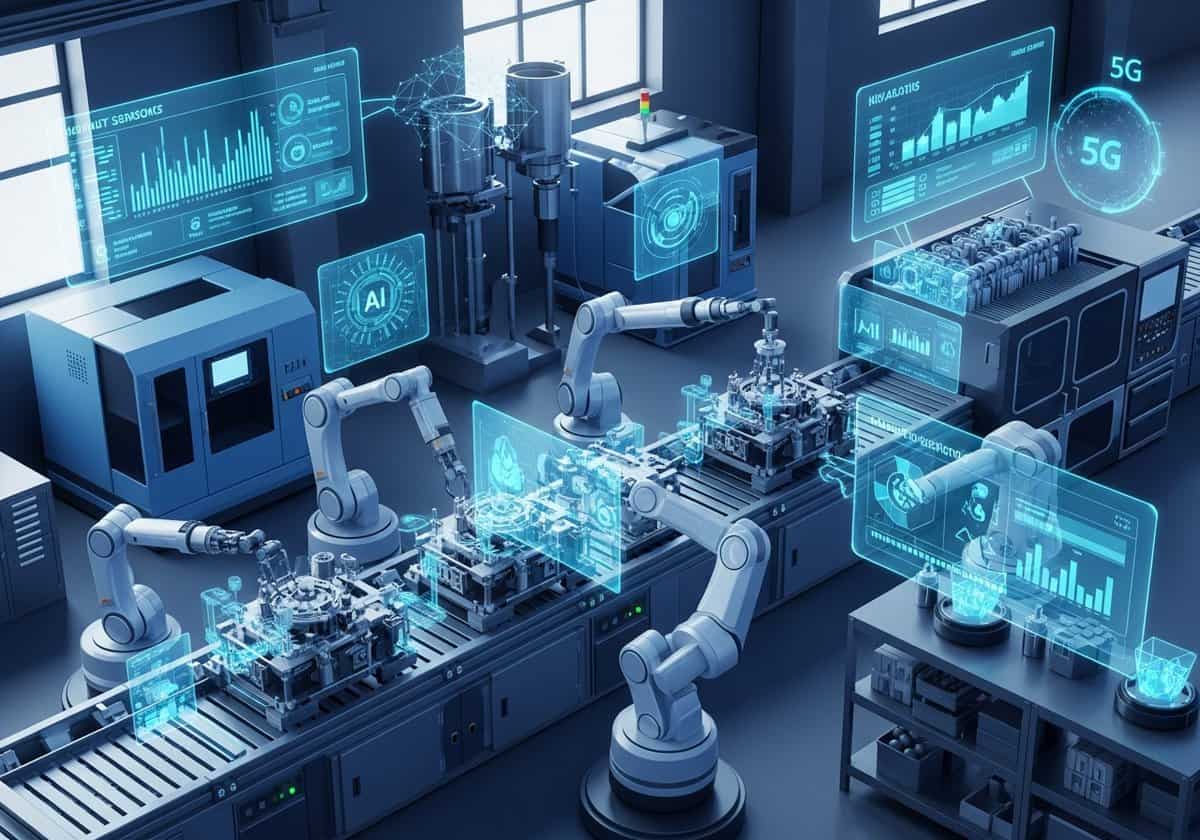
The Industrial Internet of Things (IIoT) is transforming industries by integrating advanced technologies into manufacturing and operational processes, with studies suggesting that IIoT could create $15 trillion in value by 2030 (McKinsey & Company). This article breaks down the definition and core components of IIoT, including sensors, actuators, and data analytics. You’ll discover the key differences between IoT and IIoT, as well as the architecture and communication protocols that form the backbone of IIoT systems, such as MQTT and OPC UA. We will analyze the manifold benefits, including predictive maintenance and enhanced safety measures, while addressing the security challenges that arise in IIoT environments and strategies for mitigation.
Key Takeaways
- IIoT enhances traditional manufacturing through connectivity.
- Predictions enable proactive maintenance and reduce downtime.
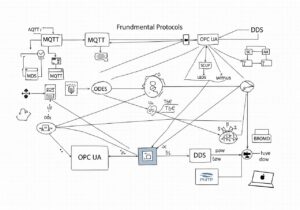
- Key protocols include MQTT, OPC UA, and DDS.
- Integration with AI and 5G revolutionizes operations.
- Security requires layered strategies to mitigate risks.
- Applications span across industries, enhancing efficiency and safety.
Definition and Core Components of IIoT
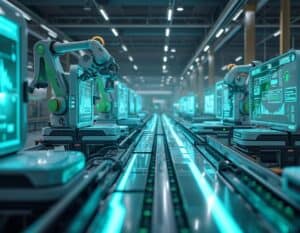
Industrial Internet of Things (IIoT) refers to the integration of smart sensors, devices, and machinery into industrial processes, enabling real-time data exchange and communication among equipment. It involves a network of connected devices that gather, monitor, and analyze data to optimize performance and increase efficiency. IIoT plays a big role in creating “smart factories,” where machinery communicates autonomously to streamline operations, enhance productivity, and reduce downtime significantly.
Core components of IIoT include advanced sensors, actuators, and connectivity solutions that facilitate data collection and transmission. These components operate on a variety of communication protocols such as MQTT, CoAP, and HTTP, allowing seamless inter-device communication. Additionally, gateway devices process raw data from sensors before transmission.
Fact: in industries like energy, IIoT has been shown to improve operational efficiency by as much as 25%.
The rest of this article is reserved for members
To limit scraping bots (currently 40,000 hits per day!),
we had to restrict access to full articles and tools to registered members only.
to access all the rest.