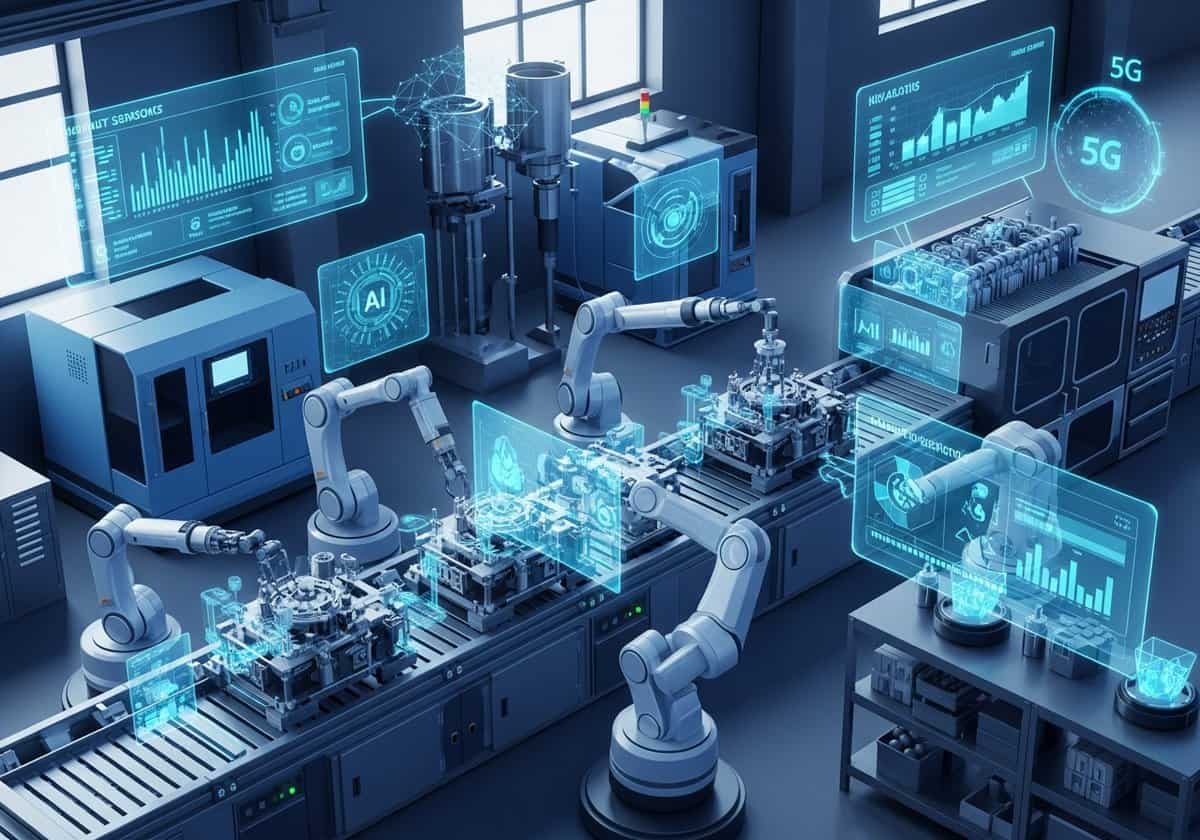
L'Internet industriel des objets (IIoT) transforme les industries en intégrant des technologies de pointe dans les processus de fabrication et d'exploitation, des études suggérant que l'IIoT pourrait créer $15 trillions de valeur d'ici 2030 (McKinsey & Company). Cet article présente la définition et les principaux composants de l'IIoT, notamment les capteurs, les actionneurs et l'analyse des données. Vous découvrirez les principales différences entre IoT and IIoT, as well as the architecture and communication protocols that form the backbone of IIoT systems, such as MQTT and OPC UA. We will analyze the manifold benefits, including predictive maintenance and enhanced safety measures, while addressing the security challenges that arise in IIoT environments and strategies for mitigation.
A Retenir
- IIoT enhances traditional manufacturing through connectivity.
- Predictions enable proactive maintenance and reduce downtime.
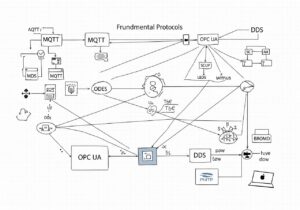
- Key protocols include MQTT, OPC UA, and DDS.
- Integration with AI and 5G revolutionizes operations.
- Security requires layered strategies to mitigate risks.
- Applications span across industries, enhancing efficiency and safety.
Definition and Core Components of IIoT
L'Internet industriel des objets (IIoT) fait référence à l'intégration de capteurs, d'appareils et de machines intelligents dans les processus industriels, permettant l'échange de données en temps réel et la communication entre les équipements. Il s'agit d'un réseau d'appareils connectés qui recueillent, surveillent et analysent les données afin d'optimiser les performances et d'accroître l'efficacité. L'IIoT joue un rôle important dans la création d'"usines intelligentes", où les machines communiquent de manière autonome pour rationaliser les opérations, améliorer la productivité et réduire considérablement les temps d'arrêt.
Core components of IIoT include advanced sensors, actuators, and connectivity solutions that facilitate data collection and transmission. These components operate on a variety of communication protocols such as MQTT, CoAP, and HTTP, allowing seamless inter-device communication. Additionally, gateway devices process raw data from sensors before transmission.
Fact: in industries like energy, IIoT has been shown to improve operational efficiency by as much as 25%.
Key Differences Between IoT and IIoT
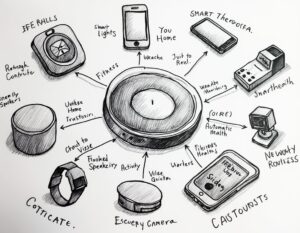
The Internet of Things (IoT) primarily focuses on connecting consumer devices, such as smart thermostats, wearables, and smart home gadgets. These devices are generally utilized to enhance user convenience and efficiency in daily activities. The Industrial Internet of Things (IIoT), on the other hand, centers around industrial applications, such as manufacturing machines and supply chain logistics, aiming to optimize operational performance, improve safety, and increase reliability in industrial settings.
Another differentiating factor lies in the scale and complexity of the systems involved. IoT solutions often address smaller networks of devices, which require straightforward integration and user interfaces. In contrast, IIoT involves large-scale systems within an industrial framework. These systems require advanced integration capabilities to manage complex data flows, interoperability among legacy machines, and seamless communication between various stakeholders, including suppliers, manufacturers, and service providers.
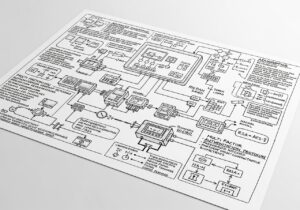
Security requirements differ significantly between the two domains:
- L'IdO grand public peut donner la priorité expérience utilisateur et la commodité,
- Les besoins en matière de sécurité de l'IIoT sont accrus en raison des conséquences potentielles des cyberattaques sur les infrastructures critiques. Des pirates informatiques accédant à un système de contrôle industriel pourraient perturber les opérations ou causer des dommages physiques. Par conséquent, les systèmes IIoT mettent souvent en œuvre des protocoles de sécurité rigoureux, y compris des systèmes de sécurité avancés. cryptage et l'authentification multifactorielle, afin de protéger les données sensibles contre tout accès non autorisé.
IIoT systems are also designed for high reliability and availability, which can often be overlooked with consumer-oriented IoT devices. Industrial applications typically require continuous operation, and therefore, IIoT solutions are engineered to minimize downtime through predictive maintenance and immediate fault detection.
Implementing predictive maintenance in industrial settings can reduce maintenance costs by 25% to 30% while increasing equipment availability by up to 20%.
In terms of data management, IIoT emphasizes the use of big data analytics, enabling organizations to sift through vast amounts of sensor data to gain actionable insights. Consumer IoT, while still data-driven, may depend on simpler analytics.
| Concept | IoT (Internet of Things) | IIoT (Industrial Internet of Things) |
|---|---|---|
| Se concentrer | Connecting consumer devices (e.g., smart thermostats, wearables) | Industrial applications (e.g., manufacturing machines, supply chain logistics) |
| Primary Goals | Enhance user convenience and efficiency | Optimize operational performance, improve safety, increase reliability |
| Scale and Complexity | Smaller networks of devices, straightforward integration | Large-scale systems, advanced integration capabilities |
| Data Management | Simpler analytics | Big data analytics for actionable insights |
| Security Requirements | Prioritizes user experience and convenience | Heightened security needs with stringent protocols (e.g., encryption, multi-factor authentication) |
| Reliability and Availability | Less emphasis on continuous operation | Designed for high reliability and continuous operation, predictive maintenance |
| Productivity Impact | Not specifically mentioned | Can boost productivity levels by up to 30% |
| Cost Management | Not specifically mentioned | Predictive maintenance can reduce maintenance costs by 25% to 30% |
IIoT Architecture and Communication Protocols
The architecture of the Industrial Internet of Things (IIoT) can be broadly categorized into several layers, including the Edge Layer, Communication Layer, and Cloud Layer. In the Edge Layer, devices such as sensors and actuators collect data directly from manufacturing equipment or operational environments.
These devices may operate using low-power technologies like LoRaWAN or Zigbee. The Communication Layer facilitates data transmission between the edge devices and the cloud or on-premise servers, primarily through protocols such as MQTT, CoAP, and HTTP. This layered approach allows for effective data management and scaling as system requirements evolve.
| IoT (Internet of Things) | IIoT (Industrial Internet of Things) | |
|---|---|---|
| Data Volume | Typically lower data volume, focusing on individual consumer devices. | High data volume, involving numerous sensors and devices within industrial environments. |
| Protocols | HTTP, MQTT, CoAP, WebSocket. | OPC UA, MQTT, DDS, Profinet. |
Data generated in IIoT environments can be voluminous and complex. Utilizing protocols like OPC UA (Open Platform Communications Unified Architecture) enables interoperability among industrial systems. OPC UA allows devices from various manufacturers to communicate seamlessly, enhancing operational efficiency.
| Protocol | Use Case | Advantages |
|---|---|---|
| MQTT | Messaging for low-bandwidth devices | Lightweight, efficient |
| OPC UA | Device interoperability | Standardized, secure |
| HTTP | Web services | Widespread compatibility |
Conseil: Implementing a hybrid architecture combining edge and cloud computing can significantly enhance both data processing speed and system resilience.
Benefits and Impact of IIoT on Industries
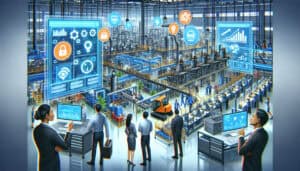
L'intégration de l'Internet industriel des objets (IIoT) dans diverses industries a... dirigé à des améliorations significatives de l'efficacité opérationnelle et de la productivité. En connectant les machines et les appareils, les fabricants bénéficient d'une surveillance et d'une analyse en temps réel améliorées, ce qui se traduit par une meilleure prise de décision. Cette réduction est directement liée à l'augmentation de la capacité de production et à la réduction des coûts d'exploitation, ce qui montre clairement la voie vers un processus de fabrication plus rationalisé.
L'IIoT améliore la gestion des actifs en permettant des stratégies de maintenance prédictive. Les entreprises peuvent suivre les performances des équipements et prévoir les défaillances avant qu'elles ne se produisent, minimisant ainsi les temps d'arrêt imprévus. Un rapport de McKinsey a souligné que la maintenance prédictive peut réduire les coûts de maintenance jusqu'à 25% et augmenter les équipements. durée de vie par 30%. Ce passage à une maintenance proactive permet non seulement de réduire les coûts, mais aussi de garantir un environnement opérationnel plus fiable.
The impact on energy and utilities sectors is tangible, particularly through smart grids that optimize energy consumption and distribution. These grids can reduce energy waste by approximately 10-15% through improved demand-response mechanisms. Additionally, organizations can better manage resources and anticipate peak loads. Below is a comparison of metrics before and after implementing IIoT in various sectors:
| Sector | Metric Before IIoT | Metric After IIoT |
|---|---|---|
| Fabrication | 20% downtime | 10% downtime |
| Utilities | 10% energy waste | 5% energy waste |
Conseil: utilizing informatique en périphérie alongside IIoT enhances data processing speeds and reduces latency, improving real-time analytics capabilities.
Security Challenges and Mitigation Strategies in IIoT

Security vulnerabilities in Industrial Internet of Things (IIoT) systems stem from a mix of interconnected devices, proprietary software, and outdated infrastructure. Data breaches can occur through insecure endpoints or during data transmission. For instance, a report indicated that 60% of IIoT devices have known vulnerabilities, making them prime targets for cyberattacks. Manufacturers must implement security measures like multi-factor authentication and encrypted communication protocols to safeguard sensitive data and maintain operational integrity.
A significant challenge in the IIoT ecosystem is the current lack of standardized security protocols across varied devices and networks.
Manufacturers need to adopt a security-by-design approach, which includes regular security assessments and updates for devices and systems.
Conseil: La formation régulière des employés à la sensibilisation à la sécurité peut réduire considérablement l'erreur humaine, qui est l'un des principaux facteurs de violation de la sécurité. Une enquête a révélé que 95% des cybersécurité sont dus à des erreurs humaines. En outre, l'utilisation d'outils de surveillance automatisés peut aider à détecter les anomalies dans le trafic du réseau, fournissant ainsi un mécanisme de défense en temps réel contre les menaces potentielles.
Integration of IIoT with Emerging Technologies
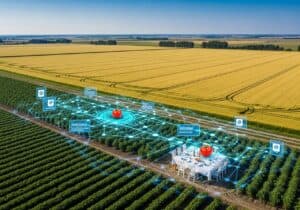
Integrating Artificial Intelligence (AI) with the Industrial Internet of Things (IIoT) significantly enhances predictive analytics and machine learning capabilities. Manufacturing plants employing AI-powered IIoT systems can analyze vast amounts of operational data. AI algorithms can dissect patterns and anomalies in the data collected from machinery, enhancing efficiency in processes such as quality control and equipment monitoring.
The convergence of IIoT with blockchain technology ensures enhanced data integrity and security in supply chain management. By using decentralized ledgers, organizations can create immutable records of transactions that enhance traceability.
Companies like IBM have successfully implemented blockchain in agriculture for tracking the journey of food products from farm to table, thus ensuring authenticity and safety. The integration of these technologies results in a more transparent and trustworthy food supply chain.
Conseils: when integrating emerging technologies with IIoT, consider employing API gateways to facilitate seamless communication between devices and applications. This approach enhances interoperability and fosters innovation within the system.
Prioritize Security: implement a multi-layered security approach, including network segmentation, encryption, and regular security audits to protect sensitive data and devices.
Design for Scalability: before implementing, ensure that your IIoT system can easily scale to accommodate new devices and increased data flow without major redesigns.
Conclusion
As industries stand on the brink of a technological revolution, the Industrial Internet of Things (IIoT) plays a big role in redefining operational capabilities and efficiencies. By integrating devices that communicate and analyze data in real-time, companies are not only enhancing productivity but also creating new avenues for growth and innovation. The projected creation of $15 trillion in value by 2030 underscores the transformative impact IIoT will have across sectors.
FAQ
What are the core components of the Industrial Internet of Things (IIoT)?
The core components of IIoT include sensors that collect data, actuators that control physical systems, connectivity for data transmission, data analytics for insights, and cloud or edge computing for storage and processing.
What are the key differences between IoT and IIoT?
IoT primarily focuses on consumer applications like smart homes, whereas IIoT targets industrial processes and operations. IIoT emphasizes reliability, security, and real-time data analytics for enhanced efficiency in manufacturing and production environments.
What is the typical IIoT architecture and its communication protocols?
IIoT architecture generally includes layers such as device, edge, data, and application layers. Communication protocols commonly used are MQTT for lightweight messaging, OPC UA for industrial interoperability, and DDS for data-centric communication.
What are the main benefits of implementing IIoT in industries?
The benefits of IIoT include predictive maintenance to reduce downtime, increased operational efficiency through real-time monitoring, enhanced safety protocols, and the development of new business models for generating revenue.
What security challenges are associated with IIoT environments?
IIoT environments face security challenges such as data breaches, unauthorized access, and device vulnerabilities. Mitigation strategies include implementing strong encryption, regular software updates, and multi-factor authentication.
Can you provide real-world use cases of IIoT in various industries?
In manufacturing, IIoT is used for predictive maintenance and asset management. In agriculture, it enables precision farming and automated irrigation. Transportation examples include fleet management and supply chain optimization, while in healthcare, IIoT aids equipment management.
How does IIoT integrate with emerging technologies?
IIoT integrates closely with AI/ML for data analytics, jumeaux numériques for real-time simulation, and 5G for high-speed connectivity, enhancing capabilities across smart factories and various operational processes.
Sujets connexes
- Digital Twin Technologie : a virtual representation of physical assets or systems used for analysis and simulation.
- Edge Computing: processing data closer to the source to reduce latency and bandwidth use.
- Interoperability Standards: frameworks that ensure different devices and systems can work together seamlessly.
- Smart Manufacturing: an approach that incorporates IIoT for increased efficiency and flexibility in production processes.
- Remote Monitoring: observing and managing equipment from a distance using IIoT technologies.
- Predictive Analytics: utilizing statistical algorithms and machine learning techniques to identify risks and opportunities from data.
- Supply Chain Integration: connecting various elements of the supply chain using IIoT for improved transparency and efficiency.
- Automation and Robotics: employing robotic systems in conjunction with IIoT to enhance operational performance.
- Resilient Networks: creating communication networks capable of withstanding failures while maintaining functionality.
- Real-time Data Processing: handling and analyzing data as it is generated for immediate insight and action.
- Workforce Empowerment: integrating IIoT solutions that provide workers with real-time information and insights to enhance productivity.
- Data Visualization Outils : software that converts complex data sets into visual formats for easier interpretation and analysis.
- Cybersecurity Frameworks: strategies designed to protect IIoT systems against cyber threats and vulnerabilities.
Liens externes sur l'internet industriel des objets (IIoT)
Normes internationales
(survolez le lien pour voir notre description du contenu)
Glossaire des termes utilisés
Application Programming Interface (API): un ensemble de règles et de protocoles qui permet à différentes applications logicielles de communiquer et d'interagir entre elles, permettant l'intégration de fonctionnalités et l'échange de données entre les systèmes.
Certificate of Analysis (CoA): un document émis par un fabricant ou un laboratoire d'essais qui confirme les spécifications, la qualité et la conformité d'un produit aux normes réglementaires, détaillant les résultats des tests et les méthodes utilisées pour l'analyse.
Hypertext Transfer Protocol (HTTP): Protocole utilisé pour la transmission d'hypertexte via Internet, il permet la communication entre les navigateurs web et les serveurs. Il définit les formats de requête et de réponse, facilitant ainsi la récupération de ressources web telles que les documents HTML, les images et autres médias.
Industrial Internet of Things (IIoT): un réseau d'appareils et de capteurs interconnectés dans des environnements industriels qui collectent, échangent et analysent des données pour améliorer l'efficacité opérationnelle, améliorer la prise de décision et permettre l'automatisation de la fabrication, de la chaîne d'approvisionnement et d'autres processus industriels.
Internet of Things (IoT): un réseau d'appareils interconnectés dotés de capteurs, de logiciels et d'autres technologies qui leur permettent de collecter et d'échanger des données sur Internet, facilitant ainsi l'automatisation, la surveillance et le contrôle de divers processus et systèmes.
Multi-Factor Authentication (MFA): Processus de sécurité qui requiert au moins deux méthodes de vérification, issues de catégories d'identifiants indépendantes, pour authentifier un utilisateur, renforçant ainsi la protection contre les accès non autorisés. Les facteurs communs incluent ce que l'utilisateur connaît, possède ou est.
Optical Proximity Correction (OPC): une technique d'amélioration de la lithographie qui modifie les motifs du masque pour compenser les distorsions optiques lors de la fabrication des semi-conducteurs, améliorant ainsi la fidélité des caractéristiques sur les plaquettes de silicium en ajustant les formes et les tailles des caractéristiques pour obtenir les dimensions souhaitées après exposition et développement.
User experience (UX): la satisfaction globale et la perception d'un utilisateur lors de l'interaction avec un produit, un système ou un service, englobant la convivialité, l'accessibilité, la conception et la réponse émotionnelle tout au long du processus d'interaction.
User Interface (UI): un système qui permet l'interaction entre les utilisateurs et les applications logicielles, englobant des éléments visuels, des contrôles et une disposition générale pour faciliter les tâches de l'utilisateur et améliorer l'expérience.
Wide Area Network (WAN): un réseau de télécommunications qui s'étend sur une vaste zone géographique, connectant plusieurs réseaux locaux (LAN) et permettant la transmission de données à travers des villes, des pays ou des continents, généralement à l'aide de lignes de télécommunications louées ou de liaisons par satellite.
































