The Industrial Internet of Things (IIoT) is transforming industries by integrating advanced technologies into manufacturing and operational processes, with studies suggesting that IIoT could create $15 trillion in value by 2030 (McKinsey & Company). This article breaks down the definition and core components of IIoT, including sensors, actuators, and data analytics. You’ll discover the key differences between IoT and IIoT, as well as the architecture and communication protocols that form the backbone of IIoT systems, such as MQTT and OPC UA. We will analyze the manifold benefits, including predictive maintenance and enhanced safety measures, while addressing the security challenges that arise in IIoT environments and strategies for mitigation.
핵심 요약
- IIoT는 연결성을 통해 전통적인 제조 방식을 향상시킵니다.
- 예측 기능을 통해 사전 예방적 유지보수가 가능하고 가동 중지 시간을 줄일 수 있습니다.
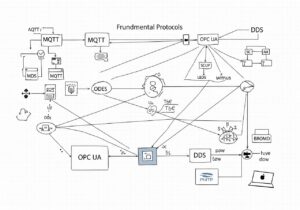
- 주요 프로토콜에는 MQTT, OPC UA 및 DDS가 포함됩니다.
- AI와 5G의 통합은 운영 방식을 혁신적으로 변화시킵니다.
- 보안을 위해서는 위험을 완화하기 위한 다층적인 전략이 필요합니다.
- 다양한 산업 분야에 적용되어 효율성과 안전성을 향상시킵니다.
산업용 사물 인터넷(IIoT)의 정의 및 핵심 구성 요소
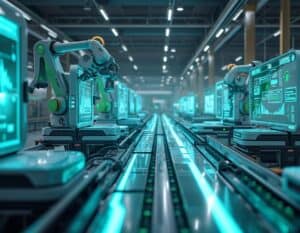
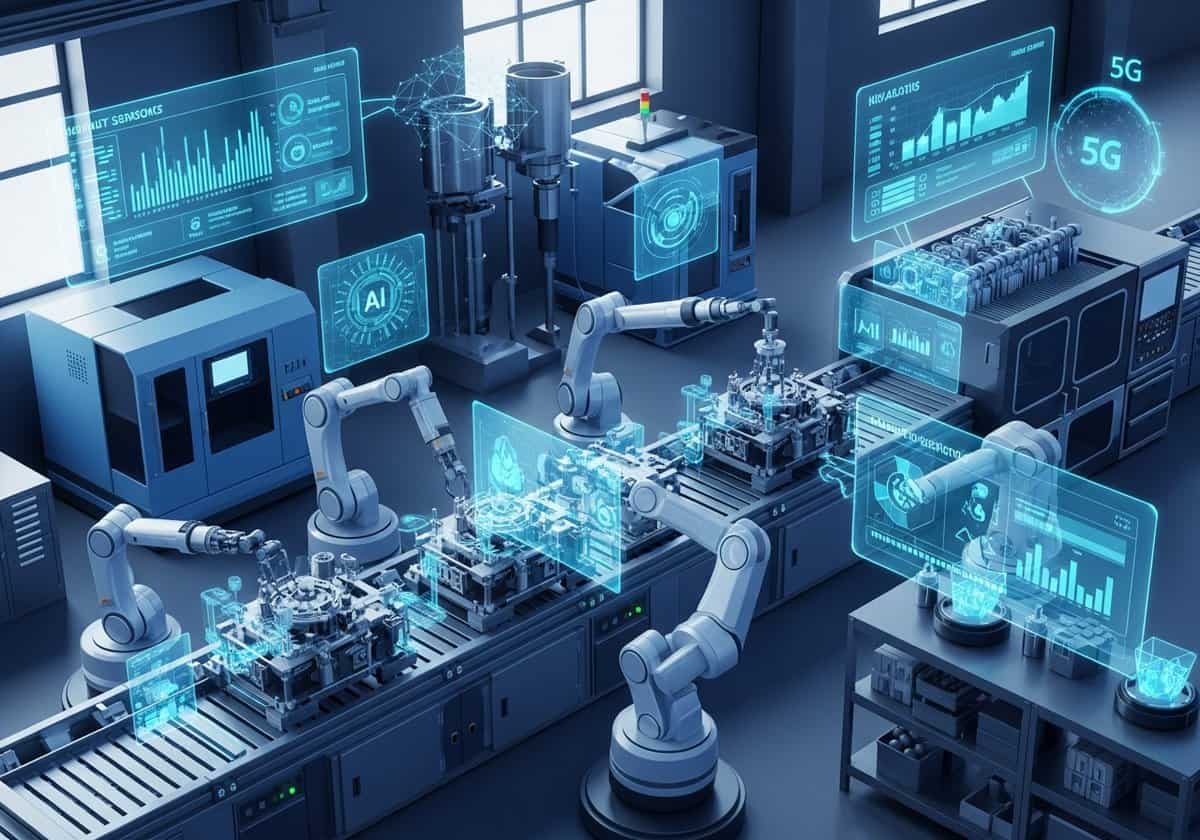
산업용 사물 인터넷(IIoT)은 스마트 센서, 장치 및 기계를 산업 공정에 통합하여 장비 간 실시간 데이터 교환 및 통신을 가능하게 하는 기술입니다. IIoT는 연결된 장치 네트워크를 통해 데이터를 수집, 모니터링 및 분석하여 성능을 최적화하고 효율성을 향상시킵니다. 기계들이 자율적으로 통신하여 운영을 간소화하고 생산성을 높이며 가동 중지 시간을 크게 줄이는 '스마트 공장' 구현에 중요한 역할을 합니다.
산업용 사물 인터넷(IIoT)의 핵심 구성 요소에는 데이터 수집 및 전송을 용이하게 하는 고급 센서, 액추에이터 및 연결 솔루션이 포함됩니다. 이러한 구성 요소는 MQTT, CoAP, HTTP와 같은 다양한 통신 프로토콜을 사용하여 장치 간 원활한 통신을 가능하게 합니다. 또한 게이트웨이 장치는 센서에서 수집된 원시 데이터를 전송 전에 처리합니다.
사실: 에너지와 같은 산업 분야에서 IIoT는 운영 효율성을 최대 25%까지 향상시키는 것으로 나타났습니다.
IoT와 IIoT의 주요 차이점
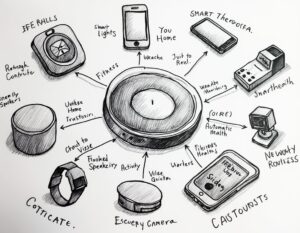
사물인터넷(IoT)은 주로 스마트 온도 조절기, 웨어러블 기기, 스마트 홈 기기 등 소비자 기기를 연결하는 데 중점을 둡니다. 이러한 기기들은 일반적으로 사용자의 일상 활동에서 편의성과 효율성을 향상시키는 데 활용됩니다. 반면 산업용 사물인터넷(IIoT)은 제조 기계 및 공급망 물류와 같은 산업 분야에 초점을 맞춰 산업 현장에서 운영 성능을 최적화하고 안전성을 향상시키며 신뢰성을 높이는 것을 목표로 합니다.
Another differentiating factor lies in the scale and complexity of the systems involved. IoT solutions often address smaller networks of devices, which require straightforward integration and user interfaces. In contrast, IIoT involves large-scale systems within an industrial framework. These systems require advanced integration capabilities to manage complex data flows, interoperability among legacy machines, and seamless communication between various stakeholders, including suppliers, manufacturers, and service providers.
두 영역의 보안 요구 사항은 상당히 다릅니다.
- 소비자 IoT는 우선순위를 정할 수 있습니다. 사용자 경험 그리고 편리함,
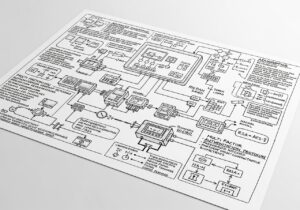
- 산업용 사물 인터넷(IIoT)은 중요 인프라에 대한 사이버 공격의 잠재적 결과 때문에 보안 요구 사항이 더욱 높아졌습니다. 해커가 산업 제어 시스템에 접근하면 운영이 중단되거나 물리적 피해가 발생할 수 있습니다. 따라서 IIoT 시스템은 고급 보안 프로토콜을 포함한 엄격한 보안 기술을 구현하는 경우가 많습니다. 암호화 민감한 데이터를 무단 접근으로부터 보호하기 위해 다양한 방법과 다중 요소 인증을 사용합니다.
산업용 사물 인터넷(IIoT) 시스템은 소비자용 IoT 기기에서 종종 간과되는 높은 신뢰성과 가용성을 고려하여 설계됩니다. 산업용 애플리케이션은 일반적으로 지속적인 운영을 요구하므로, IIoT 솔루션은 예측 유지보수와 즉각적인 오류 감지를 통해 가동 중지 시간을 최소화하도록 설계됩니다.
산업 현장에서 예측 유지보수를 도입하면 유지보수 비용을 25~30% 절감하는 동시에 장비 가용성을 최대 20%까지 높일 수 있습니다.
데이터 관리 측면에서 산업용 사물 인터넷(IIoT)은 빅데이터 분석 활용을 강조하여 기업이 방대한 센서 데이터를 분석하고 실행 가능한 통찰력을 얻을 수 있도록 합니다. 소비자용 사물 인터넷(Consumer IoT) 역시 데이터 기반이지만, 보다 단순한 분석 방식에 의존할 수 있습니다.
| Concept | IoT (Internet of Things) | IIoT (Industrial Internet of Things) |
|---|---|---|
| 집중하다 | Connecting consumer devices (e.g., smart thermostats, wearables) | Industrial applications (e.g., manufacturing machines, supply chain logistics) |
| Primary Goals | Enhance user convenience and efficiency | Optimize operational performance, improve safety, increase reliability |
| Scale and Complexity | Smaller networks of devices, straightforward integration | Large-scale systems, advanced integration capabilities |
| Data Management | Simpler analytics | Big data analytics for actionable insights |
| Security Requirements | Prioritizes user experience and convenience | Heightened security needs with stringent protocols (e.g., encryption, multi-factor authentication) |
| Reliability and Availability | Less emphasis on continuous operation | Designed for high reliability and continuous operation, predictive maintenance |
| Productivity Impact | Not specifically mentioned | Can boost productivity levels by up to 30% |
| Cost Management | Not specifically mentioned | Predictive maintenance can reduce maintenance costs by 25% to 30% |
IIoT Architecture and Communication Protocols
The architecture of the Industrial Internet of Things (IIoT) can be broadly categorized into several layers, including the Edge Layer, Communication Layer, and Cloud Layer. In the Edge Layer, devices such as sensors and actuators collect data directly from manufacturing equipment or operational environments.
These devices may operate using low-power technologies like LoRaWAN or Zigbee. The Communication Layer facilitates data transmission between the edge devices and the cloud or on-premise servers, primarily through protocols such as MQTT, CoAP, and HTTP. This layered approach allows for effective data management and scaling as system requirements evolve.
| IoT (Internet of Things) | IIoT (Industrial Internet of Things) | |
|---|---|---|
| Data Volume | Typically lower data volume, focusing on individual consumer devices. | High data volume, involving numerous sensors and devices within industrial environments. |
| Protocols | HTTP, MQTT, CoAP, WebSocket. | OPC UA, MQTT, DDS, Profinet. |
Data generated in IIoT environments can be voluminous and complex. Utilizing protocols like OPC UA (Open Platform Communications Unified Architecture) enables interoperability among industrial systems. OPC UA allows devices from various manufacturers to communicate seamlessly, enhancing operational efficiency.
| Protocol | Use Case | 장점 |
|---|---|---|
| MQTT | Messaging for low-bandwidth devices | Lightweight, efficient |
| OPC UA | Device interoperability | Standardized, secure |
| HTTP | Web services | Widespread compatibility |
팁: Implementing a hybrid architecture combining edge and cloud computing can significantly enhance both data processing speed and system resilience.
Benefits and Impact of IIoT on Industries
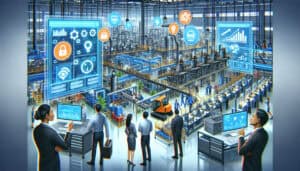
The integration of the Industrial Internet of Things (IIoT) into various industries has ~ 주도의 to significant improvements in operational efficiency and productivity. By connecting machines and devices, manufacturers experience enhanced real-time monitoring and analytics, which result in better decision-making. This reduction directly correlates with increased production capacity and reduced operational costs, showing a clear pathway toward a more streamlined manufacturing process.
IIoT enhances asset management by enabling predictive maintenance strategies. Companies can track equipment performance and predict failures before they occur, thus minimizing unexpected downtime. A report by McKinsey highlighted that predictive maintenance can reduce maintenance costs by up to 25% and increase equipment 수명 by 30%. This shift to proactive maintenance not only lowers costs but also ensures a more reliable operational environment.
The impact on energy and utilities sectors is tangible, particularly through smart grids that optimize energy consumption and distribution. These grids can reduce energy waste by approximately 10-15% through improved demand-response mechanisms. Additionally, organizations can better manage resources and anticipate peak loads. Below is a comparison of metrics before and after implementing IIoT in various sectors:
| Sector | Metric Before IIoT | Metric After IIoT |
|---|---|---|
| 조작 | 20% downtime | 10% downtime |
| Utilities | 10% energy waste | 5% energy waste |
팁: utilizing edge computing alongside IIoT enhances data processing speeds and reduces latency, improving real-time analytics capabilities.
Security Challenges and Mitigation Strategies in IIoT

Security vulnerabilities in Industrial Internet of Things (IIoT) systems stem from a mix of interconnected devices, proprietary software, and outdated infrastructure. Data breaches can occur through insecure endpoints or during data transmission. For instance, a report indicated that 60% of IIoT devices have known vulnerabilities, making them prime targets for cyberattacks. Manufacturers must implement security measures like multi-factor authentication and encrypted communication protocols to safeguard sensitive data and maintain operational integrity.
A significant challenge in the IIoT ecosystem is the current lack of standardized security protocols across varied devices and networks.
Manufacturers need to adopt a security-by-design approach, which includes regular security assessments and updates for devices and systems.
팁: regular employee training on security awareness can significantly mitigate human error, a major contributor to security breaches. A survey found that 95% of 사이버 보안 incidents are due to human mistakes. Moreover, leveraging automated monitoring tools can help detect anomalies in network traffic, providing a real-time defense mechanism against potential threats.
Integration of IIoT with Emerging Technologies
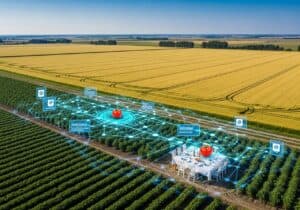
Integrating Artificial Intelligence (AI) with the Industrial Internet of Things (IIoT) significantly enhances predictive analytics and machine learning capabilities. Manufacturing plants employing AI-powered IIoT systems can analyze vast amounts of operational data. AI algorithms can dissect patterns and anomalies in the data collected from machinery, enhancing efficiency in processes such as quality control and equipment monitoring.
The convergence of IIoT with 블록체인 technology ensures enhanced data integrity and security in supply chain management. By using decentralized ledgers, organizations can create immutable records of transactions that enhance traceability.
Companies like IBM have successfully implemented blockchain in agriculture for tracking the journey of food products from farm to table, thus ensuring authenticity and safety. The integration of these technologies results in a more transparent and trustworthy food supply chain.
팁: when integrating emerging technologies with IIoT, consider employing API gateways to facilitate seamless communication between devices and applications. This approach enhances interoperability and fosters innovation within the system.
Prioritize Security: implement a multi-layered security approach, including network segmentation, encryption, and regular security audits to protect sensitive data and devices.
Design for Scalability: before implementing, ensure that your IIoT system can easily scale to accommodate new devices and increased data flow without major redesigns.
결론
As industries stand on the brink of a technological revolution, the Industrial Internet of Things (IIoT) plays a big role in redefining operational capabilities and efficiencies. By integrating devices that communicate and analyze data in real-time, companies are not only enhancing productivity but also creating new avenues for growth and innovation. The projected creation of $15 trillion in value by 2030 underscores the transformative impact IIoT will have across sectors.
자주 묻는 질문
산업용 사물 인터넷(IIoT)의 핵심 구성 요소는 무엇인가요?
산업용 사물 인터넷(IIoT)의 핵심 구성 요소에는 데이터를 수집하는 센서, 물리적 시스템을 제어하는 액추에이터, 데이터 전송을 위한 연결성, 통찰력을 얻기 위한 데이터 분석, 그리고 저장 및 처리를 위한 클라우드 또는 엣지 컴퓨팅이 포함됩니다.
IoT와 IIoT의 주요 차이점은 무엇인가요?
IoT는 주로 스마트 홈과 같은 소비자 애플리케이션에 초점을 맞추는 반면, IIoT는 산업 공정 및 운영을 대상으로 합니다. IIoT는 제조 및 생산 환경에서 효율성 향상을 위해 신뢰성, 보안 및 실시간 데이터 분석을 강조합니다.
일반적인 IIoT 아키텍처와 통신 프로토콜은 무엇입니까?
IIoT 아키텍처는 일반적으로 디바이스, 엣지, 데이터 및 애플리케이션 계층으로 구성됩니다. 일반적으로 사용되는 통신 프로토콜로는 경량 메시징을 위한 MQTT, 산업 간 상호 운용성을 위한 OPC UA, 데이터 중심 통신을 위한 DDS 등이 있습니다.
산업 현장에서 IIoT를 도입할 때 얻을 수 있는 주요 이점은 무엇인가요?
산업용 사물 인터넷(IIoT)의 이점으로는 가동 중지 시간을 줄이는 예측 유지보수, 실시간 모니터링을 통한 운영 효율성 향상, 안전 프로토콜 강화, 그리고 수익 창출을 위한 새로운 비즈니스 모델 개발 등이 있습니다.
산업용 사물 인터넷(IIoT) 환경과 관련된 보안 문제는 무엇입니까?
산업용 사물 인터넷(IIoT) 환경은 데이터 유출, 무단 접근, 장치 취약성 등과 같은 보안 문제에 직면해 있습니다. 이러한 문제를 완화하기 위한 전략으로는 강력한 암호화, 정기적인 소프트웨어 업데이트, 다중 요소 인증 구현 등이 있습니다.
다양한 산업 분야에서 IIoT의 실제 활용 사례를 제시해 주실 수 있습니까?
In manufacturing, IIoT is used for predictive maintenance and asset management. In agriculture, it enables precision farming and automated irrigation. Transportation examples include fleet management and supply chain optimization, while in healthcare, IIoT aids equipment management.
산업용 사물 인터넷(IIoT)은 신기술과 어떻게 통합될까요?
IIoT integrates closely with AI/ML for data analytics, digital twins for real-time simulation, and 5G for high-speed connectivity, enhancing capabilities across smart factories and various operational processes.
관련 주제
- 디지털 트윈 기술: 분석 및 시뮬레이션에 사용되는 물리적 자산 또는 시스템의 가상 표현.
- 엣지 컴퓨팅: 데이터 소스에 더 가까운 곳에서 데이터를 처리하여 지연 시간과 대역폭 사용량을 줄입니다.
- 상호 운용성 표준: 서로 다른 장치와 시스템이 원활하게 연동될 수 있도록 보장하는 프레임워크.
- 스마트 제조: 생산 공정의 효율성과 유연성을 높이기 위해 산업용 사물 인터넷(IIoT)을 통합하는 접근 방식입니다.
- 원격 모니터링: IIoT 기술을 활용하여 원격으로 장비를 관찰하고 관리합니다.
- 예측 분석: 데이터에서 위험과 기회를 식별하기 위해 통계 알고리즘과 머신러닝 기술을 활용합니다.
- 공급망 통합: 산업용 사물 인터넷(IIoT)을 활용하여 공급망의 다양한 요소를 연결함으로써 투명성과 효율성을 향상시킵니다.
- Automation and Robotics: employing robotic systems in conjunction with IIoT to enhance operational performance.
- 탄력적인 네트워크: 장애 발생 시에도 기능을 유지할 수 있는 통신 네트워크 구축.
- 실시간 데이터 처리: 데이터가 생성되는 즉시 처리하고 분석하여 즉각적인 통찰력과 조치를 제공합니다.
- 인력 역량 강화: 작업자에게 실시간 정보와 통찰력을 제공하여 생산성을 향상시키는 IIoT 솔루션을 통합합니다.
- Data Visualization Tools: 복잡한 데이터 세트를 더 쉽게 해석하고 분석할 수 있도록 시각적인 형식으로 변환하는 소프트웨어.
- Cybersecurity Frameworks: 산업용 사물인터넷(IIoT) 시스템을 사이버 위협 및 취약점으로부터 보호하기 위해 고안된 전략.
External Links on Industrial Internet Of Things (IIoT)
국제 표준
(링크 위에 마우스를 올려놓으면 콘텐츠에 대한 설명을 볼 수 있습니다.)
사용된 용어집
Application Programming Interface (API): 서로 다른 소프트웨어 애플리케이션이 통신하고 상호 작용할 수 있도록 하는 규칙 및 프로토콜 집합으로, 시스템 간 기능 통합 및 데이터 교환을 가능하게 합니다.
Certificate of Analysis (CoA): a document issued by a manufacturer or testing laboratory that confirms a product's specifications, quality, and compliance with regulatory standards, detailing test results and methods used for analysis.
Hypertext Transfer Protocol (HTTP): 인터넷을 통해 하이퍼텍스트를 전송하는 데 사용되는 프로토콜로, 웹 브라우저와 서버 간의 통신을 가능하게 합니다. 요청 및 응답 형식을 정의하여 HTML 문서, 이미지 및 기타 미디어와 같은 웹 리소스를 쉽게 검색할 수 있도록 합니다.
Industrial Internet of Things (IIoT): 산업 환경에서 상호 연결된 장치 및 센서 네트워크는 데이터를 수집, 교환 및 분석하여 운영 효율성을 높이고 의사 결정을 개선하며 제조, 공급망 및 기타 산업 공정의 자동화를 가능하게 합니다.
Internet of Things (IoT): 센서, 소프트웨어 및 기타 기술이 내장된 상호 연결된 장치 네트워크로, 인터넷을 통해 데이터를 수집하고 교환할 수 있어 다양한 프로세스와 시스템의 자동화, 모니터링 및 제어를 용이하게 합니다.
Multi-Factor Authentication (MFA): 사용자를 인증하기 위해 서로 다른 범주의 자격 증명에서 두 가지 이상의 검증 방법을 요구하는 보안 프로세스로, 무단 접근으로부터 보호를 강화합니다. 일반적인 검증 요소에는 사용자가 알고 있는 것, 소유하고 있는 것 또는 사용자의 신분 등이 포함됩니다.
Optical Proximity Correction (OPC): 반도체 제조 과정에서 발생하는 광학적 왜곡을 보정하기 위해 마스크 패턴을 수정하는 리소그래피 향상 기술로, 노광 및 현상 후 원하는 치수를 얻기 위해 특징의 모양과 크기를 조정하여 실리콘 웨이퍼의 특징 충실도를 향상시킵니다.
User experience (UX): the overall satisfaction and perception of a user when interacting with a product, system, or service, encompassing usability, accessibility, design, and emotional response throughout the entire interaction process.
User Interface (UI): a system that enables interaction between users and software applications, encompassing visual elements, controls, and overall layout to facilitate user tasks and enhance experience.
Wide Area Network (WAN): 지리적으로 넓은 영역에 걸쳐 여러 근거리 통신망(LAN)을 연결하고, 일반적으로 임대 통신 회선이나 위성 링크를 사용하여 도시, 국가 또는 대륙 간 데이터 전송을 가능하게 하는 통신 네트워크.