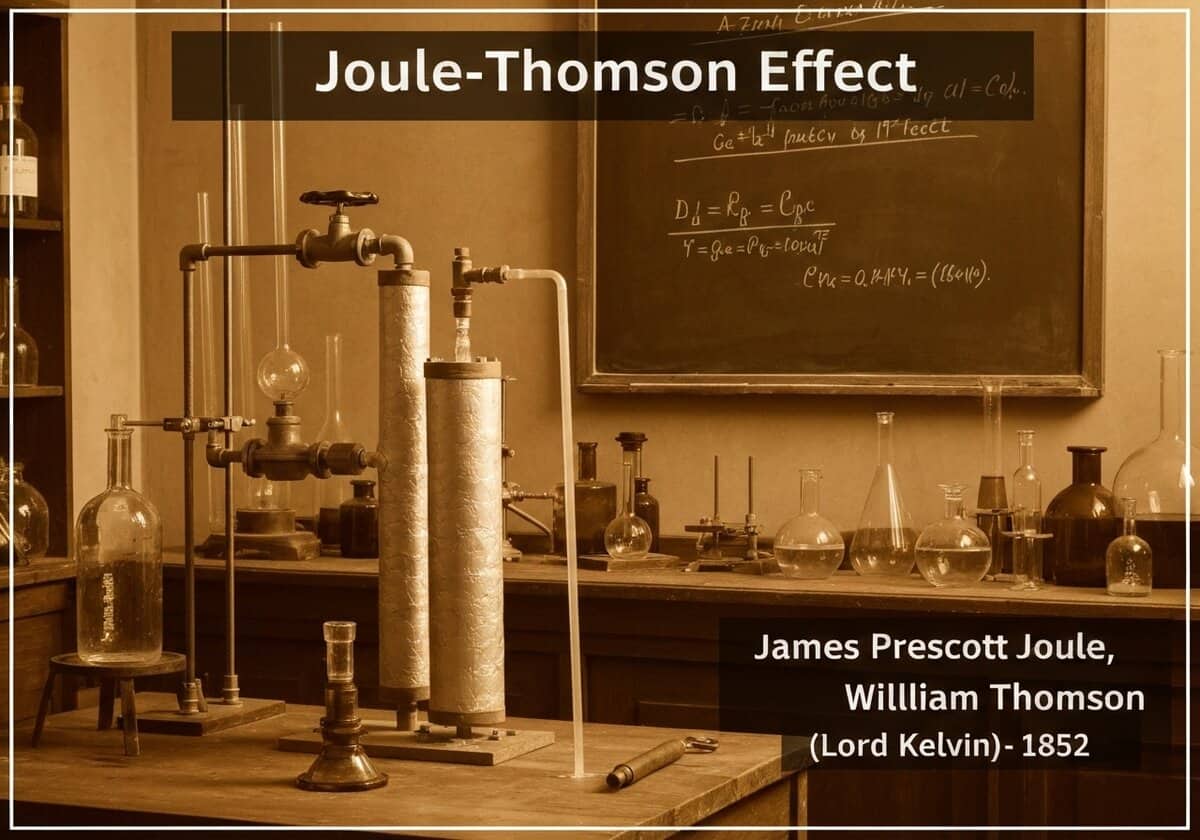
The Joule-Thomson (or Joule-Kelvin) effect describes the temperature change of a real gas when it is forced through a valve or porous plug while kept insulated (an isenthalpic process). At a given pressure, a gas has an inversion temperature. If expanded below this temperature, it cools; if expanded above it, it heats up. This cooling effect is a cornerstone of modern refrigeration and liquefaction.