Product Design, Manufacturing & Innovation Resources
بيت » Autoclave Steam Sterilization

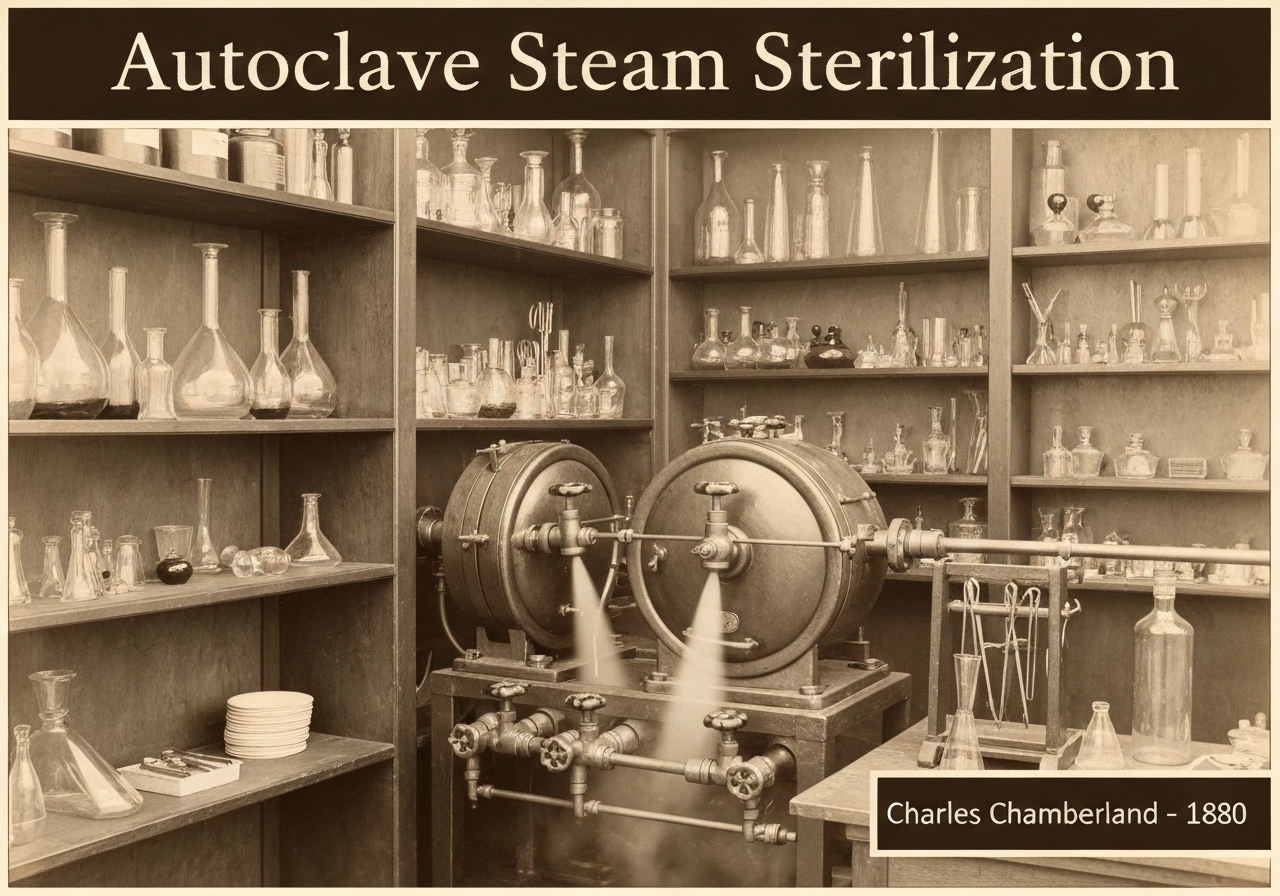
Autoclave Steam Sterilization

1880
  • Charles Chamberland
Antique autoclave used for steam sterilization in applied microbiology.

(صورة توضيحية فقط)

طريقة تستخدم البخار المشبع عالي الضغط عند درجات حرارة عالية لتعقيم المعدات والمستلزمات. دورة نموذجية هي 121 درجة مئوية (250 درجة فهرنهايت) عند ضغط 100 كيلو باسكال (15 رطل لكل بوصة مربعة) فوق الضغط الجوي. ضغط for 15 minutes. This combination of heat and moisture effectively denatures proteins and enzymes, killing all microorganisms, including resilient bacterial spores. An autoclave is released for production only after IQ OQ PQ process validation shows that every cycle reaches the required temperature and exposure time.
The autoclave’s effectiveness stems from the principles of thermodynamics and microbiology. Unlike dry heat, which kills microorganisms through slow oxidation, moist heat from saturated steam is far more efficient. The steam transfers heat energy rapidly and upon contact with a cooler surface, it condenses, releasing its الحرارة الكامنة of vaporization. This process causes a rapid and irreversible coagulation and denaturation of essential proteins, enzymes, and nucleic acids within the microbial cells, leading to their death. The increased pressure inside the autoclave serves a critical purpose: it raises the boiling point of water. At standard atmospheric pressure, water boils at 100 °C, a temperature insufficient to reliably kill bacterial endospores, which are highly resistant dormant structures. By increasing the pressure to approximately 15 psi (100 kPa) above atmospheric pressure, the boiling point is elevated to 121 °C. This higher temperature, combined with the penetrating power of steam, ensures the destruction of even the most resilient spores, such as those from Geobacillus stearothermophilus, which is often used as a biological indicator to validate autoclave performance. The typical 15-minute cycle time at 121 °C is a standard derived from thermal death time studies, providing a significant safety margin to achieve a high sterility assurance level (SAL). The process is not suitable for heat-sensitive materials like plastics or delicate electronics, which would be damaged by the high temperatures and pressure.

تاريخيًا، كان جهاز التعقيم بالبخار (الأوتوكلاف) امتدادًا مباشرًا لجهاز "الهاضم البخاري"، وهو قدر ضغط اخترعه دينيس بابان عام 1679. إلا أن تطبيقه في علم الأحياء الدقيقة كان رائدًا على يد تشارلز تشامبرلاند، أحد معاوني لويس باستور، عام 1879. أثناء عمله في مختبر باستور، أدرك تشامبرلاند الحاجة إلى طريقة موثوقة لتعقيم أوساط الاستنبات والمعدات لدعم مجال علم البكتيريا الناشئ وتأكيد نظرية جرثومية الأمراض. وقد وفر اختراعه أول أداة فعالة للقضاء على جميع أشكال الحياة الميكروبية، مُحدثًا ثورة في علم الأحياء التجريبي والطب والجراحة. سمح هذا الاختراع بتحضير أوساط استنبات معقمة، مما مكّن من عزل ودراسة مزارع بكتيرية نقية، وهو حجر الزاوية في علم الأحياء الدقيقة الحديث الذي أسسه روبرت كوخ. أدى إدخال جهاز التعقيم بالبخار (الأوتوكلاف) في الممارسة السريرية إلى انخفاض كبير في التهابات مواقع الجراحة وجعل العمليات الجراحية المعقدة أكثر أمانًا، ليصبح أداة لا غنى عنها في المستشفيات حول العالم.

UNESCO Nomenclature: 2401
– Microbiology

يكتب

Physical Process

خلل

Revolutionary

الاستخدام

استخدام واسع النطاق

مقدمات

  • denis papin’s steam digester (pressure cooker)
  • تجارب لازارو سبالانزاني على الغليان و الميكروبات نمو
  • louis pasteur’s germ theory of disease

التطبيقات

  • sterilizing medical and surgical instruments
  • decontaminating laboratory equipment and media
  • processing waste in healthcare facilities
  • canning and food preservation

براءات الاختراع:

NA

أفكار ابتكارية محتملة

  • smart autoclaves with integrated bio-sensors for real-time sterility verification, eliminating the need for post-cycle indicators
  • portable, solar-powered autoclaves for use in remote or disaster-stricken areas without reliable electricity
  • autoclave systems that recycle water and heat to minimize environmental impact in large healthcare facilities
  • specialized autoclaves for 3d-printed الغرسات الطبية, with cycles optimized for complex geometries and novel materials
  • integration of ai to predict maintenance needs and optimize cycle times based on load composition and density
  • rapid-cycle autoclaves using microwave-assisted steam generation for point-of-use sterilization in operating rooms
  • autoclave systems designed for sterilizing electronic components for استكشاف الفضاء missions
  • home-use autoclaves for sterilizing baby equipment, canning, and advanced hobbyist mycology
  • automated robotic loading and unloading systems for high-throughput industrial autoclaves
  • autoclaves with variable pressure cycles to sterilize delicate, pressure-sensitive materials
Related to: autoclave, steam sterilization, microbiology, pressure, temperature, spores, decontamination, medical instruments, charles chamberland, moist heat.

السياق التاريخي

Autoclave Steam Sterilization

1800
1800-05-02
1880
1900
1910
1921
1930
1930
1800
1834-01-01
1880
1902
1920
1928
1930

(إذا كان التاريخ غير معروف أو غير ذي صلة، على سبيل المثال "ميكانيكا الموائع"، يتم توفير تقدير تقريبي لظهوره الملحوظ)

أحدث الإضافات

أهم المنشورات والمقالات

أفضل الأدوات الأصلية

السنة العاشرة عيد

الصور والتنزيلات بالحجم الكامل متاحة فقط، ومجانية تمامًا، للأعضاء المسجلين.