Product Design, Manufacturing & Innovation Resources
بيت » التحليل الكهربائي للماء

التحليل الكهربائي للماء

1800-05-02
  • William Nicholson
  • Anthony Carlisle
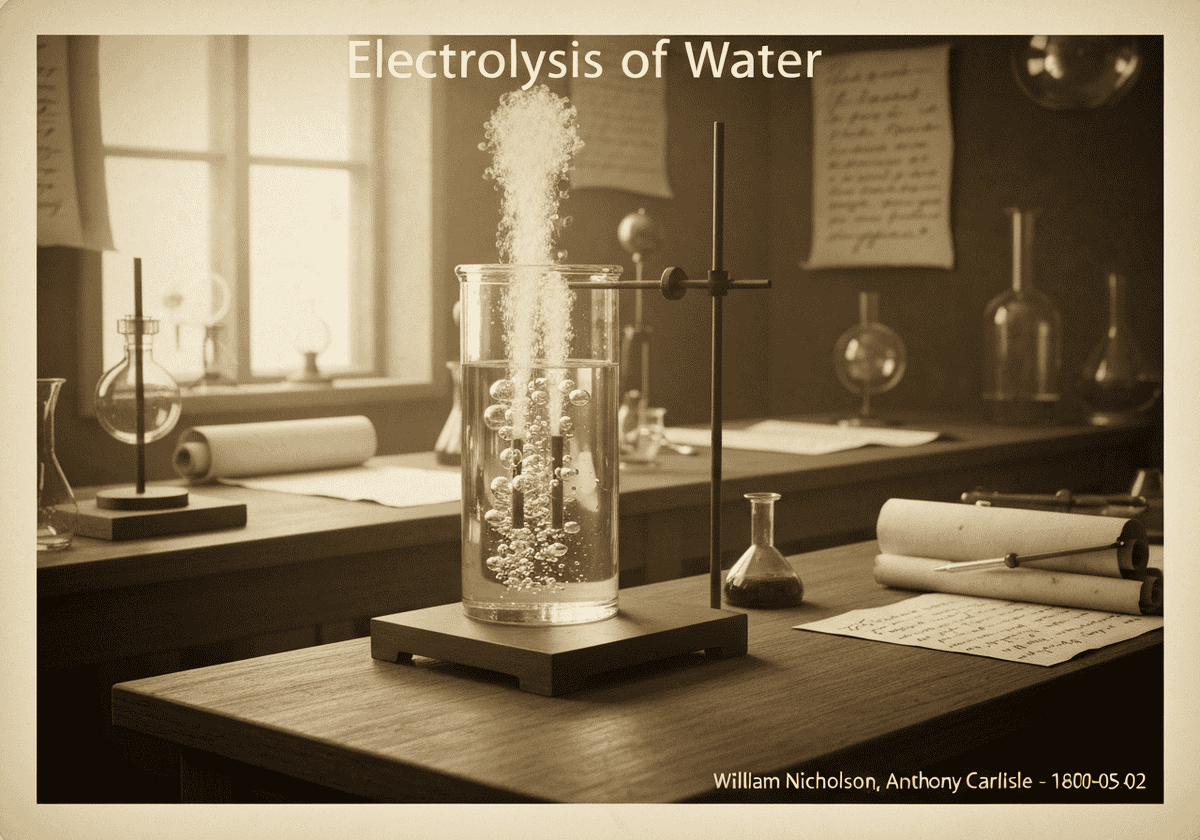
Electrolysis apparatus demonstrating water decomposition into hydrogen and oxygen gases.

(صورة توضيحية فقط)

ال التحليل الكهربائي of water is the decomposition of water (H₂O) into its constituent elements, oxygen (O₂) and hydrogen (H₂), by passing an electric current through it. At the cathode, two water molecules are reduced to form hydrogen gas and hydroxide ions. At the anode, two water molecules are oxidized to form oxygen gas, protons, and electrons.

The decomposition of pure water into hydrogen and oxygen is a thermodynamically unfavorable process, requiring external energy in the form of electricity. Pure water is a poor conductor of electricity, so an electrolyte, such as a small amount of a soluble salt or an acid like sulfuric acid, is typically added to increase conductivity. The overall balanced equation for the reaction is [latex]2H_2O(l) \rightarrow 2H_2(g) + O_2(g)[/latex].

The process occurs in an electrolytic cell. At the negatively charged cathode, a reduction reaction takes place: [latex]2H_2O(l) + 2e^- \rightarrow H_2(g) + 2OH^-(aq)[/latex]. At the positively charged anode, an oxidation reaction occurs: [latex]2H_2O(l) \rightarrow O_2(g) + 4H^+(aq) + 4e^-[/latex]. The production of hydrogen gas at the cathode is exactly twice the volume of oxygen gas produced at the anode, a direct consequence of the stoichiometry of water. This 2:1 volume ratio is a classic demonstration in chemistry classrooms, often performed using a Hofmann voltameter.

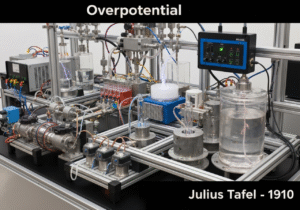
يبلغ الحد الأدنى للجهد اللازم لحدوث التحليل الكهربائي، والمعروف بجهد التحلل، 1.23 فولت في الظروف القياسية. ومع ذلك، عمليًا، يلزم جهد أعلى، يُسمى overpotential, is needed to overcome various activation barriers. The efficiency of water electrolysis is a key factor in the viability of a hydrogen-based economy, with significant research focused on developing more effective and cheaper المحفزات for the anode and cathode to reduce the overpotential and energy consumption.

UNESCO Nomenclature: 2406
– Electrochemistry

يكتب

Chemical Process

خلل

Substantial

الاستخدام

استخدام واسع النطاق

مقدمات

  • اكتشاف الهيدروجين بواسطة هنري كافنديش
  • اكتشاف الأكسجين بواسطة كارل فيلهلم شيل وجوزيف بريستلي
  • invention of the voltaic pile by alessandro volta

التطبيقات

  • إنتاج الهيدروجين لخلايا الوقود والمركبات
  • إنتاج الأكسجين عالي النقاء للاستخدام الطبي والصناعي
  • أنظمة دعم الحياة في الغواصات والمركبات الفضائية
  • مشاعل اللحام والقطع (الأكسجين والهيدروجين)
  • إنتاج الديوتيريوم (الماء الثقيل)

براءات الاختراع:

NA

أفكار ابتكارية محتملة

  • أنظمة التحليل الكهربائي الكهروضوئي المتكاملة لتحويل الطاقة الشمسية إلى هيدروجين مباشرة
  • home-scale units for producing وقود الهيدروجين for personal vehicles from tap water and renewable energy
  • أنظمة التحليل الكهربائي لتنقية المياه وتوليد الهيدروجين في وقت واحد في المناطق النائية
  • أجهزة التحليل الكهربائي عالية الضغط التي تنتج الهيدروجين المضغوط مباشرة، مما يقلل من تكاليف التخزين
  • خلايا الوقود القابلة للعكس والتي تعمل كمحلل كهربائي ومولد للطاقة
  • استخدام الحرارة المهدرة من العمليات الصناعية لتحسين كفاءة التحليل الكهربائي (التحليل الكهربائي عالي الحرارة)
  • التحليل الكهربائي لمياه البحر دون معالجة مسبقة لتحلية المياه
  • المحفز development using earth-abundant materials to replace platinum and iridium
Related to: water التحليل الكهربائي, hydrogen production, oxygen production, decomposition, cathode, anode, hofmann voltameter, green hydrogen.

السياق التاريخي

التحليل الكهربائي للماء

1800
1800-05-02
1880
1900
1910
1921
1930
1930
1800
1834-01-01
1880
1902
1920
1928
1930

(إذا كان التاريخ غير معروف أو غير ذي صلة، على سبيل المثال "ميكانيكا الموائع"، يتم توفير تقدير تقريبي لظهوره الملحوظ)

أحدث الإضافات

أهم المنشورات والمقالات

أفضل الأدوات الأصلية

السنة العاشرة عيد

الصور والتنزيلات بالحجم الكامل متاحة فقط، ومجانية تمامًا، للأعضاء المسجلين.