Product Design, Manufacturing & Innovation Resources
بيت » اكتشاف الأنسولين وعزله

اكتشاف الأنسولين وعزله

1921
  • Frederick Banting
  • Charles Best
  • John Macleod
  • James Collip
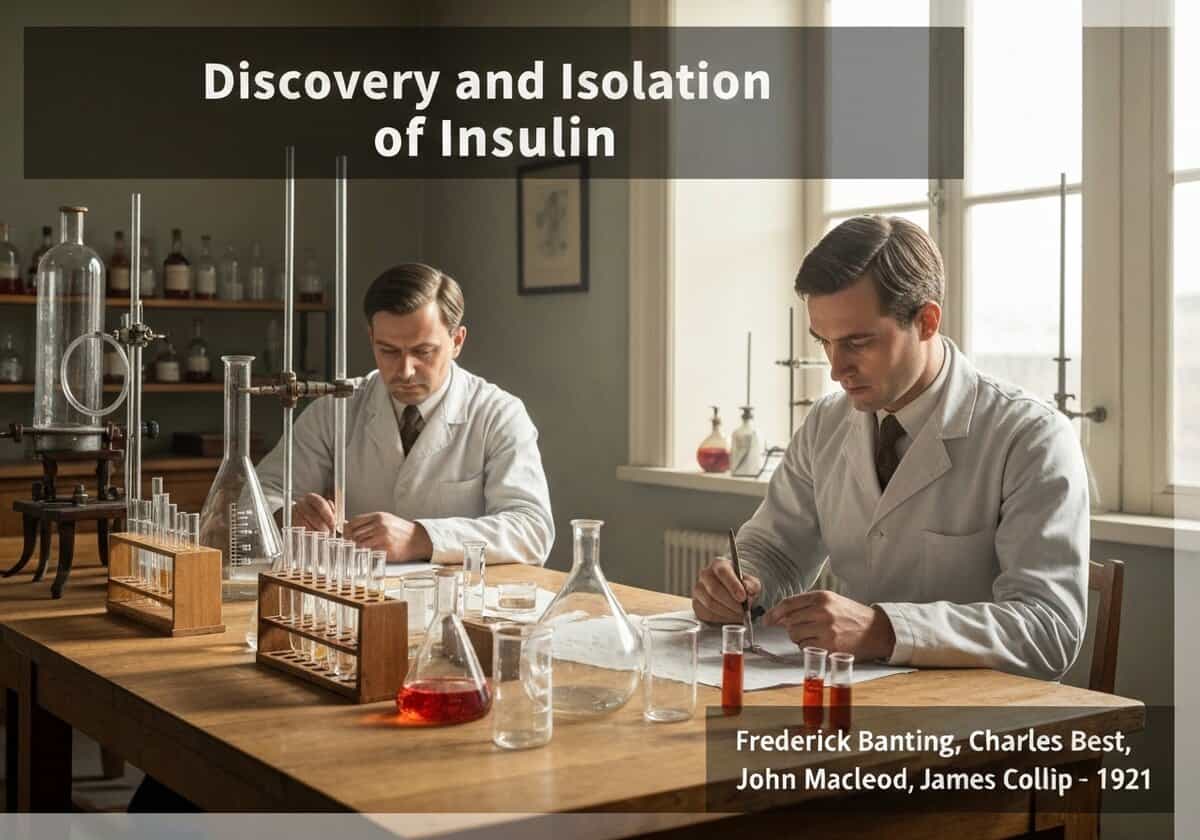
Laboratory scene of insulin isolation by Banting and Best, 1921, endocrinology research.

(صورة توضيحية فقط)

In 1921, Frederick Banting and Charles Best, under John Macleod’s direction at the University of Toronto, isolated insulin from canine pancreatic extracts. Biochemist James Collip then developed a purification process, making the extract safe for human use. This discovery transformed type 1 diabetes from a fatal disease into a manageable condition, earning Banting and Macleod the 1923 جائزة نوبل جائزة.
Before 1921, a diagnosis of type 1 diabetes was a death sentence, often within months. The prevailing theory, proposed by researchers like Oskar Minkowski and Joseph von Mering in 1889, linked the pancreas to diabetes by showing that its removal in dogs induced the disease. The challenge was to isolate the specific anti-diabetic substance from the pancreas without it being destroyed by the organ’s own digestive enzymes. Frederick Banting, a young surgeon, hypothesized that ligating the pancreatic ducts would cause the enzyme-producing acinar cells to atrophy, leaving the islets of Langerhans, which he believed produced the sought-after secretion, intact. He proposed this idea to John Macleod, a prominent physiologist at the University of Toronto. Macleod was initially skeptical but provided Banting with lab space, ten dogs, and the assistance of a medical student, Charles Best. Over the summer of 1921, they successfully induced diabetes in dogs by removing their pancreas and then treated them with an extract from the degenerated pancreases of duct-ligated dogs. The extract, which they called “isletin,” effectively lowered blood glucose levels. The next crucial step was purification. Biochemist James Collip joined the team and developed a method using alcohol extraction to produce a purer, less toxic form of the extract suitable for human trials. The first human patient, 14-year-old Leonard Thompson, was successfully treated in January 1922, marking a turning point in medical history.

UNESCO Nomenclature: 2408
علم الأحياء البشري

يكتب

Medical Procedure

خلل

Revolutionary

الاستخدام

استخدام واسع النطاق

مقدمات

  • اكتشاف أوسكار مينكوفسكي وجوزيف فون ميرينغ أن استئصال البنكرياس يسبب مرض السكري (1889)
  • تحديد جزر لانجرهانز بواسطة بول لانجرهانز (1869)
  • اقتراح إدوارد ألبرت شاربي-شافر بأن مادة كيميائية واحدة من البنكرياس، أطلق عليها اسم "الأنسولين"، كانت مسؤولة عن التحكم في الجلوكوز (1916).
  • محاولات فاشلة من قبل جورج لودفيج زويلزر وآخرين لإنشاء مستخلصات البنكرياس

التطبيقات

  • علاج مرض السكري من النوع الأول
  • تطوير تركيبات مختلفة من الأنسولين (قصيرة المفعول، طويلة المفعول)
  • إدارة ارتفاع سكر الدم في مرض السكري من النوع 2
  • علاج فرط بوتاسيوم الدم
  • البحث الأساسي في علم الغدد الصماء

براءات الاختراع:

  • US1469994

أفكار ابتكارية محتملة

  • implantable insulin pumps with حلقة مغلقة glucose monitoring
  • أنظمة توصيل الأنسولين عن طريق الفم أو الاستنشاق
  • خلايا بيتا المعدلة وراثيًا للزراعة
  • الأنسولين الذكي الذي يتم تنشيطه فقط عند مستويات الجلوكوز المرتفعة
  • العلاج بالأنسولين الشخصي بناءً على العلامات الجينية
  • insulin-based therapies for neurodegenerative diseases like alzheimer’s
  • تقنيات مراقبة الجلوكوز غير الجراحية المتكاملة مع توصيل الأنسولين
  • عضويات إفراز الأنسولين المزروعة من الخلايا الجذعية
  • توصيل الأنسولين المستهدف إلى أنسجة محددة لتقليل الآثار الجانبية
  • تطوير محاكيات الأنسولين (جزيئات صغيرة تعمل على تنشيط مستقبلات الأنسولين)
ذات صلة بـ: اكتشاف الأنسولين، بانتينج، ماكلويد، ج. كوليب، مرض السكري، البنكرياس، الغدد الصماء، جائزة نوبل.

السياق التاريخي

اكتشاف الأنسولين وعزله

1880
1900
1910
1921
1930
1930
1940
1834-01-01
1880
1902
1920
1928
1930
1940
1950

(إذا كان التاريخ غير معروف أو غير ذي صلة، على سبيل المثال "ميكانيكا الموائع"، يتم توفير تقدير تقريبي لظهوره الملحوظ)

أحدث الإضافات

أهم المنشورات والمقالات

أفضل الأدوات الأصلية

السنة العاشرة عيد

الصور والتنزيلات بالحجم الكامل متاحة فقط، ومجانية تمامًا، للأعضاء المسجلين.