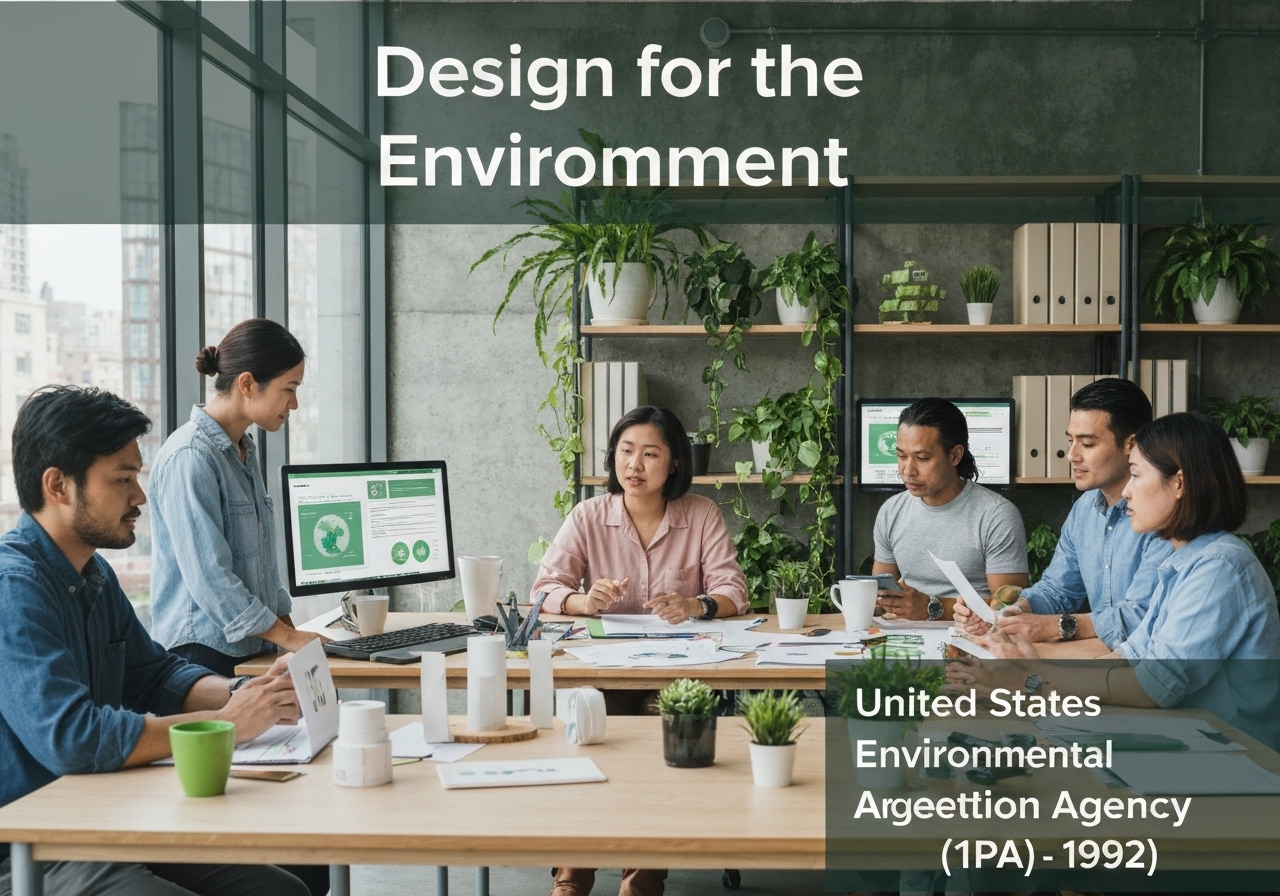
DfE emerged from the realization that end-of-pipe pollution controls were inefficient and costly. Instead of treating waste after its creation, DfE focuses on prevention by making smarter choices during design. This holistic approach employs life-cycle thinking, evaluating everything from raw material extraction (‘cradle’) to manufacturing, use, and final disposal (‘grave’). Key principles include selecting low-impact, non-toxic, and 回收利用 materials; minimizing overall material and energy usage during production and operation; and designing for longevity, repairability, and 拆卸. By considering a product’s 生命终结 at its beginning, DfE facilitates recycling, remanufacturing, and safe decomposition, forming a cornerstone of the circular economy. The novelty of DfE was its fundamental shift from a reactive to a proactive and systemic view of environmental protection within industry, embedding sustainability as a core criterion of innovation and quality, rather than an afterthought or a regulatory burden. It transformed environmental management from a compliance issue into a strategic business opportunity.
service-based models for durable goods (e.g., ‘lighting as a service’)
使用可回收和可生物降解的长丝进行 3D 打印
融入建筑设计的城市农业基础设施
时尚行业的无水染色工艺
碳负性混凝土配方
Related to: design for the environment, DfE, 生态设计, sustainable design, 生命周期评估, green design, circular economy, pollution prevention, product stewardship, industrial ecology.