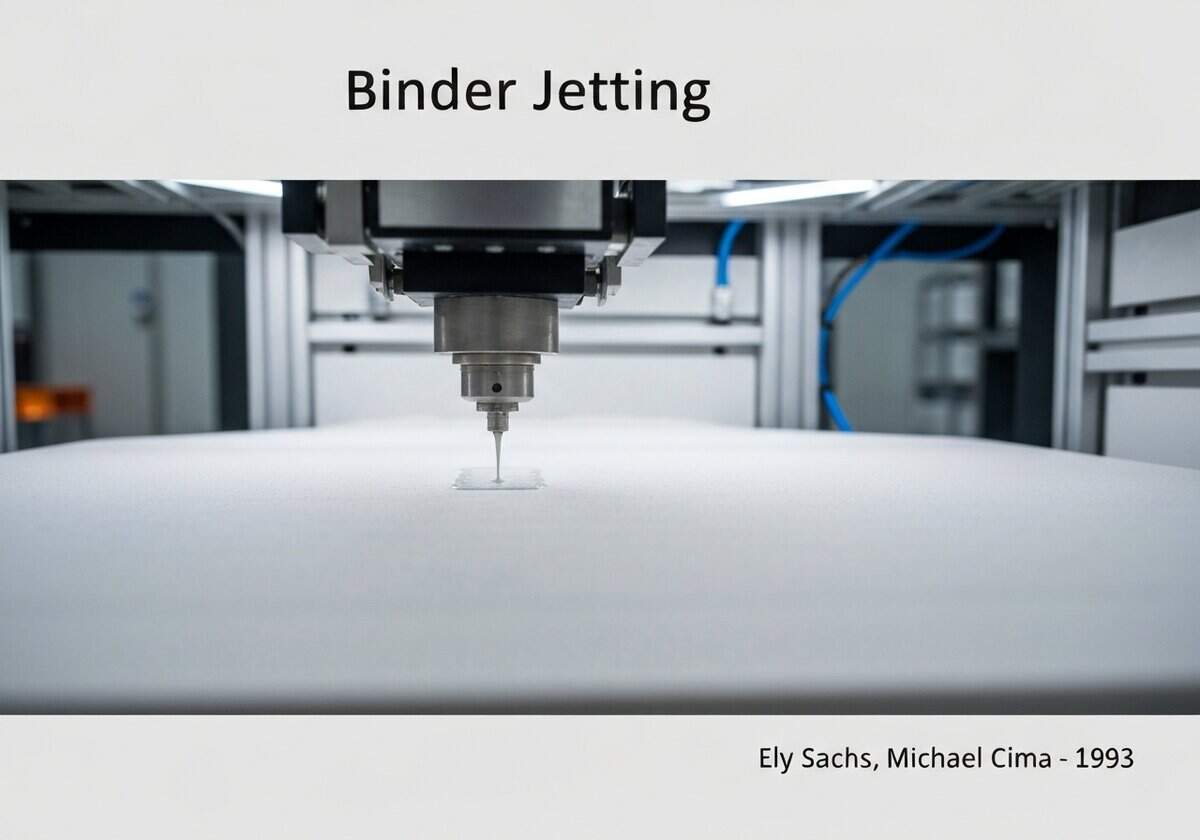
The primary advantage of binder jetting is its speed and scalability, as the inkjet deposition process is typically faster than laser-based methods. It also operates at room temperature, which avoids the thermal stresses and warping common in high-temperature processes. This makes it suitable for a wide range of materials, including sand, metals, ceramics, and 聚合物. After printing, the part exists in a fragile ‘green state,’ held together only by the binder. It must be carefully excavated from the surrounding loose powder. For metal and ceramic parts, a crucial post-processing step is required to achieve final density and strength. This typically involves sintering in a furnace to burn out the binder and fuse the material particles, a process that causes significant and predictable shrinkage. Alternatively, the green part can be infiltrated with a lower-melting-point metal, such as bronze, to fill the pores and create a dense composite. A unique feature is the ability to incorporate color into the binder, allowing for the creation of full-color 3D models directly from the printer.