Product Design, Manufacturing & Innovation Resources
Casa » Design for the Environment (DfE)

Design for the Environment (DfE)

1992
  • United States Environmental Protection Agency (EPA)
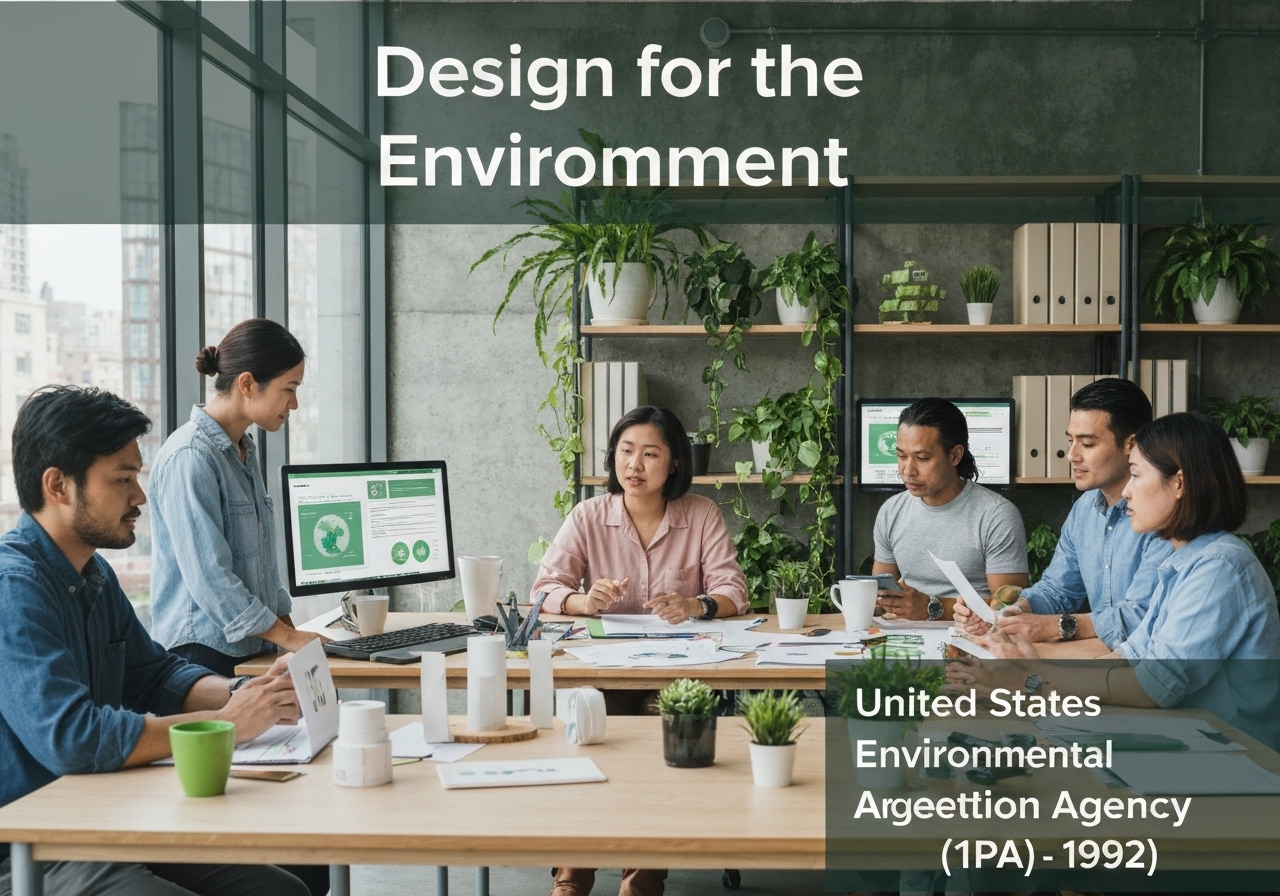
Environmental engineers collaborating on ecodesign in a modern office.

(Immagine generata a solo scopo illustrativo)

Design for the Environment (DfE), also known as ecodesign, is a proactive approach to product and process development that minimizes environmental and human health impacts across the entire product ciclo vitale. It integrates environmental considerations into the earliest design stages, alongside traditional factors like cost and performance, to prevent pollution and conserve resources from the outset.

DfE emerged from the realization that end-of-pipe pollution controls were inefficient and costly. Instead of treating waste after its creation, DfE focuses on prevention by making smarter choices during design. This holistic approach employs life-cycle thinking, evaluating everything from raw material extraction (‘cradle’) to manufacturing, use, and final disposal (‘grave’). Key principles include selecting low-impact, non-toxic, and recycled materials; minimizing overall material and energy usage during production and operation; and designing for longevity, repairability, and smontaggio. By considering a product’s end-of-life at its beginning, DfE facilitates recycling, remanufacturing, and safe decomposition, forming a cornerstone of the circular economy. The novelty of DfE was its fundamental shift from a reactive to a proactive and systemic view of environmental protection within industry, embedding sustainability as a core criterion of innovation and quality, rather than an afterthought or a regulatory burden. It transformed environmental management from a compliance issue into a strategic business opportunity.

UNESCO Nomenclature: 3308
– Environmental Engineering

Tipo

Abstract System

Interruzione

Sostanziale

Utilizzo

Uso diffuso

Precursori

  • the environmental movement of the 1960s and 1970s
  • the concept of pollution prevention (p2)
  • early life cycle assessment (lca) methodologies
  • the ‘limits to growth’ report (1972)
  • the brundtland report ‘our common future’ (1987) defining sustainable development

Applicazioni

  • epa safer choice label
  • epeat (electronic product environmental assessment tool)
  • cradle to cradle certification
  • economia circolare business models
  • sustainable supply chain management

Brevetti:

NA

Idee e potenziali innovazioni

  • AI-powered LCA tools for real-time design feedback
  • modular consumer electronics with user-replaceable components
  • bio-integrated packaging that composts and enriches soil
  • circuito chiuso manufacturing systems for textiles and plastics
  • smart building materials that adapt to environmental conditions
  • service-based models for durable goods (e.g., ‘lighting as a service’)
  • 3d printing with recycled and biodegradable filaments
  • urban farming infrastructure integrated into building design
  • waterless dyeing processes for the fashion industry
  • carbon-negative concrete formulations
Related to: design for the environment, DfE, ecodesign, progettazione sostenibile, life cycle assessment, green design, circular economy, pollution prevention, product stewardship, industrial ecology.

Contesto storico

Design for the Environment (DfE)

1990
1990
1990
1992
1992
1993-07-22
1996
1990
1990
1990
1991
1992
1993
1994
1997

(se la data è sconosciuta o non rilevante, ad esempio "meccanica dei fluidi", viene fornita una stima approssimativa della sua notevole comparsa)

decimo anno anniversario

Le immagini a grandezza naturale e i download sono disponibili, gratuitamente al 100%, solo per gli utenti registrati.

> Login <