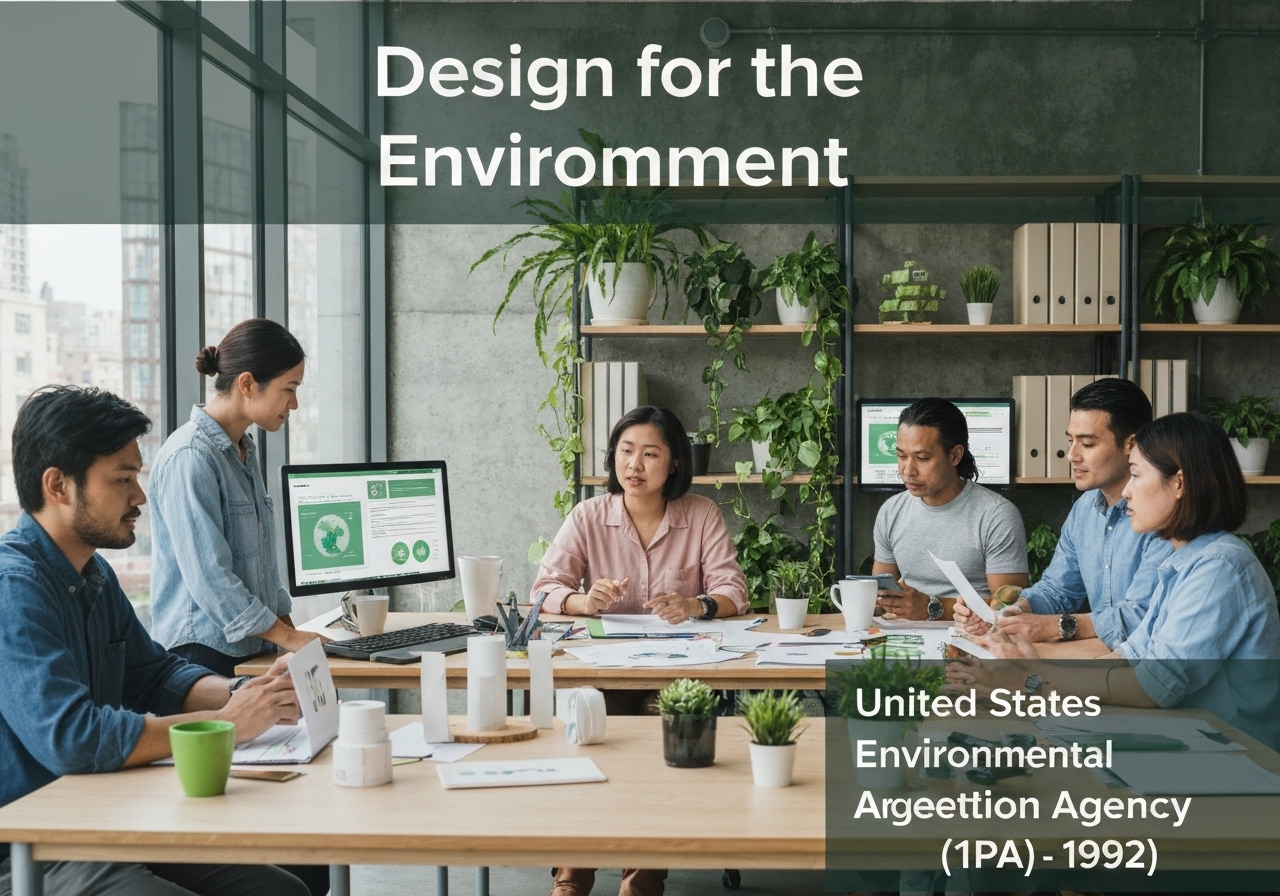
DfE emerged from the realization that end-of-pipe pollution controls were inefficient and costly. Instead of treating waste after its creation, DfE focuses on prevention by making smarter choices during design. This holistic approach employs life-cycle thinking, evaluating everything from raw material extraction (‘cradle’) to manufacturing, use, and final disposal (‘grave’). Key principles include selecting low-impact, non-toxic, and リサイクル materials; minimizing overall material and energy usage during production and operation; and designing for longevity, repairability, and 分解. By considering a product’s 終末期 at its beginning, DfE facilitates recycling, remanufacturing, and safe decomposition, forming a cornerstone of the circular economy. The novelty of DfE was its fundamental shift from a reactive to a proactive and systemic view of environmental protection within industry, embedding sustainability as a core criterion of innovation and quality, rather than an afterthought or a regulatory burden. It transformed environmental management from a compliance issue into a strategic business opportunity.
AI-powered LCA tools for real-time design feedback
modular consumer electronics with user-replaceable components
bio-integrated packaging that composts and enriches soil
closed-loop manufacturing systems for textiles and plastics
smart building materials that adapt to environmental conditions
service-based models for durable goods (e.g., ‘lighting as a service’)
3d printing with recycled and biodegradable filaments
urban farming infrastructure integrated into building design
waterless dyeing processes for the fashion industry
carbon-negative concrete formulations
Related to: design for the environment, DfE, エコデザイン, sustainable design, ライフサイクルアセスメント, green design, circular economy, pollution prevention, product stewardship, industrial ecology.