Product Design, Manufacturing & Innovation Resources
بيت » Design for the Environment (DfE)

Design for the Environment (DfE)

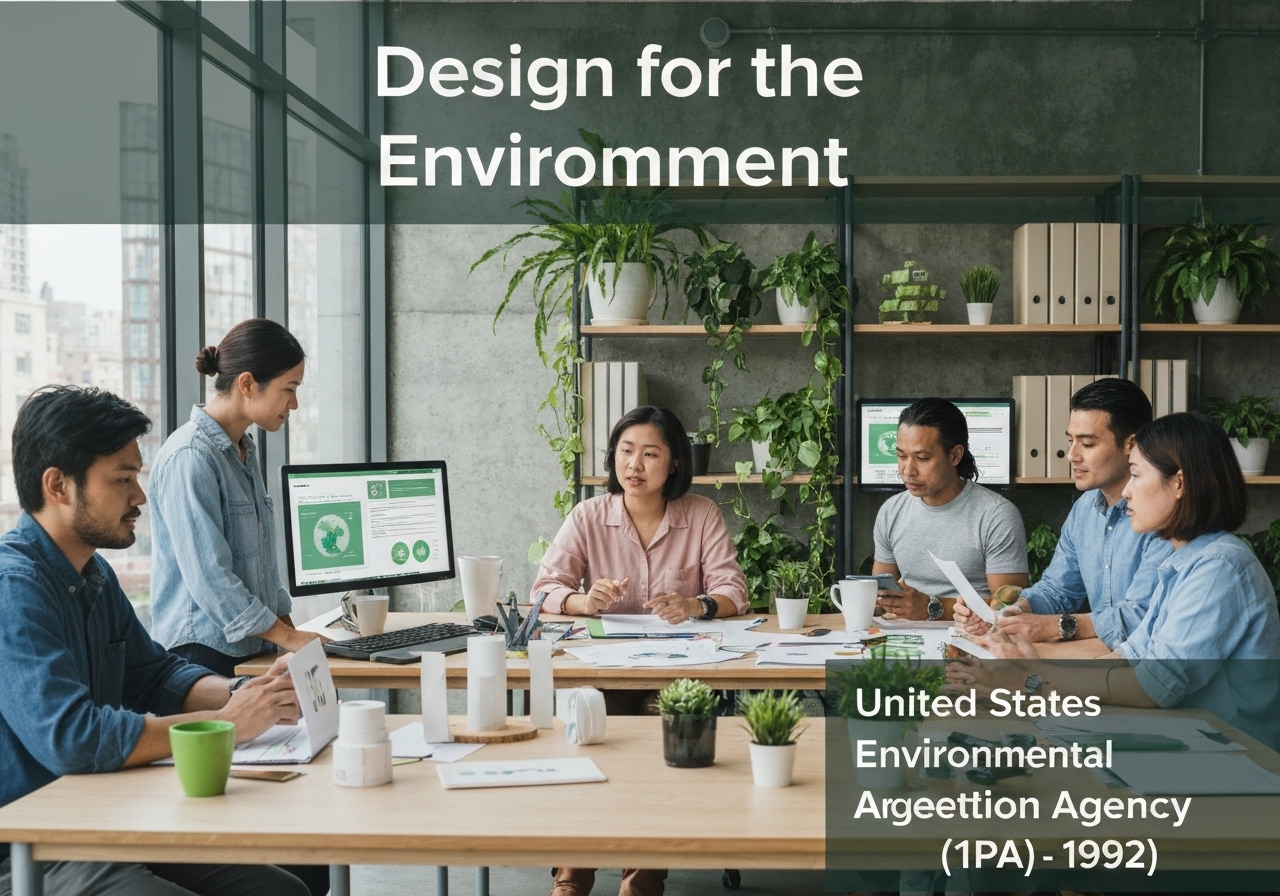
1992
  • United States Environmental Protection Agency (EPA)
مهندسو البيئة يتعاونون في التصميم البيئي في مكتب حديث.

(صورة توضيحية فقط)

Design for the Environment (DfE), also known as ecodesign, is a proactive approach to product and process development that minimizes environmental and human health impacts across the entire product life cycle. It integrates environmental considerations into the earliest design stages, alongside traditional factors like cost and performance, to prevent pollution and conserve resources from the outset.
DfE emerged from the realization that end-of-pipe pollution controls were inefficient and costly. Instead of treating waste after its creation, DfE focuses on prevention by making smarter choices during design. This holistic approach employs life-cycle thinking, evaluating everything from raw material extraction (‘cradle’) to manufacturing, use, and final disposal (‘grave’). Key principles include selecting low-impact, non-toxic, and معاد تدويره materials; minimizing overall material and energy usage during production and operation; and designing for longevity, repairability, and التفكيك. By considering a product’s نهاية الحياة at its beginning, DfE facilitates recycling, remanufacturing, and safe decomposition, forming a cornerstone of the circular economy. The novelty of DfE was its fundamental shift from a reactive to a proactive and systemic view of environmental protection within industry, embedding sustainability as a core criterion of innovation and quality, rather than an afterthought or a regulatory burden. It transformed environmental management from a compliance issue into a strategic business opportunity.

UNESCO Nomenclature: 3308
- الهندسة البيئية

يكتب

نظام مجرد

خلل

كبير

الاستخدام

استخدام واسع النطاق

مقدمات

  • the environmental movement of the 1960s and 1970s
  • the concept of pollution prevention (p2)
  • في وقت مبكر دورة الحياة التقييم (لقا) المنهجيات
  • تقرير "حدود النمو" (1972)
  • the brundtland report ‘our common future’ (1987) defining التنمية المستدامة

التطبيقات

  • epa safer choice label
  • epeat (electronic product environmental assessment tool)
  • من المهد إلى المهد التصديق
  • circular economy business models
  • sustainable supply chain management

براءات الاختراع:

NA

أفكار ابتكارية محتملة

  • AI-powered LCA tools for real-time design feedback
  • modular consumer electronics with user-replaceable components
  • bio-integrated packaging that composts and enriches soil
  • closed-loop manufacturing systems for textiles and plastics
  • smart building materials that adapt to environmental conditions
  • service-based models for durable goods (e.g., ‘lighting as a service’)
  • 3d printing with recycled and biodegradable filaments
  • urban farming infrastructure integrated into building design
  • waterless dyeing processes for the fashion industry
  • carbon-negative concrete formulations
Related to: design for the environment, DfE, التصميم البيئي, sustainable design, تقييم دورة الحياة, green design, circular economy, pollution prevention, product stewardship, industrial ecology.

السياق التاريخي

Design for the Environment (DfE)

1990
1990
1990
1992
1992
1993-07-22
1996
1990
1990
1990
1991
1992
1993
1994
1997

(إذا كان التاريخ غير معروف أو غير ذي صلة، على سبيل المثال "ميكانيكا الموائع"، يتم توفير تقدير تقريبي لظهوره الملحوظ)

أحدث الإضافات

أهم المنشورات والمقالات

أفضل الأدوات الأصلية

السنة العاشرة عيد

الصور والتنزيلات بالحجم الكامل متاحة فقط، ومجانية تمامًا، للأعضاء المسجلين.