Product Design, Manufacturing & Innovation Resources
家 » クレードル・トゥ・クレードル(C2C)

クレードル・トゥ・クレードル(C2C)

2002
  • William McDonough
  • Michael Braungart
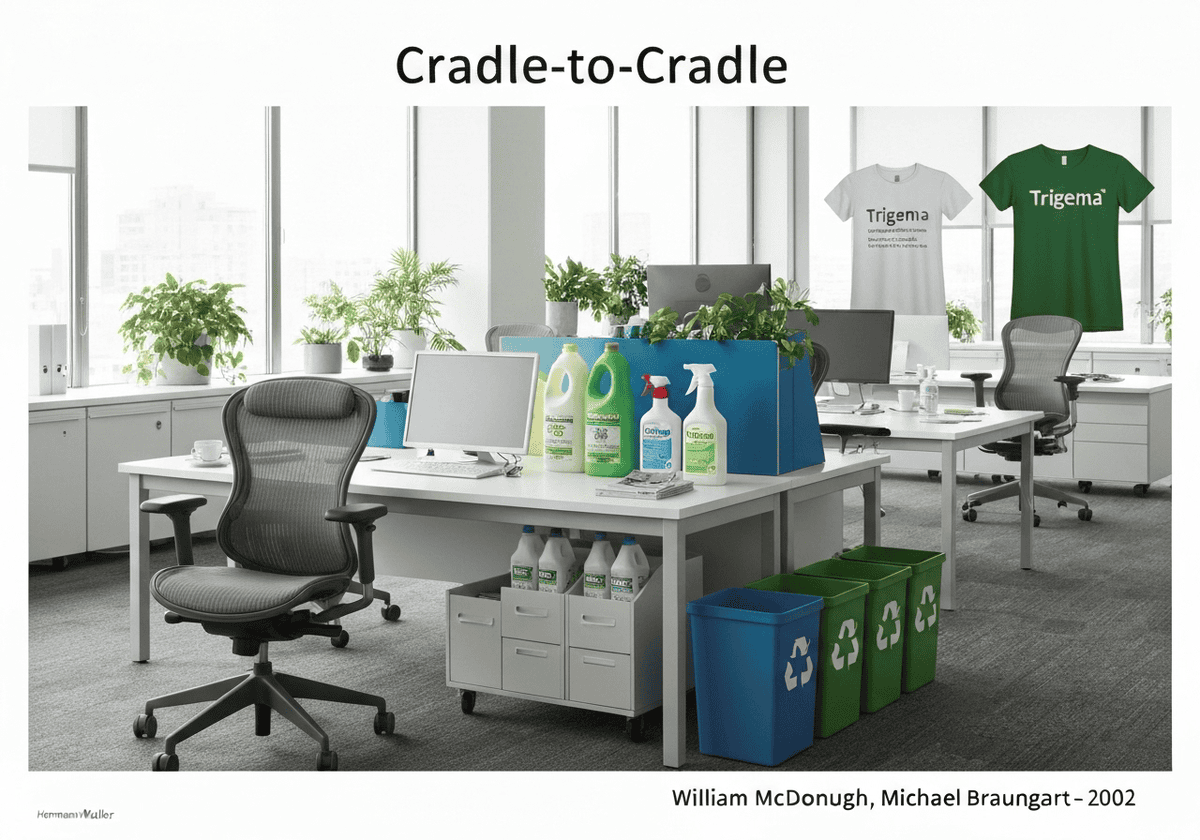
椅子や清掃用品など、クレードル・トゥ・クレードル認証製品を使用した、持続可能なオフィス。

(画像はイメージです)

クレードル・トゥ・クレードル (C2C) is a design philosophy that models human industry on nature’s processes. It views materials as “nutrients” circulating in closed-loop systems. The framework distinguishes between two cycles: the biological cycle, for biodegradable materials that can safely return to the soil, and the technical cycle, for materials that are continuously reused or アップサイクル 工業プロセスにおいて品質を損なうことなく使用できます。超吸収性ポリマーは、ラベル表示がなぜ重要なのかを示しています。ポリアクリル酸ナトリウムの生分解性に関する主張は、そのような材料が生物循環に投入される前に検証されるべきです。


The Cradle-to-Cradle framework fundamentally challenges the traditional “cradle-to-grave” industrial model, which results in a one-way flow of materials to landfills or incinerators. C2C proposes a circular economy where waste is eliminated by design. This is achieved by meticulously selecting materials based on their human and environmental health characteristics, avoiding toxic substances altogether. Products are designed for 分解, allowing their components to be easily separated and returned to their respective cycles at the end of their use phase.

In the biological cycle, materials like natural fibers, certain バイオプラスチック, and organic pigments are designed to be consumed by microorganisms and return to the biosphere as biological nutrients, enriching the soil. In the technical cycle, synthetic materials like polymers, metals, and alloys are designed to be high-quality “technical nutrients.” These materials are intended to be perpetually upcycled into new products of the same or higher quality, never becoming waste. This contrasts with conventional recycling, which often results in downcycling, where the material quality degrades with each cycle.

C2Cの導入には、単に「悪影響を減らす」(環境効率)という考え方から、「より良いものを作る」(環境効果を高める)という考え方への転換が必要です。C2Cは、材料科学、製品設計、ビジネスモデルにおけるイノベーションを促進します。C2C Certified™製品プログラムは、材料の健全性、材料の再利用、再生可能エネルギーと炭素管理、水資源管理、社会的公正性に基づいて製品を評価する第三者認証システムを提供します。

UNESCO Nomenclature: 3308
産業技術

タイプ

抽象システム

混乱

革命的

使用法

広く普及している

前駆物質

  • ウォルター・R・スタヘルによる1970年代のパフォーマンス経済とクローズドループシステムに関する研究
  • The concept of industrial ecology, which emerged in the late 1980s
  • ドイツの「グリーン・ドット」包装リサイクルシステム(1991年)
  • 一般原則 バイオミミクリー

アプリケーション

  • ハーマンミラーのC2C認証オフィスチェア(例:アーロン)
  • メソッドの家庭用洗剤は、生分解性成分とリサイクル可能なパッケージを使用しています。
  • ショー・インダストリーズのエコワークス・カーペットタイルは、分解とリサイクルを前提に設計されています。
  • trigemaのC2C認証済み堆肥化可能なTシャツ
  • ヴァン・ホーテンのC2C認証建築資材

特許:

NA

潜在的なイノベーションのアイデア

  • self-disassembling electronics triggered by a specific signal at end-of-life
  • edible packaging for food products that becomes a biological nutrient
  • modular building components that can be reconfigured for different uses over centuries
  • 3d printing filaments made from technical nutrients that can be returned and reprinted indefinitely
  • “material passports” using blockchain to track a component’s composition and history through the technical cycle
  • urban farming systems that use compostable product waste as direct fertilizer input
  • clothing made from fibers that can be either biologically composted or technically re-spun into new yarn
  • service models where manufacturers retain ownership of products, leasing them to users and ensuring their return for upcycling
Related to: cradle-to-cradle, C2C, 循環型経済, william mcdonough, michael braungart, upcycling, closed-loop system, 工業デザイン.

歴史的背景

クレードル・トゥ・クレードル(C2C)

2000
2000
2000
2002
2010
2013
2000
2000
2000
2000
2003
2010
2013-09-24

(日付が不明または関連性がない場合、例えば「流体力学」などでは、その注目すべき出現時期の概算値が提示されます。)

10年目 周年

フルサイズの画像とダウンロードは、登録会員のみが100%無料で利用できます。