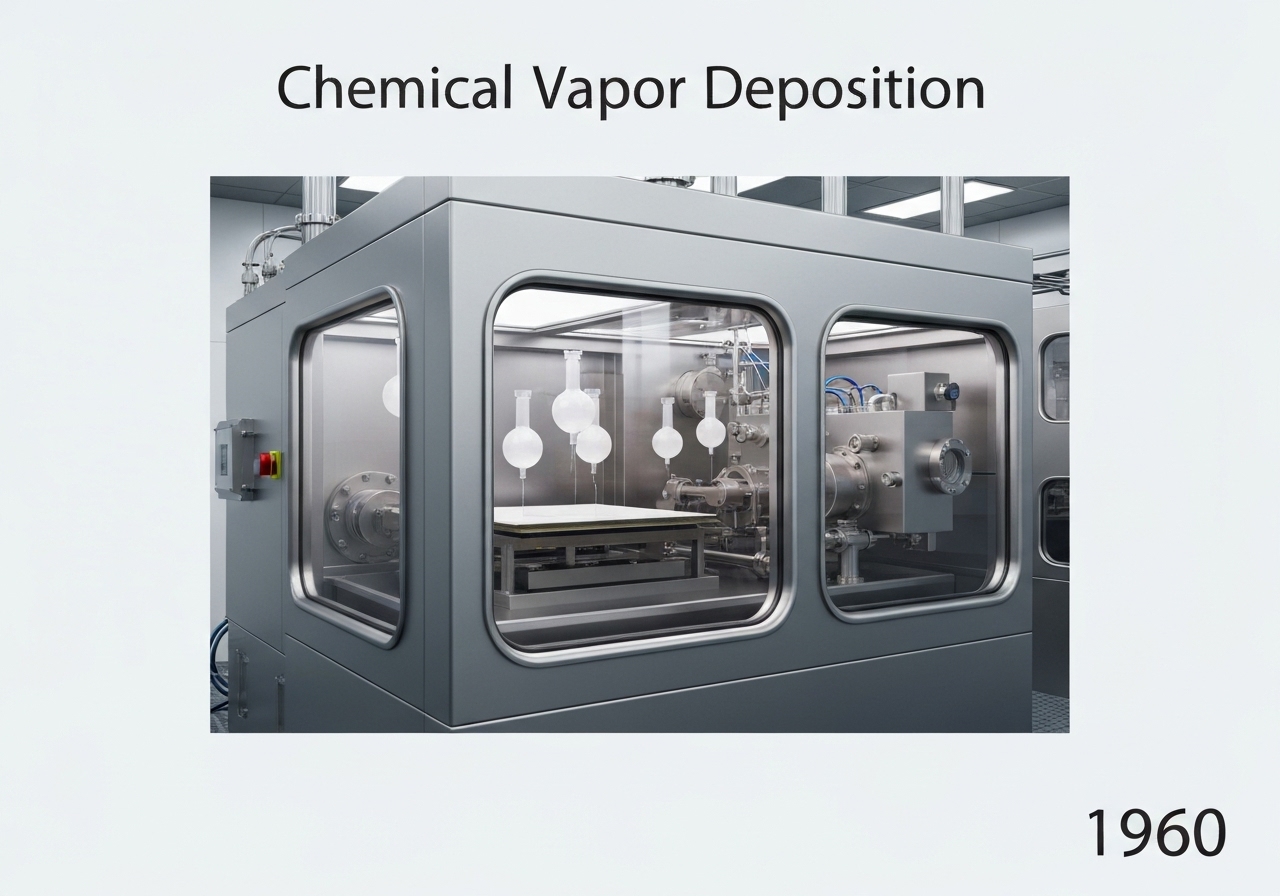
化学气相沉积(CVD)是一种 涂层 该工艺中,基材暴露于一种或多种挥发性化学前驱体中。这些前驱体在反应室中于基材表面发生反应或分解,生成高纯度、高性能的固体薄膜或涂层。温度和 压力 是控制沉积速率和薄膜质量的关键工艺参数。

(图片仅供参考)
化学气相沉积(CVD)是一种 涂层 该工艺中,基材暴露于一种或多种挥发性化学前驱体中。这些前驱体在反应室中于基材表面发生反应或分解,生成高纯度、高性能的固体薄膜或涂层。温度和 压力 是控制沉积速率和薄膜质量的关键工艺参数。
化学气相沉积(CVD)是一种用途广泛的工艺,能够生产多种材料,包括金属、陶瓷和聚合物。该工艺首先将气态前驱体分子引入装有加热基板的真空腔中。基板的高温提供打破前驱体分子中化学键所需的能量,这一过程被称为…… 热解. The resulting reactive species then adsorb onto the substrate surface, diffuse, and react to form a stable solid film. Byproducts of the reaction are then desorbed and pumped out of the chamber. There are numerous variations of CVD, each tailored for specific applications. For example, Metalorganic CVD (MOCVD) uses metalorganic precursors and is crucial for manufacturing compound semiconductor devices like LEDs. Plasma-Enhanced CVD (PECVD) uses a plasma to energize the precursor gases, allowing deposition at lower temperatures, which is essential for substrates that cannot withstand high heat. Atomic Layer Deposition (ALD), a subtype of CVD, involves sequential, self-limiting surface reactions, enabling the deposition of films with atomic-level thickness control. The quality, stoichiometry, and morphology of the deposited film are precisely controlled by adjusting parameters like substrate temperature, chamber pressure, gas flow rates, and precursor chemistry.
化学气相沉积(CVD)
(如果日期未知或不相关,例如“流体力学”,则提供其显著出现的近似估计)
只有注册会员才能免费获取完整尺寸的图片和下载内容。
> 登录 <