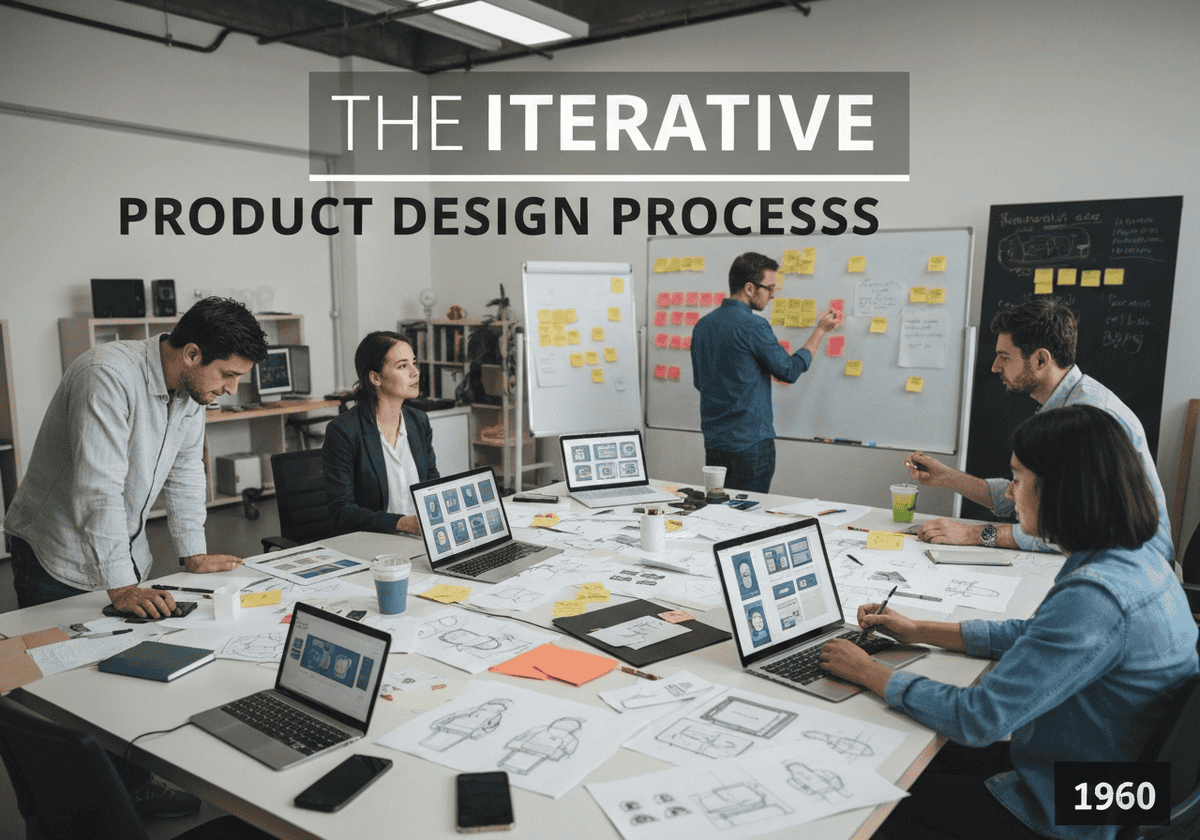
The product design process is a framework that guides designers and engineers from an initial idea to a market-ready product. It begins with the ‘Analysis’ phase, which involves deep market research, competitive analysis, and understanding user needs through methods like interviews and surveys. This phase defines the problem and sets the design constraints and goals. The subsequent ‘Concept’ phase is a creative exploration where designers brainstorm a wide range of potential solutions. Techniques like sketching, mind-mapping, and storyboarding are common. Multiple ideas are generated without initial judgment to foster innovation. Following this, the ‘Synthesis’ phase involves refining and combining the most promising concepts into a tangible design. This is where detailed specifications are created, and early prototypes, such as mockups or 3D models, are built. The process is inherently iterative; feedback from testing these prototypes is used to circle back to earlier stages for refinement. For example, a 可用性 test might reveal a flaw that requires a return to the concept phase to explore alternative solutions. This cyclical nature ensures continuous improvement and reduces the risk of market failure by validating the design against real-world user feedback and technical feasibility before committing to mass production.