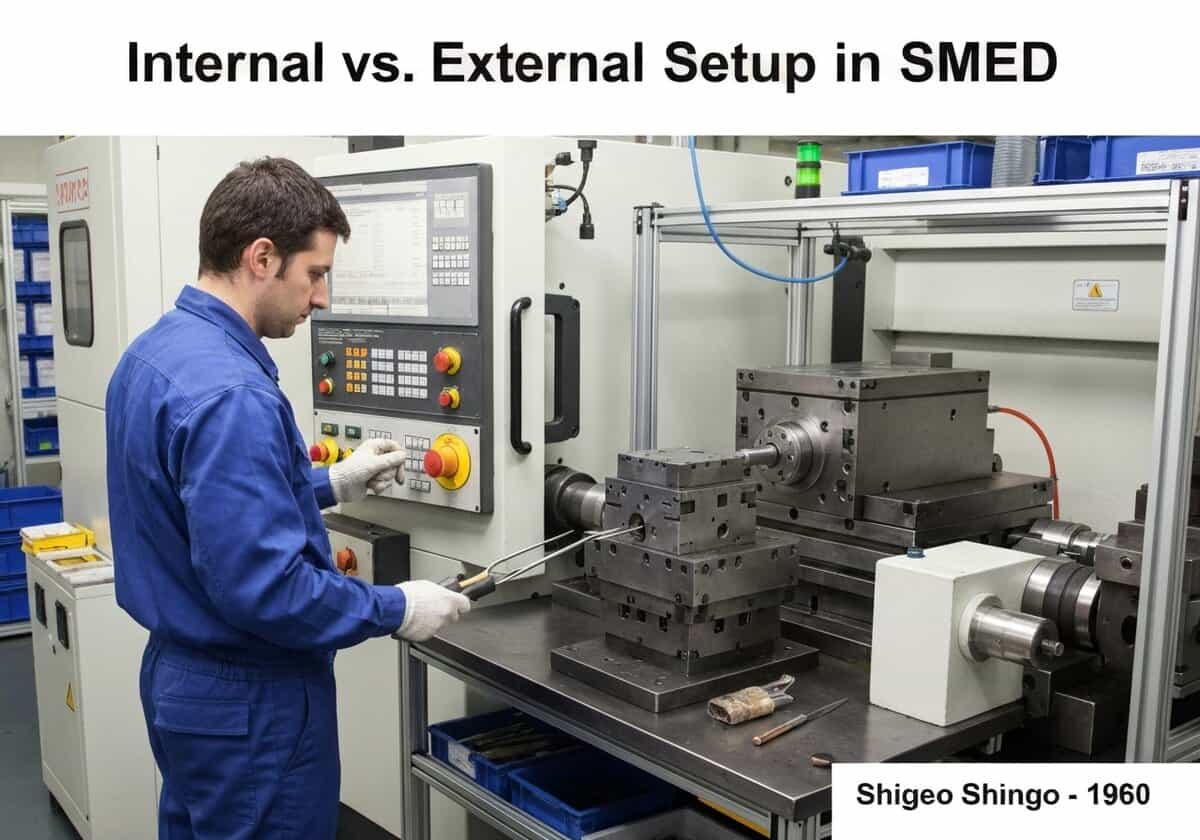
The distinction between internal and external setup is the cornerstone of the 铁匠 system. Before its formalization, changeover processes were often treated as a monolithic block of time where the machine was unproductive. Shigeo Shingo’s critical insight was to analyze every single action taken during a changeover and categorize it. Internal setup (Internal Exchange of Die or IED) includes any task that absolutely requires the machine to be shut down. Examples include unbolting the old tool, cleaning the machine bed, and securing the new tool. External setup (External Exchange of Die or OED) encompasses all preparatory and post-processing tasks that can be performed while the machine is still producing the last batch. This includes transporting the next die to the machine, pre-heating molds, preparing clamps and bolts, and moving the finished parts away. The initial stages of a SMED implementation focus heavily on identifying and separating these activities. A simple checklist is often the first tool used. By meticulously preparing all necessary tools, parts, and conditions beforehand (externalizing the setup), the time the machine is actually stopped (internal setup) can be dramatically reduced. This conceptual separation is what enables the subsequent, more technical steps of converting and streamlining.