Product Design, Manufacturing & Innovation Resources
家 » 生物材料中的分子自组装

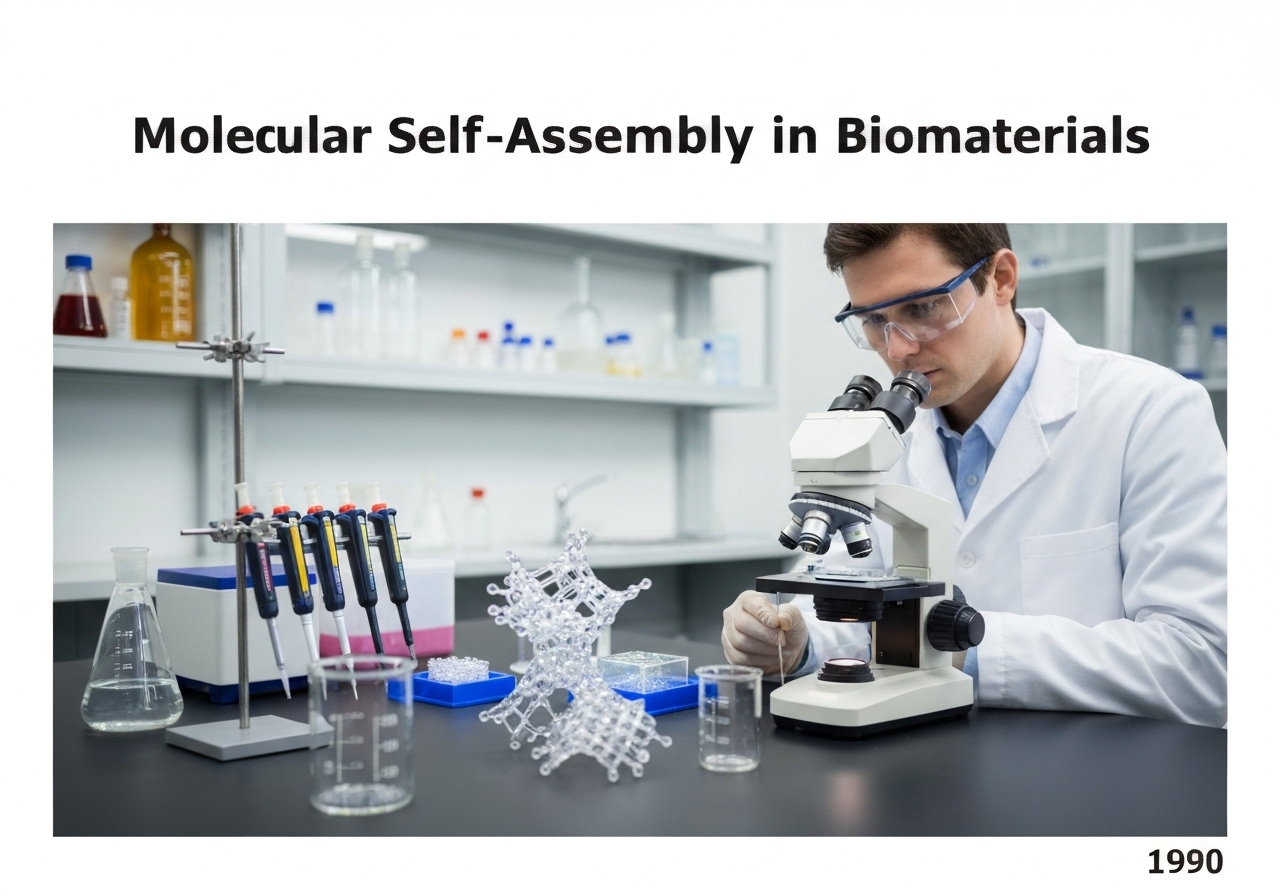
生物材料中的分子自组装

1990
展示生物医学应用生物材料分子自组装的实验室场景。

(图片仅供参考)

分子自组装是一个“自下而上”的过程,在这个过程中,分子无需外部引导即可自发地组织成有序结构。这种现象是由氢键、疏水效应等非共价相互作用驱动的。 范德华力 forces, is fundamental in biology (e.g., protein folding, lipid bilayer formation). In biomaterials, it is harnessed to create complex, nanostructured materials like hydrogels and nanofibers for biomedical applications.

Self-assembly provides a powerful paradigm for creating biomaterials that mimic the hierarchical complexity of biological tissues. The process is thermodynamically driven, seeking a minimum Gibbs free energy state. The design begins with molecular building blocks, often amphiphilic molecules (containing both hydrophilic and hydrophobic parts) such as block copolymers or peptide amphiphiles (PAs). When placed in an aqueous environment above a critical concentration, these molecules arrange themselves to minimize the unfavorable contact between their hydrophobic segments and water. This can lead to various nanostructures, including spherical micelles, cylindrical nanofibers, or planar bilayers, with the final morphology dictated by molecular geometry and packing parameters. A key advantage is the ability to encode biological function directly into the building blocks. For example, a PA can be designed with a peptide sequence containing the RGD motif, a well-known cell adhesion ligand. Upon self-assembly into nanofibers, this motif is displayed on the fiber surface, creating a scaffold that actively promotes cell attachment. These systems are often dynamic and responsive. A change in pH, temperature, or ionic strength can trigger a structural transition, allowing for the creation of ‘smart’ materials. For instance, a self-assembling peptide solution can be designed to be liquid for easy injection but form a solid hydrogel scaffold at body temperature, entrapping cells and drugs at a target site for regenerative medicine 应用程序。

UNESCO Nomenclature: 2209
聚合物化学

类型

化学过程

中断

基础

用法

新兴技术

前体

  • understanding of non-covalent forces (hydrogen bonds, van der waals)
  • 发现细胞膜的脂质双层结构
  • 研究蛋白质折叠和四级结构
  • 聚合物化学的发展,特别是嵌段共聚物
  • 莱恩、佩德森和克拉姆在超分子化学领域获得诺贝尔奖的作品

应用程序

  • fabrication of nanofibrous scaffolds for tissue engineering that mimic the natural extracellular matrix
  • 用于药物输送和细胞封装的可注射水凝胶的开发
  • 开发响应式“智能”材料,使其能够根据 pH 值或温度等刺激改变自身特性。
  • 形成纳米载体(如胶束和囊泡)用于靶向治疗
  • 防止生物污染的表面涂层

专利:

NA

潜在创新理念

  • self-assembling peptides that form conductive nanowires for neural tissue engineering
  • 可编程自组装系统,可根据一系列刺激形成不同的结构
  • 基于自组装分子的3D打印生物墨水,可在沉积后形成支架
  • 自修复材料,损伤会触发分子成分的重新组装
  • 可以主动捕获或排斥特定细胞或蛋白质的自组装涂层
  • DNA折纸技术可创建精确形状的自组装纳米结构,用于药物输送
  • 通过共定位多个组件来模拟酶级联的自组装系统
  • 自组装成光子晶体用于生物传感应用的材料
  • 可注射凝胶在体内自组装成多孔结构,促进组织浸润
  • self-assembling 疫苗 that arrange antigens into virus-like particles to enhance immune response
Related to: self-assembly, bottom-up, supramolecular chemistry, non-covalent interactions, 水凝胶, nanofiber, amphiphile, block copolymer, smart material, peptide amphiphile.

历史背景

生物材料中的分子自组装

1984
1985
1986
1990
1993-01-01
1995
2000
1980
1984
1986
1986
1991
1994
1997
2002

(如果日期未知或不相关,例如“流体力学”,则提供其显著出现的近似估计)

第十年 周年纪念日

只有注册会员才能免费获取完整尺寸的图片和下载内容。

> 登录 <