
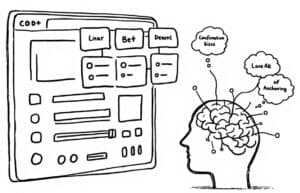
Knowing the vocabulary of an interface is not the same as knowing whether it works, and Level 2 supplies the testing methods that prove it, along with the psychology that explains the result. It covers 形成性的 和 summative usability testing, the 认知偏差 and behavioral techniques that shape how a user reads a screen or a control, and the manipulative patterns, from persuasive nudging to what the industry now calls enshittification, that separate ethical influence from exploitation.
This level serves an engineer or product developer who already ships interfaces and now needs to prove, with evidence rather than opinion, that a design decision improves task completion or reduces error. It matters most for 团队 building safety-relevant interfaces, where a misread control has real consequences, and for product developers negotiating a 设计变更 against a stakeholder who prefers personal taste over tested behavior. Manufacturers see lower field error rates, and product developers gain an argument in 设计评论 that data, not preference, can support.