설계 변경 주문(ECO) 프로세스는 현대 제조 환경에서 중요한 요소이며, 운영 효율성과 비용 관리에 상당한 영향을 미칩니다. 항공우주 및 방위 산업, 자동차, 의료기기 산업과 같은 분야에서는 설계 변경을 효율적으로 처리하는 방법을 이해하는 것이 비용이 많이 드는 생산 차질을 방지하고 지속적인 개선 문화를 확산하는 데 필수적입니다. 이 글에서는 ECO 프로세스와 관련된 몇 가지 모범 사례를 소개하고, 워크플로, 필수 문서 구성 요소, 그리고 변경 관리 위원회(CCB)의 역할에 대해 살펴봅니다.
설계 변경을 성공적으로 관리하려면 이해관계자에 대한 깊은 이해가 필요합니다. 의사소통 특히 비효율로 인한 비용이 막대할 수 있는 산업에서는 근본 원인 분석을 위한 체계적인 전략이 필수적입니다. 사소한 변화, 중요한 변화, 그리고 긴급한 변화를 구분하는 것은 자원 우선순위를 정하고 향후 발생할 수 있는 혼란을 최소화하는 데 매우 중요합니다.
핵심 요약

- 일관성을 유지하려면 구조화된 ECO 워크플로를 따르십시오.
- ECO 양식에 주요 세부 정보를 명확하게 기재하십시오.
- CCB를 참여시켜 정보에 입각한 변경 승인을 받으십시오.
- 재발 방지를 위해 근본 원인 분석을 실시하십시오.
- 변경 사항을 경미한 변경, 주요 변경 또는 긴급 변경으로 분류하십시오.
- 구체적인 지표를 사용하여 ECO 성과를 측정하세요.
제조 환경에서의 공식적인 ECO 프로세스 워크플로우

제조 환경 내의 공식적인 엔지니어링 변경 주문(ECO) 프로세스 워크플로는 변경 사항이 원활하게 구현되도록 구조화된 일련의 단계를 포함합니다.
우선, 변경 요청이 제출되면 엔지니어링 팀에서 검토합니다. 팀품질 관리 담당자, 제품 소유자 또는 고객 담당자가 해당 사항의 타당성과 필요성을 평가합니다.
연구에 따르면 잘 정의된 ECO 프로세스는 변화로 인한 혼란을 최대 30%까지 줄여 자원을 효율적으로 관리할 수 있게 해줍니다.
초기 검토 후, 제안된 변경 사항은 추가 평가를 위해 변경 관리 위원회(CCB)에 제출됩니다. 이 위원회는 설계 영향 및 비용 요소를 면밀히 검토하여 변경 사항의 의미를 평가합니다. CCB의 결정은 변경 사항의 승인, 수정 또는 거부 등 여러 결과를 초래할 수 있으며, 이는 조직 목표와의 일치를 보장합니다.
승인 후, 모든 이해관계자에게 변경 사항을 알리기 위한 상세 문서와 커뮤니케이션 계획이 수립됩니다. 여기에는 관련 설계 문서 및 생산 공정 업데이트가 포함됩니다. 이러한 변경 사항은 생산 일정에 큰 영향을 미칠 수 있으므로 시기적절하게 구현하는 것이 매우 중요하며, 효과적으로 관리할 경우 리드 타임을 최대 25%까지 단축할 수 있습니다.
팁: ECO의 상태를 실시간으로 모니터링하는 디지털 추적 시스템을 구현하여 가시성과 책임성을 강화합니다.
효과적인 문서화를 위한 ECO 양식의 필수 구성 요소

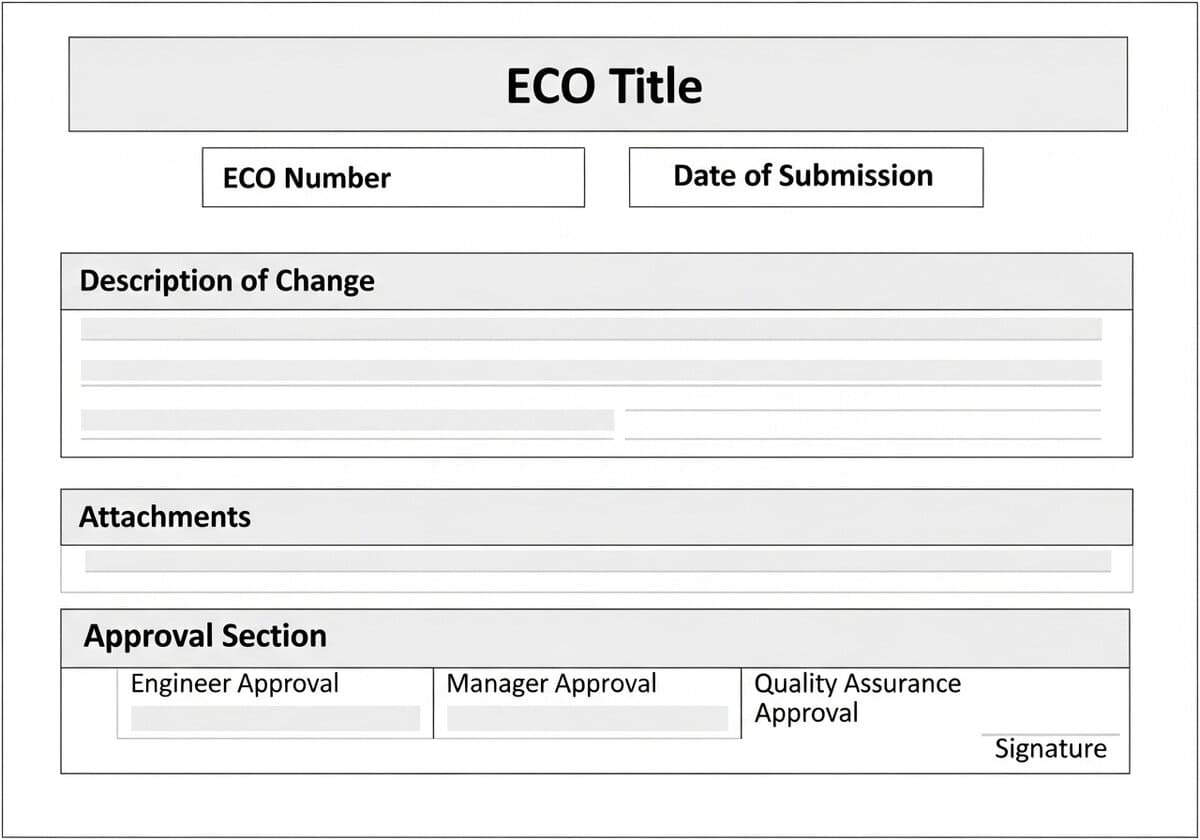
효과적인 엔지니어링 변경 주문(ECO) 양식에는 제조 환경에서 명확한 의사소통과 문서화를 촉진하기 위한 몇 가지 필수 구성 요소가 포함되어야 합니다.
잘 구성된 ECO 양식에는 일반적으로 다음과 같은 속성이 참조 사항으로 포함됩니다.
- 표준화된 제목,
- 고유 식별자(ECO 번호)
- 시작자 또는 저자
- 그리고 제출 날짜.
이러한 요소들은 설계 변경 과정 전반에 걸쳐 추적 및 검색을 위한 중요한 참조점 역할만 할 뿐이며, 변경 내용, 원인 또는 변경 그 자체는 아닙니다.
또 다른 핵심 요소는 제안된 변경 사항에 대한 자세한 설명입니다. this section ~ 해야 하다 articulate the reason behind the change while also identifying the affected items, such as parts, assemblies, or system designs. It enables stakeholders to understand the implications of the change, thus minimizing misunderstandings and potential disruption. Proper documentation here can reduce the average ECO processing time from weeks to just a few days in high-performing organizations.
스케치, 사양서 또는 관련 문서와 같은 첨부 파일은 향후 추적성을 위해 프로세스에 필수적입니다. 이러한 시각적 자료는 엔지니어링 및 생산 팀이 복잡한 변경 사항을 이해하는 데 도움이 됩니다. 모든 관련 데이터를 ECO에 통합하는 포괄적인 접근 방식은 검토 프로세스의 전반적인 품질을 향상시키고 변경 관리 위원회의 효율적인 평가를 가능하게 합니다.
결국에는 몇 가지 테스트, 검증 또는 재검증이 필요하다고 판단될 수 있습니다.
마지막으로, ECO 양식에는 승인 섹션이 포함되어야 합니다. 이곳에서 지정된 담당자들이 제안된 변경 사항을 공식적으로 승인하거나 거부할 수 있습니다. 명확하게 정의된 역할과 서명을 통해 책임성과 추적성을 확보할 수 있습니다.
The Role and Function of the Change Control Board

Operational effectiveness relies significantly on the CCB’s methodical review process. Each proposed ECO undergoes rigorous examination to assess its technical viability, cost impact, and alignment with overarching business objectives. Typically, this team includes engineers, quality assurance specialists, and project managers. Their diverse expertise contributes to well-informed decisions, thereby minimizing the risk of costly mistakes stemming from uninformed alterations.
Effective communication is integral to the CCB’s operations. Regularly scheduled meetings allow stakeholders to discuss pending modifications and their potential effects. By meticulously documenting decisions and their justifications, the CCB ensures traceability for any issues that may surface post-implementation. This level of transparency is particularly important in industries such as Aerospace and Defense, where compliance with regulations bears significant consequences.
In instances requiring immediate design alterations, the CCB may convene emergency meetings. These expedited sessions enable rapid decision-making, thereby reducing production delays. For instance, automotive manufacturers have utilized emergency CCBs to swiftly address component failures, preserving production timelines and maintaining customer satisfaction.
To assess the CCB’s performance, organizations should track metrics such as for example:
| CCB Metrics | Importance |
|---|---|
| Average Approval Time | Measures decision-making efficiency |
| Revisitation Rate | Indicates quality of initial decisions |
팁: establish a clear documentation process during CCB meetings to ensure proper tracking of decisions and rationale, enhancing accountability and transparency
Strategies for Root Cause Analysis to Mitigate ECOs

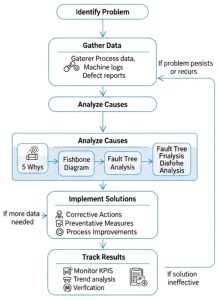
Root cause analysis (RCA) serves as a fundamental process for reducing the occurrence of Engineering Change Orders (ECOs) within diverse manufacturing sectors. Structured methodologies, such as the “5 Whys” technique, enable teams to delve deeper into problems by continuously probing the reasons behind them. For instance, when examining a recurring defect in aerospace components, this approach can reveal that the root cause lies in insufficient material specifications.
The use of Fishbone Diagrams enhances brainstorming sessions, allowing cross-functional teams to collaboratively identify potential 설계 실패 causes. This visual tool systematically organizes various contributory factors, promoting comprehensive analysis. Furthermore, employing Pareto Analysis aids in prioritizing significant issues that require immediate intervention, allowing teams to allocate their resources effectively.
Incorporating data-driven decision-making bolsters the RCA process. Analyzing historical ECO data allows manufacturers to identify trends that reveal common causes of change orders. For example, if a specific component frequently results in ECOs that cause production delays, targeted strategies—such as design modifications or supplier evaluations—can be implemented to significantly reduce the frequency of these orders.
팁: always document the findings from RCA sessions and track the corrective actions taken. This creates a repository of knowledge that can optimize future design processes and enhance overall efficiency, further contributing to the objectives outlined in the Art of the Engineering Change Order (ECO): Best practices for managing design changes in a manufacturing environment to minimize disruption and cost.
Differentiating between minor major and emergency changes in design
In product design, distinguishing between minor, major, and emergency changes is essential to efficiently manage.

- Minor changes: typically involve adjustments that have minimal impact on the product performance or regulatory compliance and can often be handled with informal communication. For instance, surface finish adjustments or slight dimension modifications that fall within the acceptable tolerances are common examples of minor changes.
- Major changes: require a more formal ECO process, as they involve alterations that can significantly affect the functionality, safety, or compliance of the product. Such changes often necessitate comprehensive testing and validation. According to the Aerospace Industries Association, approximately 20% of all changes in aerospace projects are categorized as major, often resulting in extended project timelines and increased costs.
- Emergency changes: on the other hand, are those implemented in response to unforeseen issues that could jeopardize product safety or compliance. For example, a critical defect identified in a medical device might trigger urgent design modifications before the next production batch. These changes should follow a rapid yet structured ECO pathway to mitigate risks while ensuring that documentation and communication maintain their integrity.
Metrics for Tracking ECO Efficiency
Evaluating the effectiveness of engineering change orders (ECOs) necessitates the application of several fundamental metrics that shed light on the 변화 관리 framework. Among these, the ECO cycle time and cost impact are particularly noteworthy, especially within industries such as aerospace and defense.
Another important metric is the implementation success rate, which measures the proportion of ECOs that meet their intended objectives without necessitating further modifications or regressions. This metric is especially pertinent in sectors like automotive manufacturing, where achieving an implementation success rate exceeding 90% is often the target. Monitoring this rate not only aids in identifying patterns but also serves as a basis for developing strategies aimed at ongoing enhancement.
Analyzing the frequency of ECOs across different product categories can also provide valuable information for prioritizing engineering activities. Data analysis frequently indicates that more sophisticated electronic assemblies tend to require modifications more often than simpler designs (obvious ? Not necessarily taking into account that the more complex designs may have more tools and staff and protocols around).
Some of suggested metrics above can be captured for clarity as:
| Product Category | Frequency of ECOs | Average Cost Impact |
|---|---|---|
| Aerospace Components | 5 per quarter | $50,000 |
| 의료기기 | 3 per quarter | $30,000 |
| Automotive Parts | 8 per quarter | $20,000 |
팁: regularly review these metrics in conjunction with the ECO process to identify patterns that can lead to proactive design solutions and enhance operational efficiency.

결론
The Engineering Change Order (ECO) process serves as a fundamental component within the manufacturing sector, balancing innovation with operational efficiency. Our comprehensive analysis of best practices reveals pathways for organizations in all industries to maximize the effectiveness of their ECO workflows.
Documentation stands as a cornerstone of the ECO process. The Change Control Board plays a crucial role in overseeing changes, ensuring that all modifications are aligned with organizational goals. Continuous improvement, driven by measurable outcomes, contributes to logistics optimization. This transformation not only enhances operational efficiency but also cultivates a culture of adaptability and resilience within the organization.In an environment where accuracy and reliability are key, companies dedicated to mastering the Engineering Change Order process position themselves favorably amidst challenges. They turn obstacles into opportunities for advancement and innovation. Prioritizing a structured approach to change management enables organizations to navigate complexity and maintain a competitive edge.

자주 묻는 질문
제조 환경에서 공식적인 ECO 프로세스 워크플로는 무엇인가요?
공식적인 ECO 프로세스 워크플로는 일반적으로 시작, 분석, 검토, 구현 및 효과성 관리 단계를 포함합니다. 각 단계는 생산 중 발생하는 중단과 비용을 최소화하기 위해 변경 사항을 철저히 평가하고 문서화하는 것을 보장합니다.
효과적인 문서화를 위한 ECO 양식의 필수 구성 요소는 무엇입니까?
ECO 양식에는 최소한 부품 번호, 변경 사유, 안전 또는 위험 분석, 비용 영향 분석이 포함되어야 합니다. 적절한 문서화는 변경 프로세스 전반에 걸쳐 명확성과 책임성을 보장합니다.
변경관리위원회의 역할과 기능은 의사결정 과정에서 무엇인가요?
변경 관리 위원회(CCB)는 제안된 변경 사항을 검토하고 승인 또는 거부하는 책임을 맡습니다. 이러한 거버넌스 구조는 위험 및 자원 배분을 포함한 변경의 모든 측면이 구현 전에 고려되도록 보장합니다.
향후 환경오염 사고를 완화하기 위한 근본 원인 분석에 어떤 전략을 사용할 수 있을까요?
효과적인 근본 원인 분석 전략에는 다음과 같은 기법들이 포함됩니다. 5가지 질문, 피시본 다이어그램, 고장 모드 및 영향 분석(FMEA이러한 방법들은 변화를 야기하는 근본적인 문제를 파악하는 데 도움이 되며, 팀이 재발을 방지하는 시정 조치를 실행할 수 있도록 합니다.
설계 변경에서 사소한 변경, 중요한 변경, 그리고 긴급 변경을 어떻게 구분할 수 있을까요?
사소한 변경은 일반적으로 인적 위험이 낮고 비용이 최소한으로 드는 반면, 주요 변경은 설계, 고객 또는 생산 일정에 상당한 영향을 미칠 수 있습니다. 긴급 변경은 안전 또는 규정 준수 문제로 인해 신속한 승인이 필요한 경우가 많습니다.
친환경 효율성을 추적하고 성공을 측정하는 데 어떤 지표를 사용해야 할까요?
ECO 효율성을 추적하는 주요 지표에는 시작부터 구현까지의 소요 시간과 변경 관련 비용이 포함됩니다. 이러한 지표는 ECO 프로세스의 효과성과 개선 기회를 파악하는 데 도움이 됩니다.
항공우주 및 방위산업, 자동차, 의료기기 등 다양한 제조 분야에서 ECO 프로세스는 어떻게 다른가요?
ECO 프로세스는 산업 규정, 준수 표준 및 제품의 복잡성에 따라 달라질 수 있습니다. 예를 들어, 모든 산업에서 안전이 최우선 원칙이지만, 항공우주 및 방위 산업은 자동차 산업에 비해 더욱 엄격한 검증 단계를 요구할 수 있습니다. 자동차 산업은 대량 생산과 비전문 사용자를 대상으로 하기 때문에 비용 효율성에 중점을 둡니다.
효과적인 ECO 프로세스를 구현하는 데 있어 일반적으로 직면하는 어려움은 무엇입니까?
효과적인 환경영향평가(ECO) 프로세스 구현에 있어 어려움으로는 변화에 대한 저항, 불명확한 의사소통, 평가를 위한 자원 부족 등이 있습니다. 이러한 문제들을 조기에 해결하면 성공적인 구현 가능성을 높일 수 있습니다.
관련 주제
- 변화 영향 평가: 엔지니어링 변경이 전체 프로젝트 및 생산에 미칠 수 있는 잠재적 영향을 분석합니다.
- Design Verification 및 검증: 변경된 설계가 명시된 요구 사항 및 의도된 용도를 충족하는지 확인하기 위한 절차.
- 버전 관리 시스템: ECO 수명주기 전반에 걸쳐 설계 문서 변경 사항을 추적하는 소프트웨어 솔루션.
- Supplier Communication Plan: 협력 관계 및 품질 유지를 위해 공급업체가 ECO 프로세스에 대한 정보를 얻고 참여할 수 있도록 보장하는 전략.
- 변경 주문 데이터베이스: 향후 참조 및 분석을 위해 모든 ECO를 보관하는 중앙 저장소
- 규정 준수 및 규제 관련 고려 사항: 특히 의료기기 산업과 같은 분야에서 관련 규정을 이해하고 ECO 프로세스에 통합하는 것.
- 변화가 지속가능성에 미치는 영향: 제조 공정 내에서 설계 변경이 환경 및 지속 가능성 목표와 어떻게 부합하는지 평가합니다.
- 구현 후 검토: ECO 시행 후 결과를 평가하여 얻은 교훈과 개선 기회를 파악합니다.
- 기술 문서 업데이트: ECO 프로세스에서 발생한 변경 사항을 반영하여 관련 문서를 모두 수정해야 합니다.
- ECO의 예산 영향: 잠재적 절감액과 지출액을 포함하여 엔지니어링 변경과 관련된 재정적 영향을 평가합니다.
External Links on Engineering Change Order (ECO)
국제 표준
(링크 위에 마우스를 올려놓으면 콘텐츠에 대한 설명을 볼 수 있습니다.)
사용된 용어집
Engineering Change Order (ECO): 제품의 설계, 사양 또는 공정 변경을 승인하는 문서로, 변경 사항, 사유 및 구현 지침을 상세히 기술하여 제품 수명 주기 전반에 걸쳐 변경 사항을 적절하게 추적하고 관리할 수 있도록 합니다.
Failure Mode and Effects Analysis (FMEA): a systematic method for evaluating potential failure modes within a system, process, or product, assessing their effects on performance, and prioritizing risks to improve reliability and safety through corrective actions.
Root Cause Analysis (RCA): 문제나 실패로 이어지는 근본적인 요인을 체계적으로 파악하는 과정으로, 단순히 증상만 치료하는 것이 아니라 근본적인 문제를 해결하고 제거하는 것을 목표로 합니다.
Verification and Validation (V&V): 시스템이 사양을 충족하고 의도된 목적을 달성하는지 확인하는 프로세스로, 두 가지 별개의 활동으로 구성됩니다. 검증은 제품이 설계 사양을 충족하는지 확인하는 것이고, 유효성 검사는 제품이 사용자의 요구 사항을 충족하는지 평가하는 것입니다.