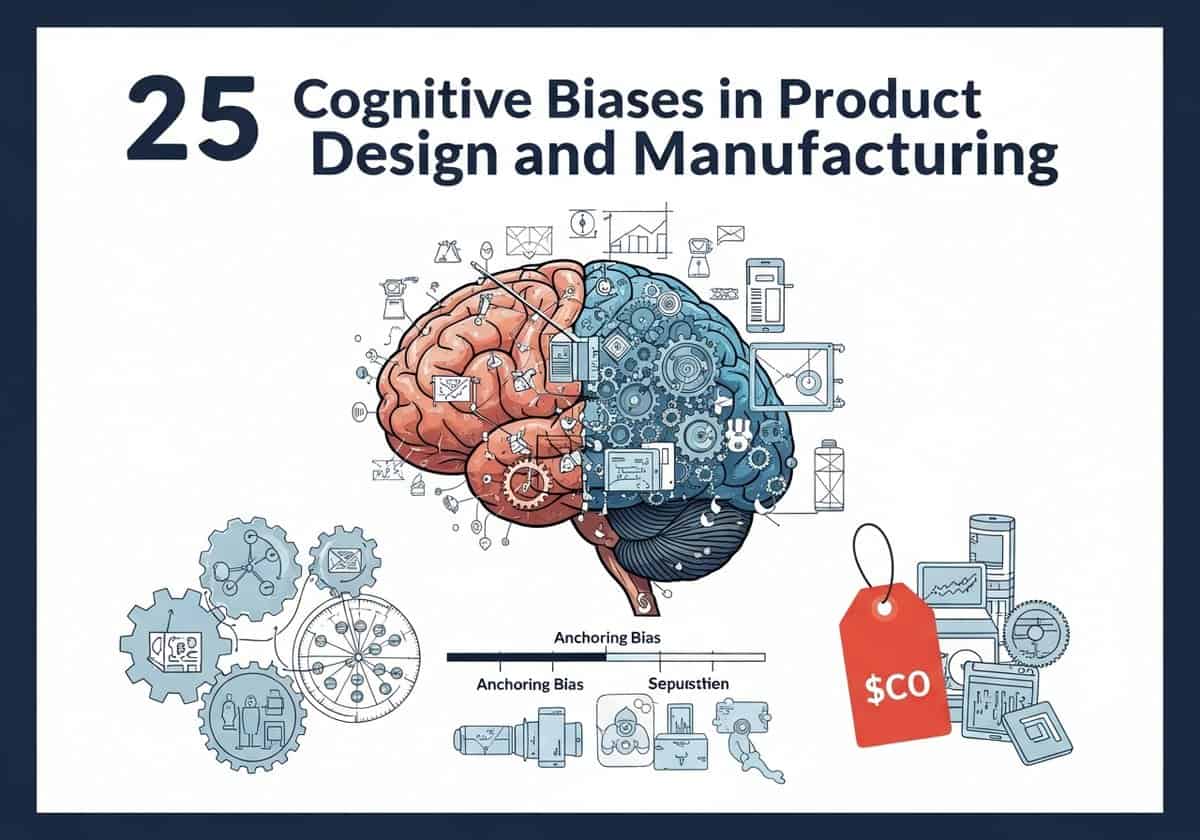
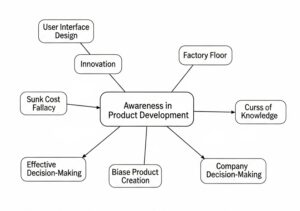
Cognitive biases are shortcuts in human thinking that shape all decisions. Product designers and engineers can improve their work by accounting for these inherent mental patterns. These shortcuts, while useful, also produce predictable, systematic errors in judgment. A working knowledge of these biases allows creators to build products that are more intuitive and successful because they align with how people’s minds actually operate.
This awareness extends beyond user interface design 完整产品 life-cycle从创新到生产车间,影响消费者选择的相同偏见也会影响内部决策。 团队 负责产品开发和质量检验的人员。沉没成本谬误可能使团队陷入失败的项目,而知识诅咒则可能导致工程师编写出对他们而言清晰易懂但对机器操作员而言却晦涩难懂的操作说明。识别这些模式具有双重功能:它有助于开发更高效的产品,并改进公司自身的决策,从而减少代价高昂的错误。
1. The Anchoring Bias
The tendency to rely too heavily on the first piece of information offered. In product development, initial estimates for budgets, timelines, or feature scope act as powerful anchors that are difficult to adjust. A project manager’s initial “2-month” timeline, even if a rough guess, becomes the benchmark for success, constraining engineering teams and discouraging innovative but more time-consuming solutions that may emerge after the project has started.
- Abused for: negotiations, pricing strategy, and managing stakeholder expectations. A high initial asking price makes a subsequent, lower price seem like a good deal, even if it is still above market value.
- Example in R&D: an early, overly optimistic result from a single experiment can anchor an entire research project’s expectations. The R&D team and management may cling to this initial “breakthrough,” making it difficult to objectively assess subsequent, less promising data and pivot the project towards a more viable path.
2. Availability Heuristic
Overestimating the importance of information that is easily recalled. A team might over-prioritize a feature addressing a problem that a high-profile competitor recently struggled with publicly, because that failure is vivid and “available” in their minds. This can divert engineering resources from addressing less sensational, but more prevalent, issues discovered in their own user research.
- 用于: 营销 宣传活动、新闻媒体和风险评估。基于恐惧的广告通常会突出生动但罕见的负面事件,以推销保险或安全产品。
- 质量与安全方面的实例 制造业例如:一个质量控制团队可能会针对两年前导致重大、令人难忘的产品召回事件的特定类型的缺陷实施费时费力的检查程序,而对目前引起客户更高不满意度的更频繁但不那么引人注目的质量问题却关注较少。
3. The Bandwagon Effect

The tendency to adopt certain behaviors or beliefs because many other people are doing so.
This often drives the adoption of popular technology stacks, design systems, or project management methodologies (like a specific Agile 框架) without a rigorous analysis of their suitability for the specific product or team culture. An engineering lead might push for using a complex technology like Kubernetes simply because it’s what “everyone at big tech” is doing, not because the project’s scale demands it.
- 被滥用的原因:推动趋势 病毒式营销并通过创造社会认同来促进产品采用。它制造了一种“害怕错过”(FOMO)的心理,鼓励人们加入不断壮大的群体。
- Example in innovation: an innovation department or company might feel pressured to invest heavily in Generative AI projects simply because it’s the dominant trend and competitors are all announcing their AI initiatives. This can lead to rushed, poorly conceived projects that chase the buzz rather than solving a genuine business problem.
4. The Confirmation Bias
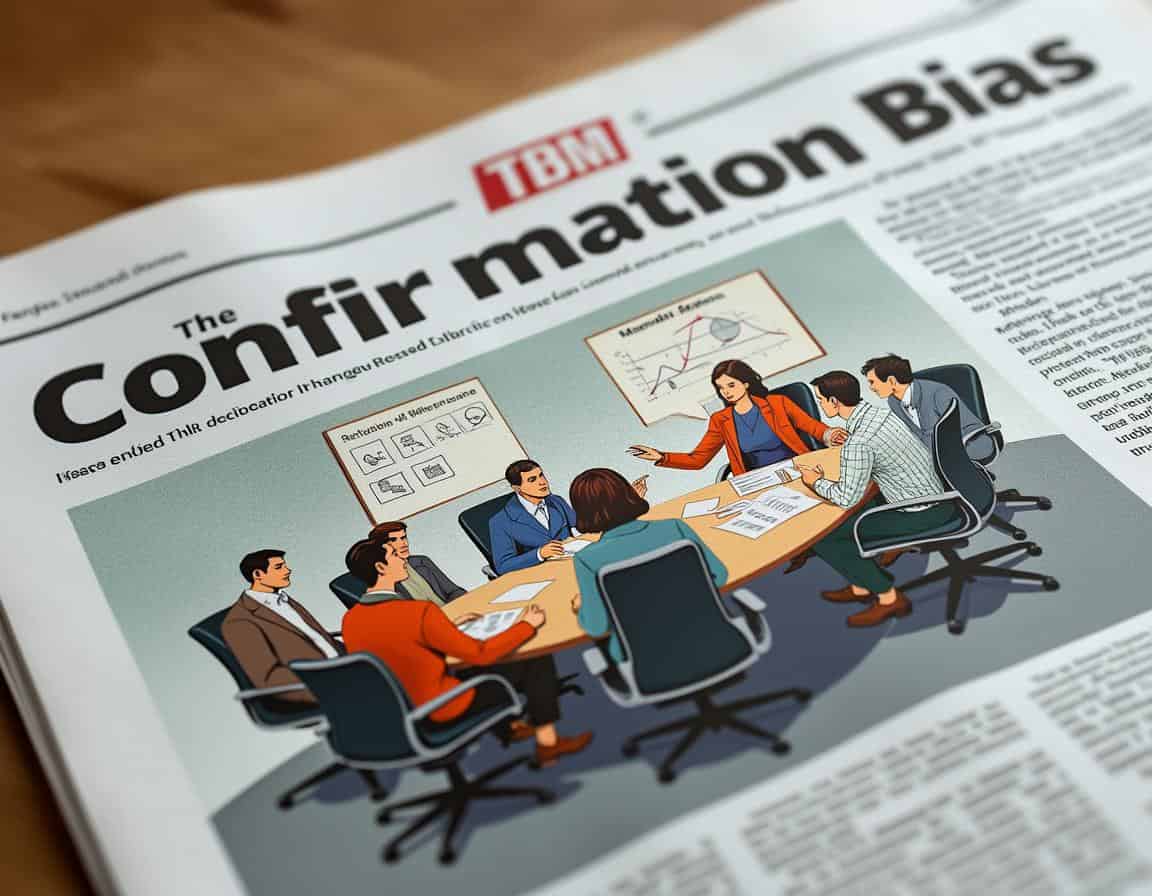
The tendency to search for, interpret, and recall information that confirms pre-existing beliefs.
一旦团队确定了产品构想,他们就会下意识地寻求用户反馈和数据来验证他们选择的方向。 可用性 测试,一个 设计师 项目经理可能会无意中提出引导性问题以获得积极的回应,或者项目经理可能会强调显示进展的指标,而忽略显示策略缺陷的指标,从而将团队引向错误的道路。
- Used for: creating echo chambers in social media feeds, political messaging, and reinforcing brand loyalty by feeding customers information that confirms the wisdom of their purchase.
- Example in R&D: a scientist who believes a specific molecule is the key to a new drug may unconsciously interpret ambiguous test results as positive evidence and dismiss contradictory data as anomalies or measurement errors. This can waste significant time and resources pursuing a dead end.
5. The Curse of Knowledge
The difficulty for experts to imagine what it’s like for someone who doesn’t have their level of knowledge. This is a primary source of friction between engineering and users. Engineers, who understand the system’s architecture, may design an interface or API that is logical from a technical standpoint but completely counter-intuitive for a new user who lacks that underlying mental model, resulting in a poor on-boarding experience and high support costs. This bias is more of an inherent obstacle. It manifests in jargon-filled presentations, overly complex user manuals, and “intuitive” interfaces that are only intuitive to their creators.
- Example in manufacturing: an engineer who designs a complex new assembly machine may write operating instructions that are perfectly clear to another engineer, but incomprehensible to the floor technician who has to use and troubleshoot it daily. This leads to operator errors, reduced efficiency, and potential safety risks. A similar problem can be in the writing of the Instruction For Use (IFU) for a product.
6. The Decoy Effect
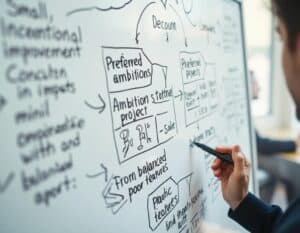
The phenomenon where people’s preference for one of two options can change when a third, asymmetrically dominated option is presented. In product strategy and project management, this can be used to guide stakeholder decisions. When presenting project roadmaps, a product manager might include a “decoy” option -one with an obviously poor balance of features versus engineering effort- to make their preferred strategic option seem more attractive and logical in comparison.
- Abused for: subscription pricing tiers and product line-ups. A “medium” popcorn is priced just slightly less than the “large,” making the large seem like a great value and the intended choice.
- Example in R&D: when pitching innovative projects for funding, a team can present three options: 1) A small, incremental improvement, 2) Their preferred, ambitious project, and 3) A “decoy” project that is almost as expensive as the ambitious one but offers far fewer benefits. The decoy makes the preferred project look like the most efficient and valuable choice.
7. The Default Bias

The tendency to stick with pre-set options.
The power of defaults is immense in both product design and engineering. For users, the default privacy settings or subscription plan can dictate behavior on a massive scale. Internally, the default configurations in a development environment or a “starter” project template will be used by the vast majority of engineers, making the choice of these defaults a critical decision that impacts security, efficiency, and code consistency across the organization.
- 用途:提高新闻简报注册率(选择退出与选择加入),设置 软件 安装选项,并建立公司范围内的 401(k) 注册制度。
- Example in quality: in a manufacturing setting, if the default setting on a machine is “standard tolerance,” most operators will use it for all jobs unless explicitly told otherwise. If a higher-quality product requires “tight tolerance,” relying on operators to remember to change it will lead to errors. Setting the default to the highest required quality standard (or the safest setting) is a powerful way to reduce defects.
提示: indeed, a default selected value can save time. But in some cases, it worth to have no default value and oblige the user or operator to “think” and apply or justify his choice.
8. The Dunning-Kruger Effect
The tendency for individuals with low ability at a task to overestimate their ability. In project planning, a manager with a limited understanding of a new technology might drastically underestimate its complexity, leading to unrealistic deadlines. Similarly, a junior engineer might confidently claim a task will take two days when it will actually take two weeks, causing cascading delays throughout the project plan.
This Bias is rarely used intentionally; its effects are mostly negative. It explains why novices can be overconfident and resistant to feedback, while experts are often more aware of their own limitations.
9. The Endowment Effect
The tendency to place a higher value on things one owns or has created.
This bias is a primary driver of resistance to change in engineering.
团队会对他们自己构建的代码和系统产生依恋(他们“天生”就拥有这些代码和系统),导致他们维护遗留系统,并抵制迁移到更现代、更高效的系统。 技术这种“非我发明”综合症会扼杀创新,并使公司背负代价高昂的技术债务。
- Abused for: free trials and money-back guarantees. Once a user integrates a product into their life, the feeling of ownership makes them less likely to “lose” it by cancelling.
- Example in product development: an innovation team that has spent six months developing a prototype becomes heavily invested in it. When market feedback suggests the core concept is flawed, the team’s sense of “ownership” can cause them to defend the prototype and resist pivoting, arguing for “just a few more features” instead of acknowledging the need for a fundamental change.
10. The Framing Effect
Very frequently used, voluntary or involuntary, it consist in drawing different conclusions from the same information, depending on how it is presented. The perception of the project health is highly susceptible to framing:
方法 a) 项目经理报告进度为“75%的功能已完成代码编写”,营造了一种积极的成就感氛围。
Method b): reporting the same status as “25% of critical code is still untested and un-integrated” creates a negative frame of risk, which can dramatically alter stakeholder confidence and decisions.
- Abused for: public relations, marketing, and political messaging. A medical treatment’s success can be framed as “90% survival rate” (positive) or “10% mortality rate” (negative).
- Another example in Quality Assurance: a QA report can frame its findings to influence action. Stating “the software passed 95% of test cases” encourages a launch decision. Framing the same data as “5% of tests failed, including 2 critical security vulnerabilities” will almost certainly halt the launch. The framing directly impacts the perception of product readiness.
11. The Halo Effect
The tendency for a positive impression in one area to positively influence one’s opinion in other areas. A product with a stunning, polished visual design often benefits from a halo effect, leading users and stakeholders to perceive it as more usable, secure, and well-engineered than it actually is. This can mask serious underlying usability flaws or technical debt, delaying critical feedback until after the product has launched.
- Used for: celebrity endorsements, luxury branding, and interviews. An articulate and charismatic candidate might be perceived as more competent, regardless of their actual skills.
- Example in R&D: a research proposal from a scientist who recently won a prestigious award may be scrutinized less rigorously by a funding committee. The “halo” of the award can lead the committee to overlook potential flaws in the experimental design or budget, assuming the entire proposal is as brilliant as the scientist’s past work.
12. Hick’s Law
The time it takes to make a decision increases with the number and complexity of choices. This applies equally to user interfaces and internal engineering systems. A settings menu with 50 options will overwhelm a user. Likewise, a microservices architecture with too many interdependent services and configuration flags creates immense cognitive load on engineers, making troubleshooting and innovation slow and error-prone.
This is primarily a principle to design against.
It is abused when companies intentionally create confusing options to nudge users toward a default or more expensive choice. It must be used constructively to simplify remote controls, application menus, and emergency procedures.
- Example in sales: never offer too many options to the customer: instead of pleasing him, he may not decide, and buy nothing at all!
- Example in Manufacturing: a control panel for a piece of factory machinery with dozens of unordered buttons and switches will slow down operators and increase the chance of error. A well-designed panel uses Hick’s Law by grouping related controls, hiding advanced options, and simplifying common workflows to reduce decision time and improve safety.
13. The IKEA Effect

Placing a disproportionately high value on products one has partially created. This is leveraged by products that involve user customization and setup.
In an enterprise or development context, when an engineering team invests significant effort in configuring and customizing a third-party platform (like a CRM or a data dashboard), they become heavily invested in it. This increases loyalty but can also make them resistant to switching to a better, simpler solution in the future because they don’t want to abandon their effort.
- Used for: building brand loyalty and user investment. Meal-kit services, build-a-bear workshops, and customizable online profiles all benefit from users valuing the final product more because of their own effort.
- Example in brainstorming: an innovation challenge that provides teams with a basic toolkit and requires them to build their own prototype can be more effective than just asking for ideas. The teams that invest the effort to build something, even if it’s rudimentary, will feel a stronger sense of ownership and be more passionate advocates for their innovative solution.
14. The Loss Aversion
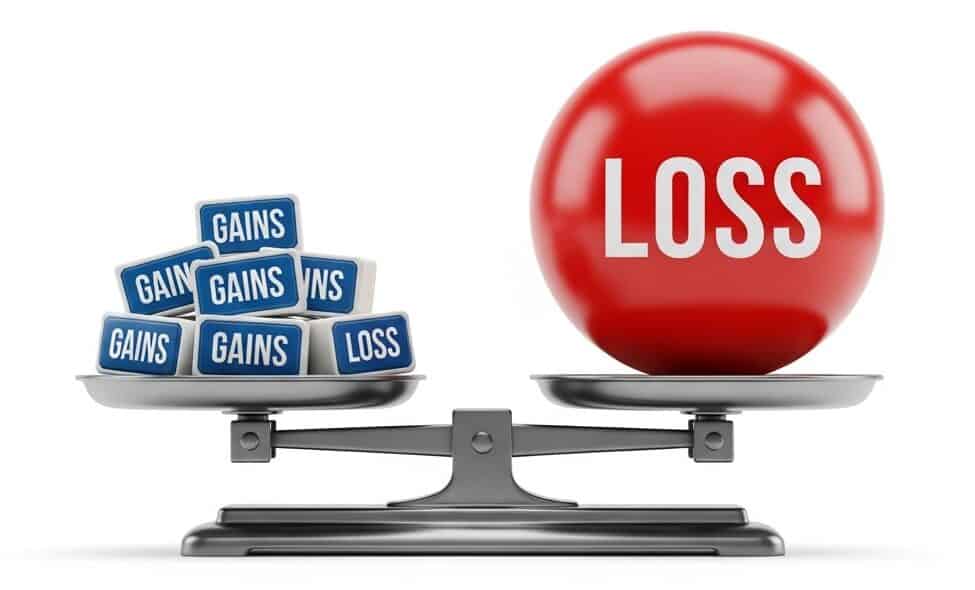
The tendency to feel that the pain of a loss is twice as powerful as the pleasure of an equivalent gain.
This is a major impediment to product evolution and project agility. Proposing the removal of a rarely-used feature will trigger strong opposition from the few who use it (a perceived loss), which often outweighs the broad, diffuse benefit of a cleaner product for everyone else. This makes it psychologically and politically difficult for product managers to simplify and streamline their products.
- Abused for: driving urgency in sales with “limited-time offer” messages (avoid the loss of the deal) and in user retention by framing cancellation as “losing your benefits.”
- Example in manufacturing: proposing a change to a long-standing manufacturing process, even if data shows it will increase efficiency (a gain), will be met with strong resistance. Workers may focus on the “loss” of their familiar routine and perceived expertise, fearing the uncertainty of the new process more than they value the promised efficiency gains.
15. The Negativity Bias
Related to the Loss Aversion, the Negativity Bias is the tendency to give more weight to negative experiences than positive ones. In project retrospectives (“post-mortems”), teams often fixate on the one or two things that went wrong (a server outage, a missed deadline) while glossing over the dozens of things that went right. This can lead to a risk-averse culture that penalizes experimentation and discourages ambitious innovation.
- Used/Abused For: customer reviews and news reporting. A single one-star review can outweigh ten five-star reviews. Negative headlines get more clicks than positive ones.
- 质量保证示例:质量保证测试人员的职责本质上是发现缺陷,这可能会导致消极偏见的制度化。他们可能会提交一份包含大量细小问题的缺陷报告,从而给人造成产品质量低下、令人沮丧的印象,而实际上产品的核心功能是稳定的。 用户体验 总体而言是积极的。
16. The Mental Model
A person’s thought process for how something works in the real world. A critical failure point in product development is a mismatch between the engineer’s mental model and the user’s. For example, an engineer may think of “saving a file” as a distinct action, while a user accustomed to cloud apps has a mental model where work is saved continuously and automatically.
Designing against the user’s mental model leads to confusion and a steep learning curve.
This is a core concept in user experience design. It’s used to create intuitive interfaces that match user expectations (e.g., a shopping cart icon). It’s a source of problems when ignored, leading to user error.
- 质量/安全示例:在制造工厂中,如果紧急停止按钮被设计成触摸屏图标(工程师对现代界面的普遍认知模型),但工人的通用认知模型却是…… 压力 如果是一个大型的、实体的红色按钮,这种不匹配可能导致紧急情况下发生灾难性故障。质量和安全规程必须与根深蒂固的思维模式相一致。
17. The Mere Exposure Effect
With some commonalities with the Mental Model, this bias is the tendency to develop a preference for things merely because of familiarity. This is why engineering teams often resist adopting new tools or processes. They are comfortable with the existing toolchain (e.g., Jira, Jenkins) not because it is the best, but because they are familiar with its quirks and workflows. Overcoming this inertia is a key challenge for innovation in development practices.
- 滥用用途:广告和品牌推广。看到一个品牌 标识 反复地,即使是潜意识地,也能建立起一种熟悉感和信任感,从而影响购买决定。
- Example in R&D: a lab might continue to purchase measurement instruments from a specific brand, even when a competitor offers a more accurate or cheaper alternative. The researchers are simply more comfortable and familiar with the old brand’s interface and operation, and this preference born of familiarity can inhibit the adoption of superior technology.
18. The Peak-End Rule

Judging an experience largely based on how it was felt at its peak (most intense point) and at its end.
The overall perception of a year-long project is often not an average of the entire experience. Instead, the team and stakeholders will remember the most stressful week (the “peak”) and the final launch experience (the “end”).
提示: a skilled project manager can salvage a difficult project by ensuring the final weeks are smooth, successful, and celebratory, thus creating a positive lasting memory.
- Used for: designing customer service experiences and user journeys. A difficult installation process can be “saved” by a final, delightful success screen and a welcoming on-boarding tour.
- Example in innovation: when running a pilot program for an innovative new product, the experience must end on a high note. Even if there were mid-program glitches (peaks), ensuring the final off-boarding process is smooth, gathers positive feedback, and provides a “thank you” gift can leave participants with a much more positive overall memory of the innovation.
19. The Serial Position Effect
Very close to the Peak-End Rule, this one is the tendency to best recall the first and last items in a series. In critical meetings like a project kickoff or a quarterly review, stakeholders will most clearly remember what is said at the beginning and what is said at the end. Important information, such as the project’s primary goal or the biggest risk, should be communicated at the very start or summarized at the very end to ensure maximum retention and impact.
- Can be used for: structuring presentations, writing sales copy, and designing lists. Key benefits are listed first, and the call-to-action is placed at the very end.
- Example in Quality Control: when an inspector checks a batch of products, they may be most attentive at the beginning and end of the batch.
提示: this can be dangerous if it leads to less scrutiny for items in the middle. To counteract this, quality procedures should mandate randomized sampling or structured breaks to reset attention and ensure consistent inspection throughout the entire batch.
20. Reciprocity
The social norm of responding to a positive action with another positive action. Within a company, this is the glue of cross-functional collaboration. When an engineer goes out of their way to help a designer debug a prototype, the designer is more likely to prioritize that engineer’s future requests for design assets. This informal system of reciprocity is often more effective at getting things done than formal project plans.
- Abused in Marketing: content marketing (giving away a free ebook to get an email address), sales (offering free samples), and building social obligations.
21. Scarcity

The tendency to see more value in something that is perceived to be limited in supply. Product managers use this to create focus and drive decisions. By framing engineering time as a scarce resource (“We only have the bandwidth for one of these two features this quarter”), they force stakeholders to make difficult but necessary trade-offs, preventing scope creep and ensuring resources are allocated to the highest-priority initiatives.
- Abused in Marketing: driving sales with “limited edition” products, “only 3 left in stock” messages, and countdown timers for deals.
- Can be used positively if done seldom : to push rapid progress, an innovation team might be given a “scarcity” constraint: a small, fixed budget and a two-week timeline to develop a proof-of-concept. This scarcity of time and money forces the team to be highly creative, focus only on what’s essential, and avoid over-engineering, often leading to more inventive solutions.
22. The Self-Serving Bias
人们倾向于将成功归功于个人技能,而将失败归咎于外部因素。当产品发布超出预期目标时,工程团队可能会将功劳归于他们“简洁的代码”,而设计团队则会将功劳归于他们“直觉”。 用户体验如果失败,同样的团队可能会把责任归咎于“管理层设定的不切实际的期限”,或者“ 糟糕的营销 策略。这种偏见会阻碍团队从成功和失败中吸取真正的教训。
This is a self-preservation bias. It’s commonly seen in performance reviews and project post-mortems where individuals or teams deflect blame and claim credit.
- Example in R&D: if an experiment succeeds, the lead scientist may attribute it to their brilliant hypothesis and skill. If it fails, they may blame a faulty piece of equipment or a contaminated sample (external factors). This bias can prevent them from re-evaluating their core hypothesis, which may be the actual source of the failure.
23. The Social Proof

The tendency to assume the actions of others reflect correct behavior.
This is profoundly influential in technology choices. Engineering teams will often adopt a language, framework, or database not after a deep, first-principles analysis, but because a respected “unicorn” tech company uses it and has written blog posts about its success. This can lead to teams adopting solutions that are far too complex for their actual needs.
- Abused for: displaying customer testimonials, user counts (“Join 10 million users”), and influencer marketing to build trust and drive adoption.
- 例如,在制造业中:工厂经理可能不愿投资一种新的、未经检验的技术。 机器人技术 技术。然而,如果他们得知三大竞争对手已成功采用该技术并提高了生产力,那么来自同行的社会认同可能成为促使他们批准投资的最后一根稻草。
24. The Sunk Cost Fallacy

With many similarities with The Endowment Effect, this one consists of continuing a behavior or endeavor as a result of previously invested resources (time, money, or effort).
这是产品开发中最具破坏性的偏见之一。它迫使项目经理继续向失败的功能或产品投入工程资源,因为“我们已经投入了太多”。由于对沉没成本的情感依恋,导致无法止损和调整方向,这造成了严重的后果。 引领 无数创新项目戛然而止。
This is a trap that people and organizations fall into. It’s used in arguments to justify continuing a failing project or war: “We can’t pull out now, because our soldiers’ lives would have been wasted.”
- Example in R&D: an organization might continue to fund a pharmaceutical research project for a drug that consistently shows poor efficacy and high side effects simply because $50 million has already been invested over five years. The rational decision would be to cut losses and reinvest in a more promising drug candidate, but the sunk cost makes this emotionally and politically difficult. See also “The Dead Horse” analogy.
25. The Zeigarnik Effect
The tendency for people to better remember uncompleted or interrupted tasks than completed tasks. This creates a persistent cognitive load for engineering teams, as unresolved bugs and pending feature requests linger in their minds.
提示: 精明的项目经理可以利用这一点,例如使用以下工具: 看板 看板和进度条,使“未完成的任务”可见,并激励团队将任务移至“完成”,从而实现心理上的满足感。
- Abused for: creating cliffhangers in TV series and using progress bars in user profiles (e.g., “Your profile is 80% complete”) to motivate users to finish the task.
- Example in Manufacturing: on an assembly line, an incomplete product at a worker’s station creates a natural cognitive tension to finish it.
Tip: this effect can be harnessed by ensuring that work-in-progress is always clearly visible. Conversely, if a worker is frequently interrupted and has too many incomplete tasks open at once, the resulting cognitive load can increase stress and the likelihood of errors.

结论
The intentional misuse of these cognitive triggers moves design from beneficial guidance to active manipulation. When product designers exploit biases like Loss Aversion to create addictive feedback loops, or use the Decoy Effect in “dark patterns” to trick people into more expensive choices, they breach user trust. This exploitation is not limited to customers; a project manager can misuse Anchoring to impose unrealistic deadlines on an engineering team, compromising quality and well-being. Such actions prioritize short-term gain over ethical responsibility, transforming psychological insight into a tool for deception.
This unethical conduct carries substantial legal and commercial risks.
Regulatory bodies now actively penalize companies for deceptive user interface designs that trap consumers in subscriptions or obscure data collection practices.
在技术领域,通过操纵舆论来歪曲安全数据以淡化风险,一旦产品出现故障,可能会导致公司被控疏忽罪。此类事件曝光后引发的公众强烈反弹可能会摧毁一家公司。 名声 比任何经济处罚都更彻底,它会削弱客户忠诚度,并吓跑那些拒绝为欺骗性组织工作的优秀求职者。
常用术语表
Application Programming Interface (API): 一组允许不同软件应用程序相互通信和交互的规则和协议,实现系统之间的功能集成和数据交换。
Conversion Rate (CR): 转化率是指网站或着陆页的访问者完成所需操作(例如购买商品或注册新闻通讯)的百分比,计算方法是将转化次数除以访问者总数。
Customer Relationship Management (CRM): 该系统用于管理公司与现有客户和潜在客户的互动,利用数据分析来改善业务关系、提高客户保留率并推动销售增长。它整合了各种沟通渠道,并实现了流程自动化,从而简化了客户互动流程。
instruction For Use (IFU): 提供有关医疗器械或产品的正确使用、处理和维护的详细信息的文件,以确保用户的安全和有效性。
User experience (UX): 用户与产品、系统或服务交互时的整体满意度和感知,涵盖整个交互过程中的可用性、可访问性、设计和情感反应。
User Interface (UI): 一种支持用户与软件应用程序之间交互的系统,包括视觉元素、控件和整体布局,以方便用户执行任务并增强体验。