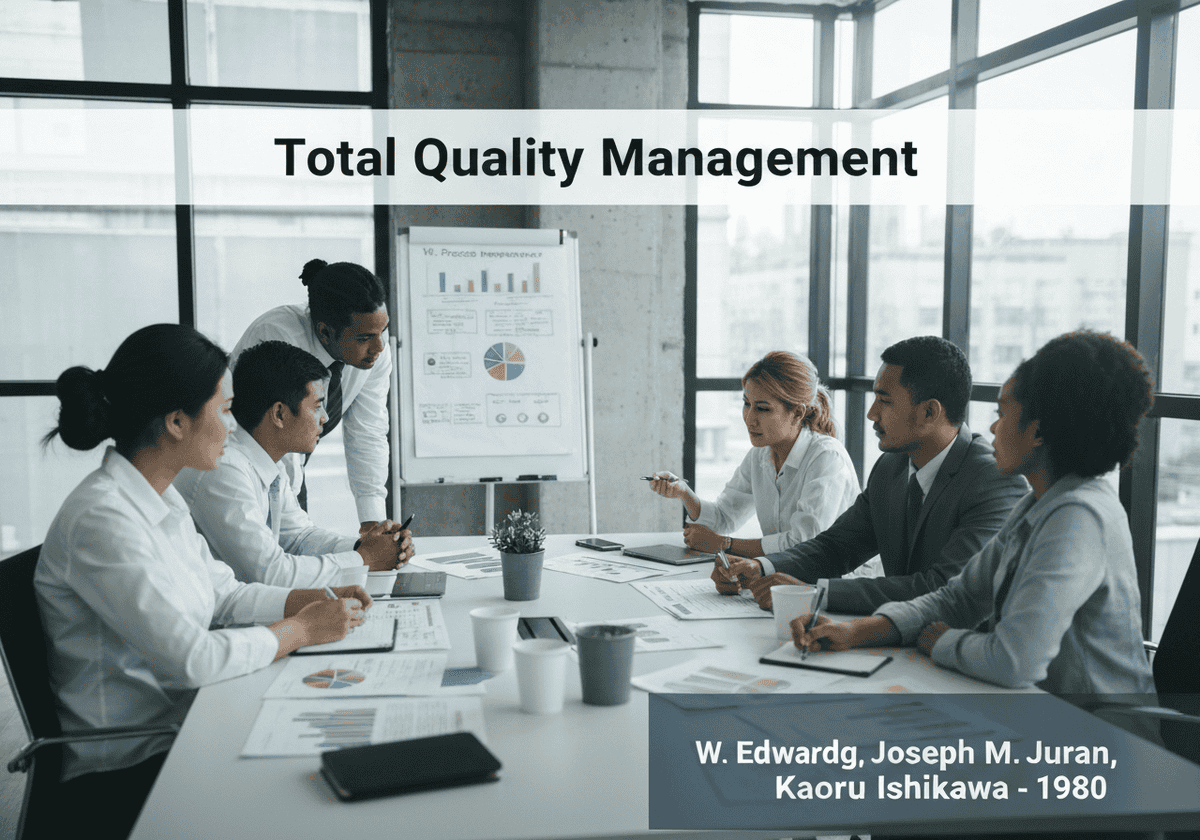
Total Quality Management (TQM) represents a fundamental shift from traditional management thinking. Instead of viewing quality as the sole responsibility of a specific department (品質管理), TQM posits that quality is everyone’s responsibility, from the CEO to the frontline worker. This approach is built on the foundation that preventing defects is more cost-effective than detecting and correcting them after they occur. The core principles of TQM often include a strong customer focus, total employee involvement, a process-centered view, an integrated system, a strategic and systematic approach, continual improvement, fact-based decision making, and effective communication.
TQMの導入には、組織内の深い文化変革が伴います。すべてのレベルで原則を推進するには、強力なリーダーシップが必要です。 PDCA cycle are often used to implement continuous improvement initiatives. TQM emphasizes data collection and analysis to understand and improve processes. Tools such as statistical process control (SPC), cause-and-effect diagrams (Ishikawa diagrams), and flowcharts are commonly employed to identify root causes of problems and streamline operations. The ultimate goal is to create a self-sustaining culture of improvement where quality is embedded in every action and decision, leading to higher customer satisfaction, reduced costs, and increased competitiveness.