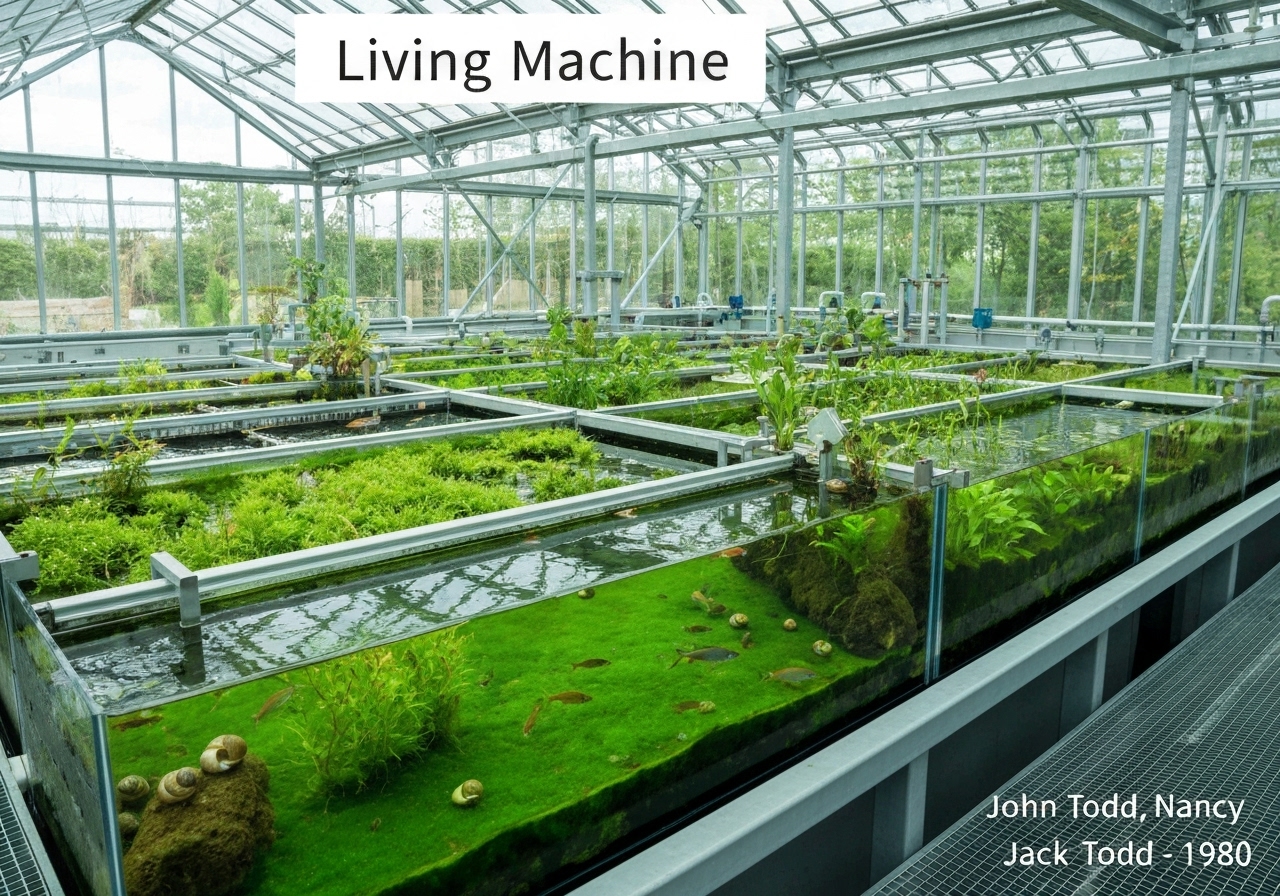
A Living Machine, also known as an Eco-Machine, is an advanced ecological engineering system for treating wastewater. It was pioneered by biologist John Todd at the New Alchemy Institute. Unlike conventional chemical or mechanical wastewater treatment plants, a Living Machine employs a complex, self-organizing web of living organisms to perform the purification. The process typically involves a series of tanks or cells, each containing a distinct ecosystem tailored to a specific stage of treatment.
Wastewater flows sequentially through these cells. The first stages often involve anaerobic and anoxic tanks where microbes break down solids and organic compounds. Subsequent stages are aerobic, housed in clear tanks or greenhouses to allow for 光合成. These tanks contain a diverse array of plants (like water hyacinths or cattails) whose roots provide vast surface area for beneficial bacteria and microorganisms. Snails, amphipods, and other invertebrates graze on algae and biofilms, while fish may be introduced in later stages to consume smaller organisms. The result is a robust, resilient system that can effectively remove pathogens, nutrients, and organic pollutants, producing high-quality reclaimed water suitable for non-potable uses like irrigation or toilet flushing.
miniaturized home-scale living machines for single-family residences
modular, scalable living machine units for disaster relief zones
integration with vertical farming to create a 閉ループ food and water system
bio-sensors that use the health of indicator species within the machine to monitor water quality in real-time
living machines designed to break down specific industrial pollutants like pharmaceuticals or microplastics
floating living machine barges to clean polluted urban canals and rivers
integration into building facades as a “living wall” that also treats greywater
systems adapted for arid climates with high evaporation rates
living machines designed for spacecraft life support systems
commercial kits for schools to build and study small-scale living machines
Related to: living machine, john todd, ecological engineering, wastewater treatment, 生物修復, constructed wetland, eco-machine, 植物による汚染浄化, new alchemy institute, water purification.