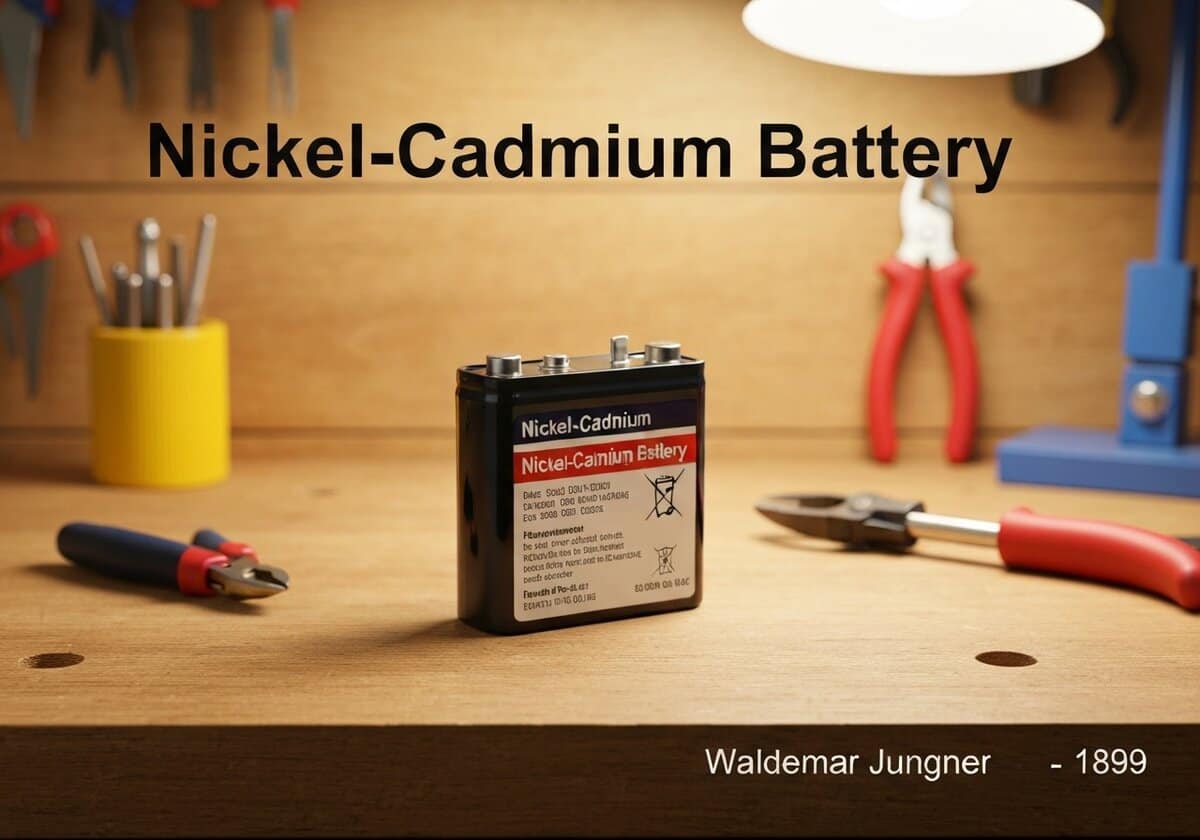
1899年にヴァルデマール・ユングナーによって発明されたニッケルカドミウム電池は、正極に酸化水酸化ニッケル(NiO(OH))、負極に金属カドミウム(Cd)を用い、電解液には水酸化カリウム(KOH)などのアルカリ性物質を使用する。長寿命で低温環境下でも優れた性能を発揮する一方、メモリー効果やカドミウムの毒性といった欠点がある。


(画像はイメージです)
1899年にヴァルデマール・ユングナーによって発明されたニッケルカドミウム電池は、正極に酸化水酸化ニッケル(NiO(OH))、負極に金属カドミウム(Cd)を用い、電解液には水酸化カリウム(KOH)などのアルカリ性物質を使用する。長寿命で低温環境下でも優れた性能を発揮する一方、メモリー効果やカドミウムの毒性といった欠点がある。
ニッケルカドミウム電池は、 lead-acid battery, offering a higher energy density and a much longer cycle life in a sealed, maintenance-free package. Waldemar Jungner’s invention provided a robust and reliable power source that became dominant in portable applications for much of the 20th century. The core chemical reaction during discharge is [latex]2 NiO(OH) + Cd + 2 H_2O rightarrow 2 Ni(OH)_2 + Cd(OH)_2[/latex].
The use of an alkaline electrolyte, typically potassium hydroxide, was a key difference from the acidic electrolyte of lead-acid cells. This chemistry allowed for a very flat discharge voltage curve, meaning the battery delivered a nearly constant voltage until it was almost fully depleted. However, its major drawbacks led to its decline. Cadmium is a heavy metal with significant environmental toxicity, making disposal and recycling a critical issue. Furthermore, NiCd batteries are prone to the ‘記憶効果,’ where repeated partial discharge/charge cycles can cause a reduction in usable capacity. This necessitated periodic full discharge cycles to maintain performance. Despite being largely replaced by NiMH and Li-ion technologies in consumer goods, its durability ensures it remains in some niche industrial and 航空 アプリケーション。
ニッケルカドミウム電池(NiCd)
(日付が不明または関連性がない場合、例えば「流体力学」などでは、その注目すべき出現時期の概算値が提示されます。)

フルサイズの画像とダウンロードは、登録会員のみが100%無料で利用できます。
> ログイン <