Product Design, Manufacturing & Innovation Resources
بيت » بطارية النيكل والكادميوم (NiCd)

بطارية النيكل والكادميوم (NiCd)

1899
  • Waldemar Jungner
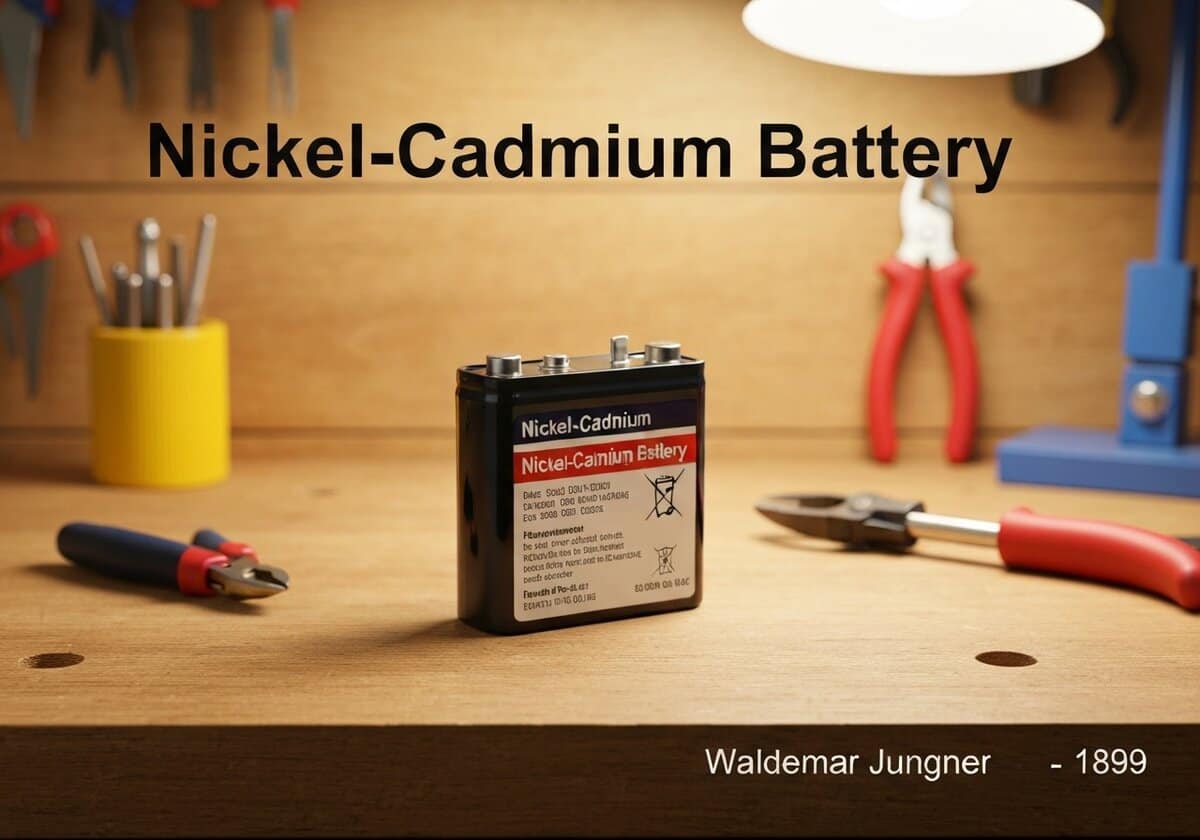
Nickel-Cadmium battery showcasing electrochemical properties and applications in electronics.

(صورة توضيحية فقط)

Invented by Waldemar Jungner in 1899, the NiCd battery uses nickel oxide hydroxide (NiO(OH)) as the positive electrode and metallic cadmium (Cd) as the negative electrode, with an alkaline electrolyte like potassium hydroxide (KOH). It is known for its long cycle life and good performance at low temperatures, but suffers from the تأثير الذاكرة وسمية الكادميوم.

كانت بطارية النيكل والكادميوم خطوة كبيرة إلى الأمام من lead-acid battery, offering a higher energy density and a much longer cycle life in a sealed, maintenance-free package. Waldemar Jungner’s invention provided a robust and reliable power source that became dominant in portable applications for much of the 20th century. The core chemical reaction during discharge is [latex]2 NiO(OH) + Cd + 2 H_2O rightarrow 2 Ni(OH)_2 + Cd(OH)_2[/latex].

The use of an alkaline electrolyte, typically potassium hydroxide, was a key difference from the acidic electrolyte of حمض الرصاص cells. This chemistry allowed for a very flat discharge voltage curve, meaning the battery delivered a nearly constant voltage until it was almost fully depleted. However, its major drawbacks led to its decline. Cadmium is a heavy metal with significant environmental toxicity, making disposal and recycling a critical issue. Furthermore, NiCd batteries are prone to the ‘memory effect,’ where repeated partial discharge/charge cycles can cause a reduction in usable capacity. This necessitated periodic full discharge cycles to maintain performance. Despite being largely replaced by NiMH and Li-ion technologies in consumer goods, its durability ensures it remains in some niche industrial and aviation applications.

UNESCO Nomenclature: 2204
– Electrochemistry

يكتب

Physical Device

خلل

Substantial

الاستخدام

Niche/Specialized

مقدمات

  • بطارية الرصاص الحمضية لغاستون بلانتيه (1859)
  • development of alkaline electrolytes
  • عمل توماس إديسون على بطاريات النيكل والحديد (1901)، والتي تشترك في كيمياء الكاثود المماثلة

التطبيقات

  • أدوات الطاقة اللاسلكية المبكرة
  • أنظمة الإضاءة الطارئة
  • نماذج الطائرات والقوارب
  • الأجهزة الإلكترونية المحمولة قبل بطاريات الليثيوم أيون
  • بطاريات الطيران

براءات الاختراع:

NA

أفكار ابتكارية محتملة

  • بطاريات خالية من الكادميوم مثل بطاريات NiCd باستخدام أقطاب كهربائية سالبة بديلة
  • طرق إعادة التدوير المتقدمة لاستعادة الكادميوم والنيكل بأمان
  • nanostructured electrodes to mitigate memory effect
  • إلكتروليتات قلوية ذات حالة صلبة لتحسين السلامة
  • أجهزة هجينة من NiCd-مكثف فائق لتطبيقات الانفجار عالية الطاقة
  • شواحن ذكية مع دورات إعادة تأهيل لعكس تأثير الذاكرة تلقائيًا
  • عمليات الاستخلاص البيولوجي لاستعادة المعادن الصديقة للبيئة من البطاريات المستهلكة
  • flexible NiCd batteries for wearable technology
  • متغيرات NiCd عالية الحرارة لأجهزة الاستشعار الحرارية الأرضية أو الفضائية
  • خلايا NiCd مصغرة للأجهزة الطبية القابلة للزرع والتي تتطلب موثوقية طويلة الأمد
Related to: NiCd, nickel-cadmium, Waldemar Jungner, تأثير الذاكرة, alkaline battery, cadmium, nickel oxide hydroxide, rechargeable, cycle life, portable electronics.

السياق التاريخي

بطارية النيكل والكادميوم (NiCd)

1890
1895
1895
1899
1900
1900
1900
1890
1895
1895
1896
1900
1900
1900
1900

(إذا كان التاريخ غير معروف أو غير ذي صلة، على سبيل المثال "ميكانيكا الموائع"، يتم توفير تقدير تقريبي لظهوره الملحوظ)

أحدث الإضافات

أهم المنشورات والمقالات

أفضل الأدوات الأصلية

السنة العاشرة عيد

الصور والتنزيلات بالحجم الكامل متاحة فقط، ومجانية تمامًا، للأعضاء المسجلين.