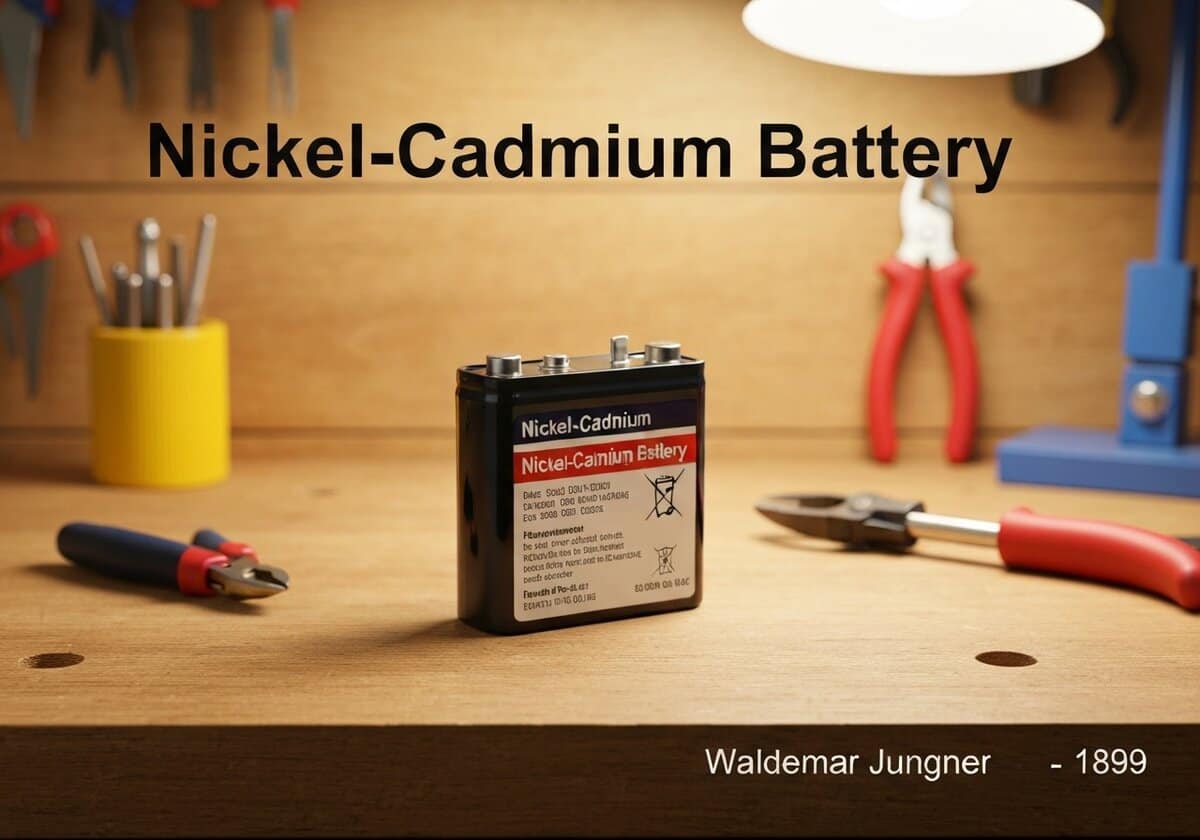
镍镉电池是镍氢电池的重要进步。 lead-acid battery, offering a higher energy density and a much longer cycle life in a sealed, maintenance-free package. Waldemar Jungner’s invention provided a robust and reliable power source that became dominant in portable applications for much of the 20th century. The core chemical reaction during discharge is [latex]2 NiO(OH) + Cd + 2 H_2O rightarrow 2 Ni(OH)_2 + Cd(OH)_2[/latex].
The use of an alkaline electrolyte, typically potassium hydroxide, was a key difference from the acidic electrolyte of lead-acid cells. This chemistry allowed for a very flat discharge voltage curve, meaning the battery delivered a nearly constant voltage until it was almost fully depleted. However, its major drawbacks led to its decline. Cadmium is a heavy metal with significant environmental toxicity, making disposal and recycling a critical issue. Furthermore, NiCd batteries are prone to the ‘记忆效应,’ where repeated partial discharge/charge cycles can cause a reduction in usable capacity. This necessitated periodic full discharge cycles to maintain performance. Despite being largely replaced by NiMH and Li-ion technologies in consumer goods, its durability ensures it remains in some niche industrial and 航空 应用程序。