Product Design, Manufacturing & Innovation Resources
Lar » Bateria de níquel-cádmio (NiCd)

Bateria de níquel-cádmio (NiCd)

1899
  • Waldemar Jungner
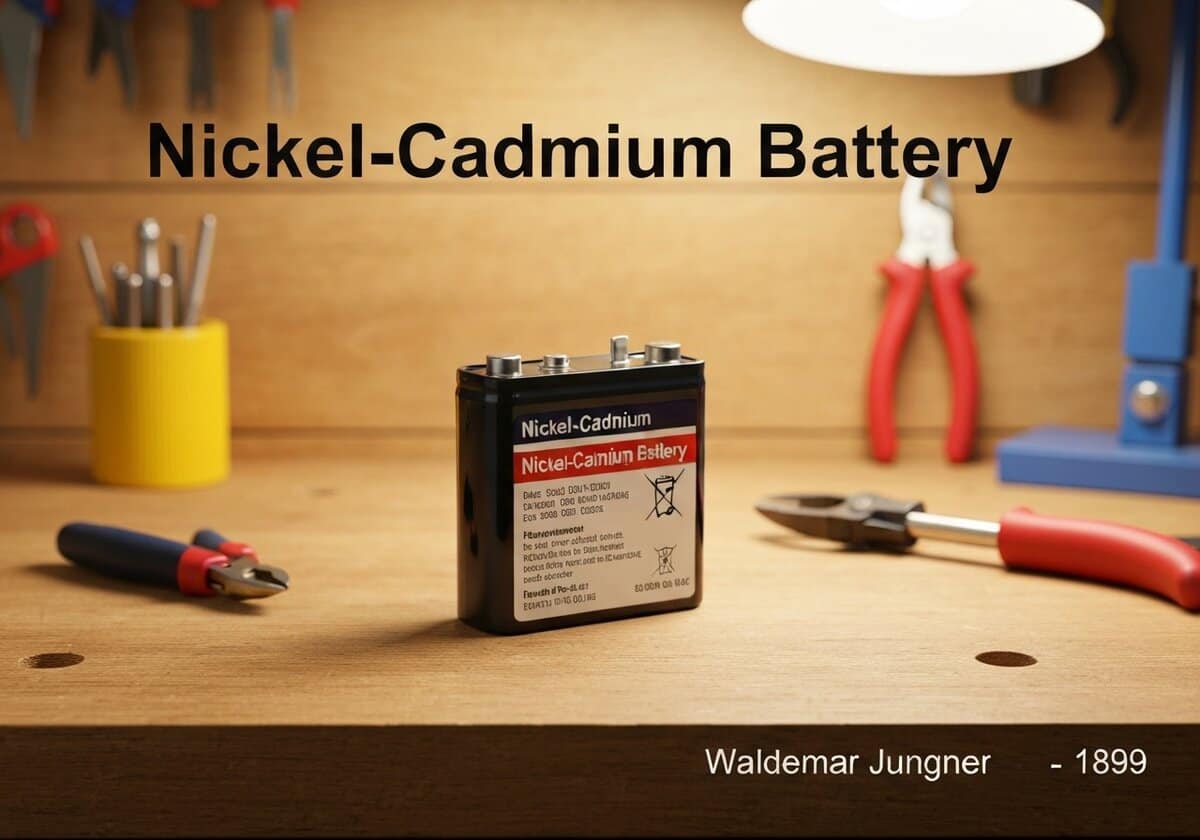
Bateria de níquel-cádmio, apresentando suas propriedades eletroquímicas e aplicações na área de eletrônica.

(Imagem gerada apenas para fins ilustrativos)

Invented by Waldemar Jungner in 1899, the NiCd battery uses nickel oxide hydroxide (NiO(OH)) as the positive electrode and metallic cadmium (Cd) as the negative electrode, with an alkaline electrolyte like potassium hydroxide (KOH). It is known for its long cycle life and good performance at low temperatures, but suffers from the efeito de memória e a toxicidade do cádmio.


A bateria de níquel-cádmio representou um avanço significativo em relação à lead-acid battery, offering a higher energy density and a much longer cycle life in a sealed, maintenance-free package. Waldemar Jungner’s invention provided a robust and reliable power source that became dominant in portable applications for much of the 20th century. The core chemical reaction during discharge is [latex]2 NiO(OH) + Cd + 2 H_2O rightarrow 2 Ni(OH)_2 + Cd(OH)_2[/latex].

The use of an alkaline electrolyte, typically potassium hydroxide, was a key difference from the acidic electrolyte of chumbo-ácido cells. This chemistry allowed for a very flat discharge voltage curve, meaning the battery delivered a nearly constant voltage until it was almost fully depleted. However, its major drawbacks led to its decline. Cadmium is a heavy metal with significant environmental toxicity, making disposal and recycling a critical issue. Furthermore, NiCd batteries are prone to the ‘memory effect,’ where repeated partial discharge/charge cycles can cause a reduction in usable capacity. This necessitated periodic full discharge cycles to maintain performance. Despite being largely replaced by NiMH and Li-ion technologies in consumer goods, its durability ensures it remains in some niche industrial and aviation applications.

UNESCO Nomenclature: 2204
Eletroquímica

Tipo

Dispositivo físico

Interrupção

Substancial

Uso

Nicho/Especializado

Precursores

  • Bateria de chumbo-ácido de Gaston Planté (1859)
  • desenvolvimento de alkaline electrolytes
  • O trabalho de Thomas Edison sobre baterias de níquel-ferro (1901), que compartilhavam uma química de cátodo semelhante.

Aplicações

  • ferramentas elétricas sem fio antigas
  • sistemas de iluminação de emergência
  • aeromodelos e barcos
  • dispositivos eletrônicos portáteis antes do íon de lítio
  • baterias de aviação

Patentes:

NA

Ideias de Inovação Potencial

  • cadmium-free NiCd-like batteries using alternative negative electrodes
  • advanced recycling methods to safely recover cadmium and nickel
  • nanostructured electrodes to mitigate memory effect
  • solid-state alkaline electrolytes for improved safety
  • hybrid NiCd-supercapacitor devices for high power burst applications
  • smart chargers with reconditioning cycles to reverse memory effect automatically
  • bio-leaching processes for eco-friendly metal recovery from spent batteries
  • flexible NiCd batteries for vestível tecnologia
  • high-temperature NiCd variants for geothermal or aerospace sensors
  • miniaturized NiCd cells for implantable medical devices requiring long-term reliability
Related to: NiCd, nickel-cadmium, Waldemar Jungner, efeito de memória, alkaline battery, cadmium, nickel oxide hydroxide, rechargeable, cycle life, portable electronics.

Contexto histórico

Bateria de níquel-cádmio (NiCd)

1890
1895
1895
1899
1900
1900
1900
1890
1895
1895
1896
1900
1900
1900
1900

(Caso a data seja desconhecida ou irrelevante, por exemplo, "mecânica dos fluidos", é fornecida uma estimativa aproximada de seu surgimento notável)

10º ano aniversário

Imagens em tamanho real e downloads estão disponíveis apenas, 100% gratuitos, para membros registrados.