Product Design, Manufacturing & Innovation Resources
घर » निकेल-कैडमियम बैटरी (NiCd)

निकेल-कैडमियम बैटरी (NiCd)

1899
  • Waldemar Jungner
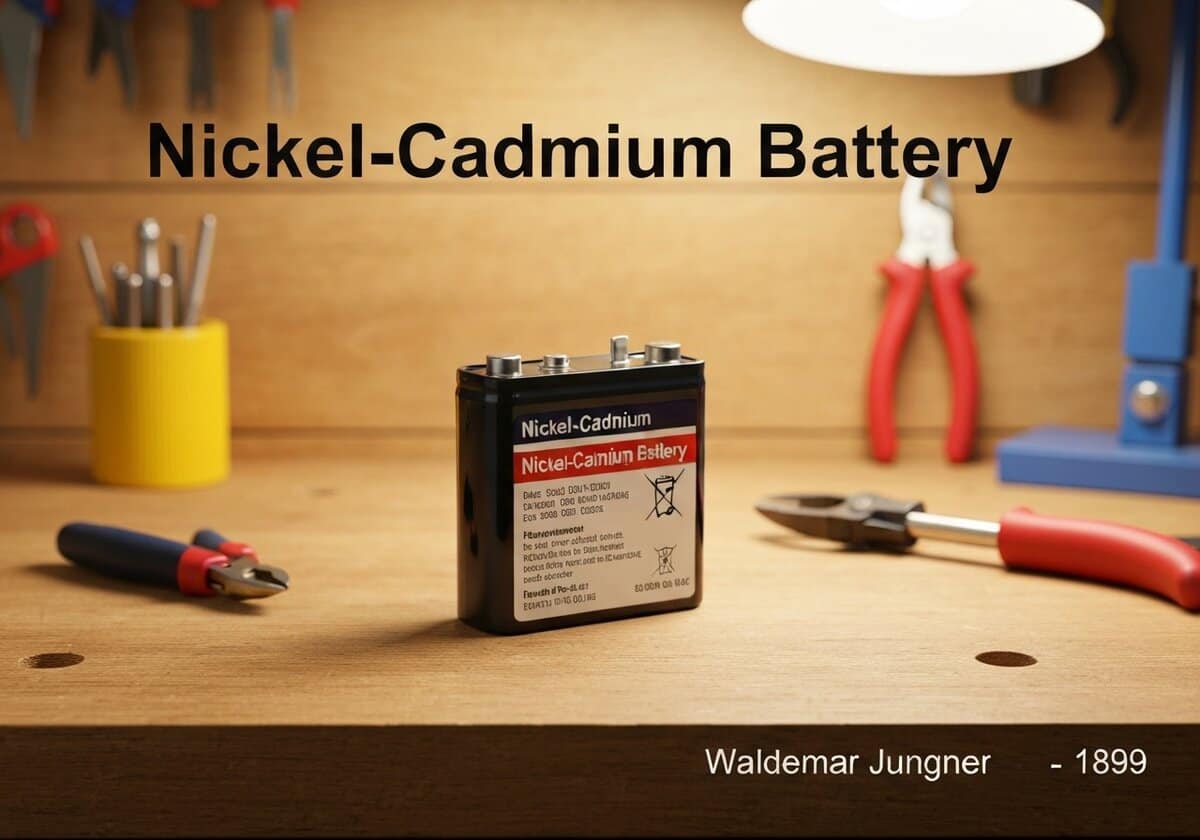
निकल-कैडमियम बैटरी, जो विद्युत रासायनिक गुणों और इलेक्ट्रॉनिक्स में अनुप्रयोगों को प्रदर्शित करती है।

(यह छवि केवल उदाहरण के लिए बनाई गई है)

Invented by Waldemar Jungner in 1899, the NiCd battery uses nickel oxide hydroxide (NiO(OH)) as the positive electrode and metallic cadmium (Cd) as the negative electrode, with an alkaline electrolyte like potassium hydroxide (KOH). It is known for its long cycle life and good performance at low temperatures, but suffers from the स्मृति प्रभाव और कैडमियम की विषाक्तता।

निकेल-कैडमियम बैटरी पिछली बैटरियों की तुलना में एक महत्वपूर्ण कदम आगे थी। lead-acid battery, offering a higher energy density and a much longer cycle life in a sealed, maintenance-free package. Waldemar Jungner’s invention provided a robust and reliable power source that became dominant in portable applications for much of the 20th century. The core chemical reaction during discharge is [latex]2 NiO(OH) + Cd + 2 H_2O rightarrow 2 Ni(OH)_2 + Cd(OH)_2[/latex].

The use of an alkaline electrolyte, typically potassium hydroxide, was a key difference from the acidic electrolyte of लैड एसिड cells. This chemistry allowed for a very flat discharge voltage curve, meaning the battery delivered a nearly constant voltage until it was almost fully depleted. However, its major drawbacks led to its decline. Cadmium is a heavy metal with significant environmental toxicity, making disposal and recycling a critical issue. Furthermore, NiCd batteries are prone to the ‘memory effect,’ where repeated partial discharge/charge cycles can cause a reduction in usable capacity. This necessitated periodic full discharge cycles to maintain performance. Despite being largely replaced by NiMH and Li-ion technologies in consumer goods, its durability ensures it remains in some niche industrial and aviation applications.

UNESCO Nomenclature: 2204
विद्युत रसायन विज्ञान

Type

भौतिक उपकरण

व्यवधान

संतोषजनक

उपयोग

विशिष्ट/विशेषज्ञ

शगुन

  • गैस्टन प्लांटे की सीसा-अम्ल बैटरी (1859)
  • का विकास alkaline electrolytes
  • थॉमस एडिसन का निकल-लोहे की बैटरियों पर किया गया कार्य (1901), जिसमें कैथोड रसायन समान था।

आवेदन

  • शुरुआती ताररहित बिजली उपकरण
  • आपातकालीन प्रकाश व्यवस्था
  • मॉडल विमान और नावें
  • लिथियम-आयन से पहले के पोर्टेबल इलेक्ट्रॉनिक उपकरण
  • विमानन बैटरियां

पेटेंट:

NA

संभावित नवाचार विचार

  • वैकल्पिक ऋणात्मक इलेक्ट्रोड का उपयोग करने वाली कैडमियम-मुक्त NiCd जैसी बैटरियां
  • कैडमियम और निकेल को सुरक्षित रूप से पुनर्प्राप्त करने के लिए उन्नत पुनर्चक्रण विधियाँ
  • nanostructured electrodes to mitigate memory effect
  • बेहतर सुरक्षा के लिए ठोस-अवस्था क्षारीय इलेक्ट्रोलाइट्स
  • उच्च शक्ति विस्फोट अनुप्रयोगों के लिए हाइब्रिड NiCd-सुपरकैपेसिटर उपकरण
  • मेमोरी इफ़ेक्ट को स्वचालित रूप से उलटने के लिए रीकंडीशनिंग चक्रों वाले स्मार्ट चार्जर
  • उपयोग में लाई गई बैटरियों से पर्यावरण के अनुकूल तरीके से धातु पुनर्प्राप्ति के लिए जैव-लीचिंग प्रक्रियाएं
  • flexible NiCd batteries for पहनने योग्य तकनीकी
  • भूतापीय या एयरोस्पेस सेंसर के लिए उच्च तापमान वाले NiCd वेरिएंट
  • दीर्घकालिक विश्वसनीयता की आवश्यकता वाले प्रत्यारोपण योग्य चिकित्सा उपकरणों के लिए लघु आकार के NiCd सेल
Related to: NiCd, nickel-cadmium, Waldemar Jungner, स्मृति प्रभाव, alkaline battery, cadmium, nickel oxide hydroxide, rechargeable, cycle life, portable electronics.

ऐतिहासिक संदर्भ

निकेल-कैडमियम बैटरी (NiCd)

1890
1895
1895
1899
1900
1900
1900
1890
1895
1895
1896
1900
1900
1900
1900

(यदि तिथि अज्ञात है या प्रासंगिक नहीं है, उदाहरण के लिए "द्रव यांत्रिकी", तो इसके उल्लेखनीय उद्भव का एक अनुमानित आंकड़ा प्रदान किया गया है)

नवीनतम परिवर्धन

शीर्ष पोस्ट और लेख

शीर्ष मूल उपकरण

10वां वर्ष सालगिरह

पंजीकृत सदस्यों के लिए पूर्ण आकार की छवियाँ और डाउनलोड 100% निःशुल्क उपलब्ध हैं।