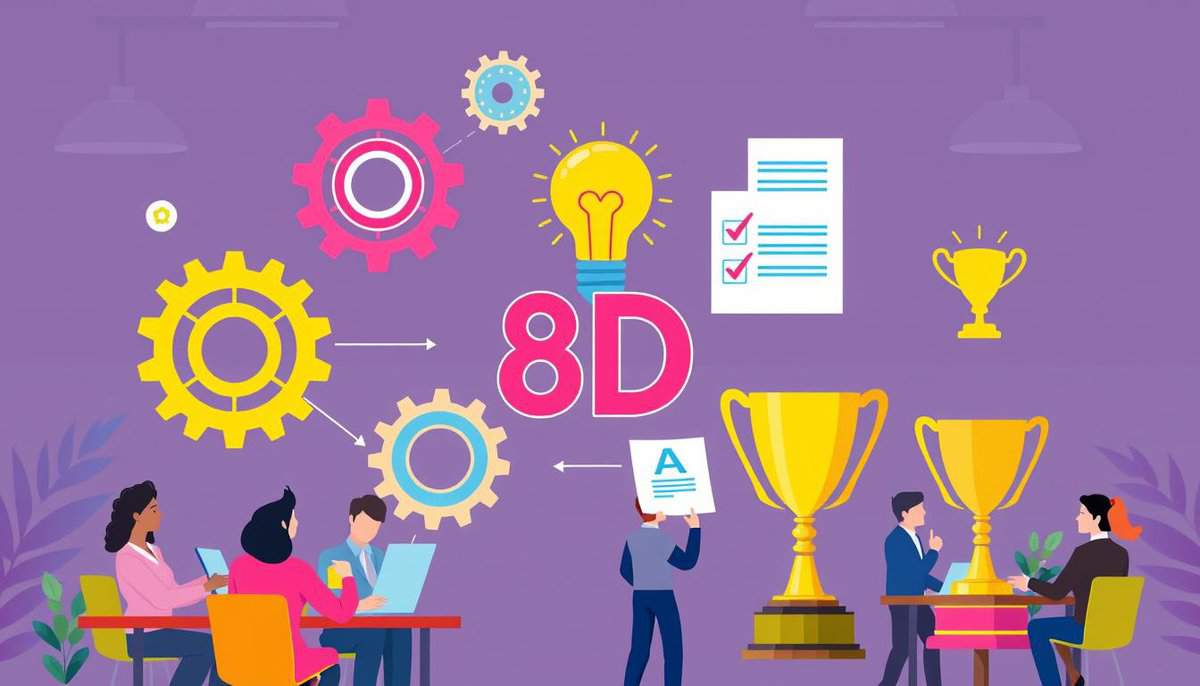
8D問題解決法はフォードによって開発されました モーター 1980年代後半に同社で開発されたこの手法は、現在では世界中の組織が品質と業務の改善を目指す上で欠かせないツールの一つとなっています。この手法は8つのステップ、つまり8つの規律から成り立っており、問題の特定、解決、そして再発防止に役立ちます。
このガイドを読み終える頃には、8Dメソッドがいかにして課題を成長の機会に変えることができるかがわかるでしょう。
主なポイント
- 8D問題解決法は、1980年代後半にフォード・モーター・カンパニーで生まれた体系的なアプローチである。
- これら8つの規律には、チーム編成から恒久的な是正措置、そしてチームの承認に至るまでの段階が含まれる。
- This approach heavily relies on collaboration, documentation, and verification.
- 8D問題解決法は、多分野にわたるチームの重要性を強調する。
- 効果的な実施には、コミュニケーションと明確な役割分担が不可欠です。
8次元問題解決入門
8D問題解決プロセスは、品質上の問題を発見し解決するための詳細な手法です。第二次世界大戦中に始まり、後にフォード・モーター社によって改良されました。このプロセスは8つのステップと、1990年代に追加されたD0と呼ばれる計画段階から構成されています。
この手法は、複雑な問題を解決するためにチームワークを重視しています。複数の品質管理手法を組み合わせたものであり、製造業や生産業に最適です。
チームは8Dメソッドを厳密に遵守し、問題の根本原因を特定して解決します。以下に、主な手順を簡単に説明します。
- D1: チームの編成。
- D2: 問題の定義と説明。
- D3: 暫定的な封じ込め措置を実施する。
- D4: 根本原因分析。
- D5: 恒久的な是正措置を策定し、検証する。
- D6: 是正措置を実施する。
- D7: 予防措置。
- D8: 締めくくりとチームへの感謝の表明。
8Dプロセスは、問題解決だけでなく、それ以上の価値をもたらします。チームワーク、責任感、そして詳細な記録管理を促進し、企業の業務効率化と長期的な成功へと導きます。
8次元問題解決の歴史
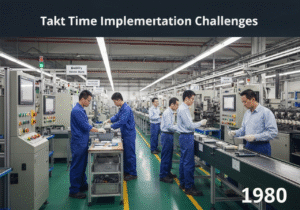
8D問題解決手法には長い歴史があり、産業構造が変化し始めた頃に始まりました。1980年代にフォード・モーター・カンパニーが開発したもので、エンジニアリングや製造における継続的な課題を解決することを目的としていました。
フォード・モーター・カンパニーでの起源
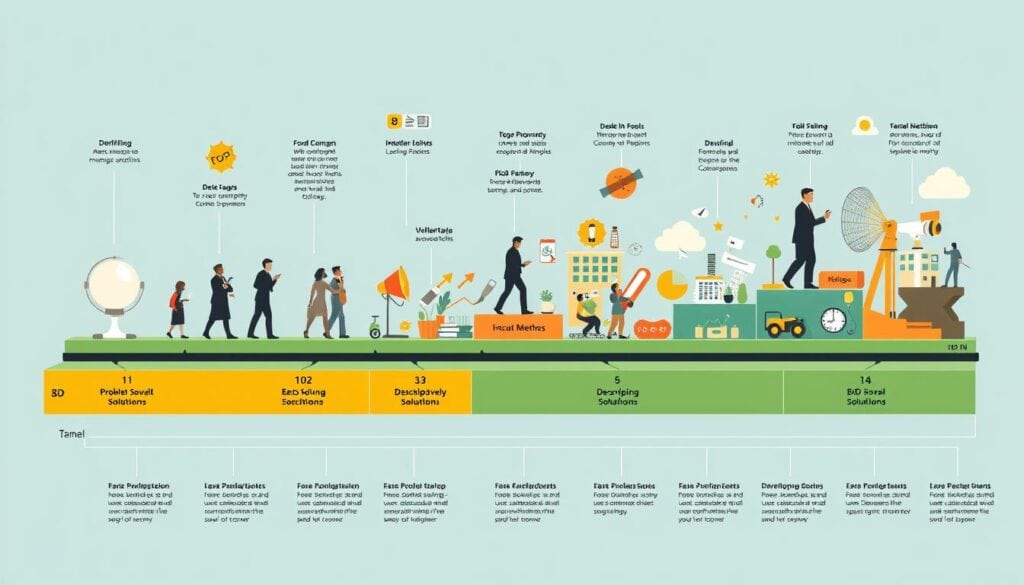
1986年、フォード・モーター・カンパニーは、品質およびエンジニアリング上の問題を解決するために8Dメソッドを導入しました。当初は「チーム指向型問題解決」と呼ばれ、専門家を集めて問題の根本原因を見つけ出し、それを根本的に解決することを目的としていました。その後、このメソッドをさらに改善するために、D0計画段階が追加されました。
業界横断的な進化
8Dメソッドは誕生以来、成長を続け、多くの分野に広がっています。現在では、自動車製造、食品生産、医療、テクノロジー業界など、幅広い分野で活用されています。これは、8Dメソッドが自動車業界だけでなく、あらゆる分野で役立つようになったことを示しています。
他の手法からの影響
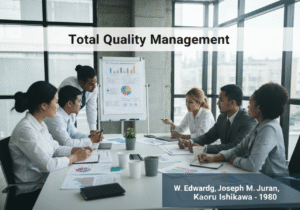
8Dは次のような方法で形作られてきました。 総合品質管理 (TQM) and Six Sigma. It uses things like Ishikawa diagrams, Pareto charts, and the 5 Whys. Also, its link with Failure Modes and Effects Analysis (FMEA) helps in solving problems well. This promotes ongoing improvement.
| 主な影響要因 | 詳細 |
|---|---|
| 総合品質管理(TQM) | 体系的なアプローチと継続的改善の実践の統合に影響を与えた。 |
| シックスシグマ | 分析ツールとデータに基づいた意思決定戦略を導入した。 |
| 故障モード影響解析(FMEA) | データ共有とブレインストーミングセッションを通じて、問題解決能力と予防策を強化する。 |
The Eight Disciplines Explained
It follows these eight steps to fix complex problems:
D1: Formation of the Team
D1 is about creating a strong team. A group approach is key. It brings different views and skills, making the solution better.
D2: Defining and Describing the Problem
D2 makes sure the problem is clearly stated. This helps everyone understand. It also keeps all steps focused on fixing the actual issue.
D3: Implementing Interim Containment Actions
D3 is about quick, temporary measures to limit the problem’s impact. These actions stop the problem from getting worse until a final solution is ready.
D4: Root Cause Analysis
In D4, tools like the Fishbone Diagram and the 5つの理由 help find the real cause of the problem. Knowing this helps create actions that tackle the issue at its core.
D5: Developing and Verifying Permanent Corrective Actions
D5 has the team find and check permanent solutions. The step ensures solutions last and really work. Testing proves these actions will fix the problem.
D6: Implementing Corrective Actions
D6 is when permanent solutions are put into place. It’s important to make sure these solutions work well in the actual system or process.
D7: Preventive Measures
D7 focuses on stopping future problems. Changing systems and processes helps prevent the same issue. These changes also improve the whole system.
D8: Closure and Team Acknowledgment
D8 celebrates solving the problem. The team’s work is documented and shared. Recognizing everyone’s effort is key for morale and future teamwork.
Benefits and Limitations of 8D Method
The 8D Problem Solving Method boosts problem-solving skills within companies. It dives deep into issues to find their root causes. This method also encourages teams with different skills to work together. They use short-term fixes to control problems, leading to long-lasting quality improvements.
Benefits of 8D Problem Solving
8D problem solving excels at finding the real cause of issues. Teams use the 5 Whys, Fishbone diagrams, and cause-and-effect analysis to uncover these causes. They then create and test actions to fix these problems for good. This reduces the chance of the same issues happening again and cuts costs linked to poor quality. Plus, involving employees in solving problems boosts their empowerment, happiness at work, and morale.
This process also helps organizations keep getting better by offering insights that improve practices. It’s acknowledged in quality systems like ISO-9001:2015 and IATF 16949:2016. This shows its effectiveness and flexibility across different fields. AS13000 sets a Problem-Solving standard for aero-engine suppliers, proving the method works well even in critical sectors.
Limitations to Consider
While 8D has many pluses, it also has downsides. The process is complicated and requires lots of training in problem-solving techniques. It leans heavily on detailed documentation and tools like Pareto charts and Fishbone diagrams. These can demand a lot of resources.
The 8D method goes to the root of complex problems to find long term solutions, but is heavy and far from a quick Agile solution, thus the D3 phase (Implementing interim containment actions)
The success of 8D greatly depends on how well the team works together. Strong teamwork and clear communication are key. If the team doesn’t work well together, it can be hard to find and fix root causes effectively. This shows how critical good team leadership and management support are to the 8D process.
Core Components of the 8D Problem Solving Process
The 8D problem-solving method is widely used in different fields like automotive, manufacturing, and healthcare. It tackles problems by identifying, analyzing, and fixing them successfully. Collaboration, documenting each step, and making sure solutions work are key parts of this strategy. These help in dealing with complex problems effectively.
Collaboration and Teamwork
Teamwork is vital in 8D, with people from different areas working together. The main team usually has three people who know a lot about the product, the process, and data. Besides, there’s a Subject Matter Expert team that helps out. They brainstorm, collect data, and look at outcomes. This way, the team covers all parts of the problem ensuring thorough solutions.
Documentation and Record Keeping
Keeping detailed records is a must in the 8D process. It helps track the steps taken to solve a problem and ensures everyone is accountable. Documentation begins with defining the problem and goes through finding its cause, short-term fixes, and lasting solutions. It also stores successes for future use, helping with ongoing improvement.
検証と妥当性確認
Checking if solutions work is a key step in the 8D method. A short-term fix is put in place before a final solution. It’s important to check this fix works to stop the problem from coming back. Tools like the 5 Why technique and Affinity Diagrams help find the root cause. Having a detailed plan, keeping in touch, and measuring success are crucial for ensuring solutions last.
Is the 8D Method Agile?
The 8D Problem Solving method is both careful and flexible. It started in 1986 with the US military’s standard 1520C. Since then, it has grown to aid various industries. Companies like it for its structured yet adaptable way of solving problems, especially where safety matters.
Flexibility in Problem Solving
The 8D Method is good at tackling different problems thanks to its systematic but adaptable approach. It is valuable across many industries, like automotive, aerospace, and manufacturing. The method’s eight steps encourage detailed analysis and ongoing betterment.
Adaptability to Various Sectors
The 8D approach is useful not just in its main areas like automotive and manufacturing. It also works well in healthcare and finance. Its flexibility meets the special challenges of various fields. Plus, it fits with Lean Six Sigma’s high-quality aims, so it’s used more broadly.
A comparison below shows how 8D and Lean Six Sigma work and their key strengths:
| 側面 | 8D Problem Solving | Lean Six Sigma |
|---|---|---|
| 起源 | 1986, US military standard 1520C | 1970s, Motorola |
| 主な焦点 | Structured problem-solving, teamwork | Data-driven, comprehensive process improvement |
| 応用 | Automotive, aerospace, manufacturing | Healthcare, finance, services |
| 方法論 | 8 steps from problem definition to team recognition | DMAIC (Define, Measure, Analyze, Improve, Control) |
| 課題 | Relies on team expertise, strict timelines | Complex statistical requirements |
Using 8D and Lean Six Sigma together offers a strong way to solve problems. It combines their strengths for flexible, wide-ranging solutions.
Role of Quality Management in 8D Problem Solving
Combining 8D problem solving with Quality Management Systems (QMS) boosts quality control. The 8D method targets and prevents problem reoccurrence through a detailed process. It fits well with quality management, leading to constant betterment.
Continuous Improvement and CAPA Process
The 8D steps are vital for Continuous Improvement and CAPA. They make sure problems are deeply analyzed and solved correctly. This way, quality issues keep getting spotted and fixed. It encourages a workplace focused on regular enhancement.
Tools and Techniques Used in 8D Problem Solving
The 8D problem-solving process features a mix of techniques and tools. These include the Fishbone diagram, the 5 Whys method, and Pareto analysis. They help find, examine, and fix issues well.
Fishbone Diagram
The Fishbone diagram, or Ishikawa, is a key tool for teams. It visually lays out potential problem causes. Issues are sorted into categories like ‘Man,’ ‘Machine,’ ‘Method,’ and ‘Materials.’
This method gives a complete view to avoid missing any root cause. It ensures thorough consideration from all angles.
5 Whys Analysis
The 5 Whys technique gets to the root cause by asking “Why?” five times. This questioning method reveals the issue’s core. It helps teams find the real cause and fix it.
パレート図
The Pareto Chart uses the 80/20 rule. It shows that 80% of problems come from 20% of causes. This bar chart highlights the most frequent issues.
It helps teams target their efforts on the major factors. This ensures resources are used where they can make the biggest impact.
Using the Fishbone diagram, 5 Whys, and Pareto analysis helps teams in the 8D process. They can find, investigate, and solve the root causes effectively. This leads to better, lasting solutions.
Related Readings
よくある質問
8D問題解決法はどのような業界で活用されていますか?
フォードが自動車向けに開発した手法ですが、現在では多くの分野で活用されています。医療、エンジニアリング、カスタマーサービスなど、様々な分野でその明確な手順が役立っています。あらゆる業務における問題解決に有効です。根本的な問題を適切に解決し、効果的な修正を行い、記録を残すことで、8Dは問題の再発を防ぎます。そして、品質を常に向上させるのに役立ちます。
8D問題解決における8つの分野とは何ですか?
8つのステップは次のとおりです。1. チームの編成 2. 問題の詳細化 3. 問題を抑制するための一時的な措置の実施 4. 根本原因の特定 5. 恒久的な解決策の作成と確認 6. 解決策の適用 7. 再発防止策の実施 8. チームの作業の完了と評価。
組織において8D問題解決法を用いることの利点は何ですか?
8Dメソッドは、チームが問題を効果的に解決し、真の問題点を見つけ出し、より良い協働を実現し、品質を継続的に向上させるのに役立ちます。問題を解決し、再発を防ぐための明確な計画を提供します。具体的なツールとしては、根本原因を見つけるためのフィッシュボーン図、問題の本質に迫るための5つのなぜ、そしてパレート図などがあります。パレート図は、最も注意を払うべき点を特定するのに役立ちます。
問題解決とプロセス管理に関する外部リンク
国際規格
(リンクにカーソルを合わせると、コンテンツの説明が表示されます)
用語集
Corrective Action and Preventative Action (CAPA): a systematic approach to identifying, investigating, and addressing nonconformities and potential issues to prevent recurrence and ensure compliance with regulatory standards in quality management systems.
Corrective and Preventive Action (CAPA): 不適合を特定、調査、対処するための体系的なアプローチにより、再発を防止し、潜在的な問題を排除し、規制基準への準拠とプロセスおよび製品の継続的な改善を確保する。
Define Measure Analyze Improve Control (DMAIC): シックスシグマで用いられる、プロセス改善のためのデータ駆動型品質戦略であり、問題の特定、現状のパフォーマンスの測定、原因特定のためのデータ分析、分析結果に基づくプロセスの改善、そして改善を持続させるための将来のパフォーマンス管理という5つの段階から構成される。
Eight Disciplines Problem Solving (8D): 繰り返し発生する問題を特定、修正、排除するために用いられる、構造化された問題解決手法。チーム編成、問題の説明、封じ込め措置、根本原因分析、是正措置、実施、予防、チームの努力の評価という8つのステップから構成される。
Failure Mode and Effects Analysis (FMEA): a systematic method for evaluating potential failure modes within a system, process, or product, assessing their effects on performance, and prioritizing risks to improve reliability and safety through corrective actions.
International Organization for Standardization (ISO): a non-governmental international body that develops and publishes standards to ensure quality, safety, efficiency, and interoperability across various industries and sectors, facilitating global trade and cooperation. Established in 1947, it comprises national standardization organizations from member countries.
Quality Management System (QMS): 製品およびサービスの一貫した品質を確保し、継続的な改善を促進し、顧客および規制要件を満たすことを目的とした、プロセス、手順、および責任の構造化されたシステム。
Root Cause Analysis (RCA): 問題や失敗につながる根本的な要因を特定するための体系的なプロセスであり、単に症状を治療するのではなく、根本的な問題に対処し、排除することを目的としている。
Total quality management (TQM): 顧客満足を通じて長期的な成功を目指す経営手法であり、組織のすべてのメンバーを巻き込み、プロセス、製品、サービスの継続的な改善を通じて品質とパフォーマンスを向上させる。
Verification and Validation (V&V): システムが仕様を満たし、意図された目的を達成していることを保証するプロセスであり、2つの異なる活動が含まれる。検証は製品が設計仕様を満たしているかどうかをチェックし、妥当性確認はそれがユーザーのニーズと要件を満たしているかどうかを評価する。