Product Design, Manufacturing & Innovation Resources
Home » Work-Energy Theorem

Work-Energy Theorem

1829
  • Gaspard-Gustave Coriolis
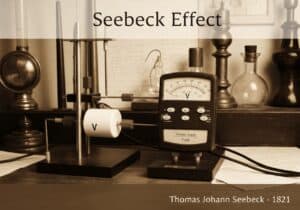
Mechanical engineering workspace illustrating the work-energy theorem application.

(generated image for illustration only)

The work-energy theorem states that the net work (\(W\)) done by all forces acting on a particle equals the change in its kinetic energy (\(\Delta E_k\)). Mathematically, \(W = \Delta E_k = E_{k,f} – E_{k,i}\). This principle directly links the concepts of force, displacement, and energy, providing a powerful tool for analyzing motion without directly using Newton’s second law.

The work-energy theorem provides a direct link between the dynamics of forces and the kinematics of motion, expressed through the language of energy. It is derived directly from Newton’s second law, \(F_{net} = ma\). By integrating the net force with respect to displacement, one can show that this integral equals the change in the quantity \(\frac{1}{2}mv^2\). Coriolis formally defined this integral as “work” and \(\frac{1}{2}mv^2\) as “kinetic energy,” thereby formulating the theorem as \(W_{net} = \Delta E_k\). This was a significant conceptual advance because it allows for the analysis of complex systems without needing to solve differential equations of motion directly. For example, to find the final speed of an object after being acted upon by a variable force over a certain distance, one can simply calculate the total work done and equate it to the change in kinetic energy. The theorem applies to the work done by the *net* force. If one considers the work done by individual forces, it can be partitioned. For instance, the work done by conservative forces (like gravity) equals the negative change in potential energy, leading to the broader principle of the conservation of mechanical energy (\(\Delta E_k + \Delta E_p = W_{non-conservative}\)).

UNESCO Nomenclature: 2209
– Mechanics

Type

Abstract System

Disruption

Foundational

Usage

Widespread Use

Precursors

  • Isaac Newton’s second law of motion (\(F=ma\))
  • Definition of mechanical work as force times displacement
  • The formula for classical kinetic energy (\(E_k = \frac{1}{2}mv^2\))

Applications

  • engineering design of engines and motors
  • analysis of collisions in physics
  • biomechanics of human and animal movement
  • calculating stopping distances for vehicles
  • astronomical calculations of orbital maneuvers

Patents:

NA

Potential Innovations Ideas

Due to scrapping bot traffic, currently more than 40k per day, this content is reserved to community members.
> Login < or > Register < (100% free) to access this, so as all other restricted content and tools.

Related to: work-energy theorem, kinetic energy, work, force, displacement, net work, energy conservation, classical mechanics, dynamics, particle physics.

Historical Context

Work-Energy Theorem

1821
1822
1827
1829
1831
1831
1833
1820
1822
1824
1827
1831
1831
1832
1834

(if date is unknown or not relevant, e.g. "fluid mechanics", a rounded estimation of its notable emergence is provided)

Full size images and downloads are only available, 100% free, for registered members.

> Login <