Product Design, Manufacturing & Innovation Resources
घर » सामान्य और विशेष कारण भिन्नता

सामान्य और विशेष कारण भिन्नता

1920
  • Walter A. Shewhart
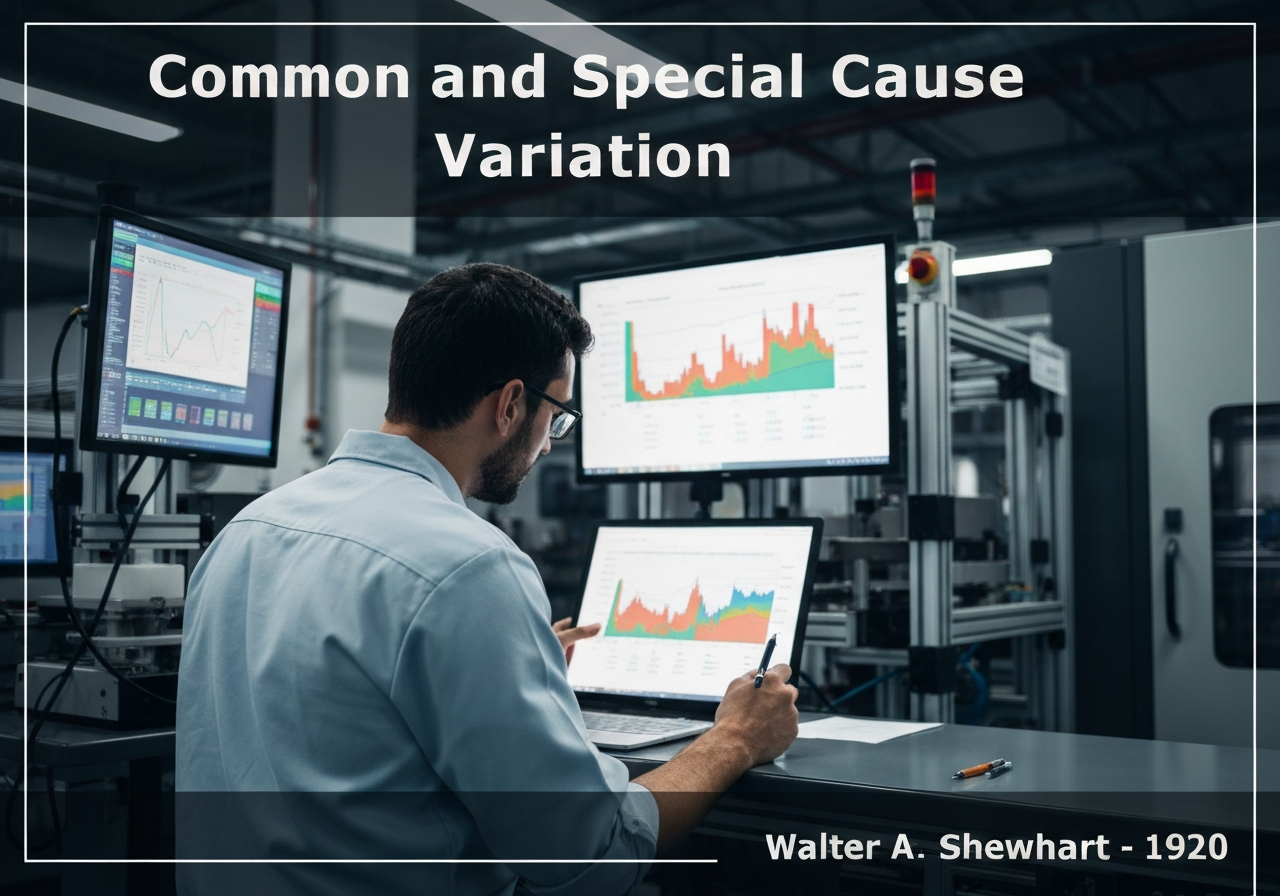
Quality control engineer analyzing process variations in manufacturing statistics.

(यह छवि केवल उदाहरण के लिए बनाई गई है)

एक मूल सिद्धांत SPC प्रक्रिया भिन्नता के दो प्रकारों के बीच अंतर करना। सामान्य कारण भिन्नता एक स्थिर और पूर्वानुमानित प्रक्रिया के भीतर अंतर्निहित, यादृच्छिक "शोर" है। विशेष कारण भिन्नता, या निर्दिष्ट कारण, बाहरी, पहचाने जाने योग्य स्रोतों से उत्पन्न होती है, जो प्रक्रिया की अस्थिरता को दर्शाती है। लक्ष्य विशेष कारणों को समाप्त करना और सामान्य कारण भिन्नता को कम करना है।


The distinction between common and special causes of variation is the bedrock upon which सांख्यिकीय प्रक्रिया नियंत्रण is built. Walter A. Shewhart, while working at Bell Labs, recognized that variation is inherent in any process, but not all variation is equal. He categorized it into two types. Common cause variation is the cumulative effect of many small, unavoidable causes. It is a natural part of the process and, when only common causes are present, the process is considered stable, in-control, and predictable within statistical limits. Examples include slight variations in material properties, ambient temperature, or machine vibration. This variation creates a distribution that is typically normal.

In contrast, special cause variation (also called assignable cause) arises from specific, identifiable circumstances that are not part of the process’s usual operation. These causes are intermittent, unpredictable, and result in a process that is out of statistical control. Examples could be a new, untrained operator, a faulty batch of raw material, a machine malfunction, or a change in measurement method. The key objective of SPC is to first detect the presence of special causes using tools like control charts. Once detected, these causes can be investigated and eliminated, bringing the process back into a state of statistical control. Only after a process is stable (i.e., free of special causes) can one meaningfully work on reducing the common cause variation to improve प्रक्रिया क्षमता.

UNESCO Nomenclature: 1209
सांख्यिकी

Type

सार प्रणाली

व्यवधान

मूलभूत

उपयोग

व्यापक उपयोग

शगुन

  • संभाव्यता सिद्धांत
  • normal distribution theory (De Moivre, लाप्लास, Gauss)
  • औद्योगिक गुणवत्ता निरीक्षण की प्रारंभिक अवधारणाएँ
  • वैज्ञानिक प्रबंधन सिद्धांत (फ्रेडरिक विंसलो टेलर)

आवेदन

पेटेंट:

NA

संभावित नवाचार विचार

  • AI-powered predictive maintenance alerts based on special cause detection
  • real-time supply chain stability monitoring using variation analysis
  • personalized medicine dosage adjustments based on patient biological signal stability
  • algorithmic trading systems that differentiate market noise from specific event triggers
  • adaptive learning software that identifies student learning roadblocks (special causes)
  • smart home energy systems that detect appliance malfunctions versus normal usage patterns
  • automated fraud detection systems distinguishing random user behavior from targeted attacks
  • environmental monitoring systems that flag pollution events against background fluctuations
  • पहनने योग्य health trackers that identify health anomalies versus daily physiological variations
  • dynamic traffic control systems that react to accidents (special causes) rather than normal traffic flow (common causes)
Related to: common cause, special cause, assignable cause, variation, process stability, Shewhart, quality control, statistical प्रक्रिया नियंत्रण, in-control, out-of-control.

ऐतिहासिक संदर्भ

सामान्य और विशेष कारण भिन्नता

1899
1900
1911
1920
1924
1925
1930
1896
1900
1903
1914
1922
1925
1928
1930

(यदि तिथि अज्ञात है या प्रासंगिक नहीं है, उदाहरण के लिए "द्रव यांत्रिकी", तो इसके उल्लेखनीय उद्भव का एक अनुमानित आंकड़ा प्रदान किया गया है)

नवीनतम परिवर्धन

शीर्ष पोस्ट और लेख

शीर्ष मूल उपकरण

10वां वर्ष सालगिरह

पंजीकृत सदस्यों के लिए पूर्ण आकार की छवियाँ और डाउनलोड 100% निःशुल्क उपलब्ध हैं।