Product Design, Manufacturing & Innovation Resources
家 » 普通原因变异和特殊原因变异

普通原因变异和特殊原因变异

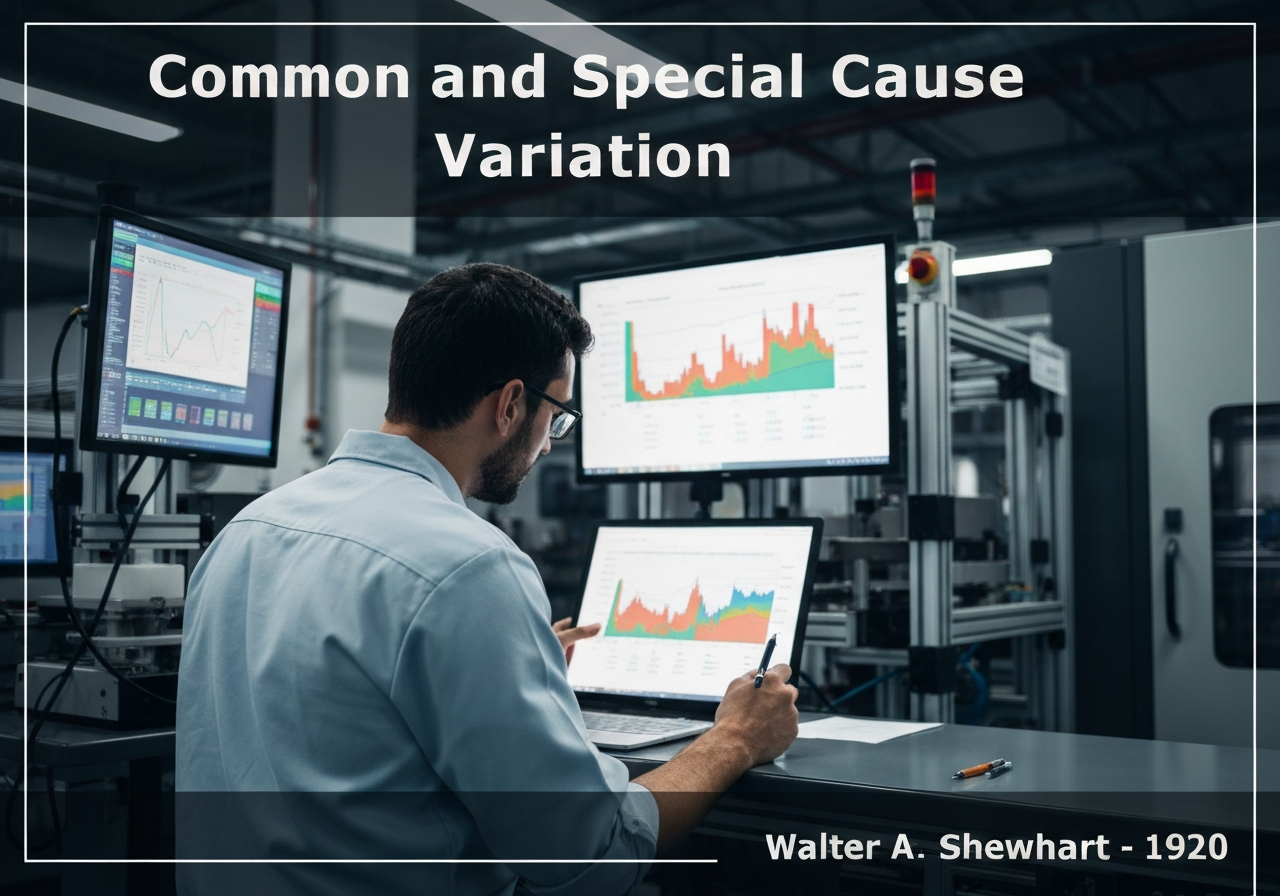
1920
  • Walter A. Shewhart
Quality control engineer analyzing process variations in manufacturing statistics.

(图片仅供参考)

核心原则 统计过程控制 区分两种类型的过程变异。普通原因变异是指稳定且可预测的过程中固有的、随机的“噪声”。特殊原因变异,或称可归因原因变异,源于外部可识别的因素,表明过程不稳定。目标是消除特殊原因并减少普通原因变异。

The distinction between common and special causes of variation is the bedrock upon which Statistical Process Control is built. Walter A. Shewhart, while working at Bell Labs, recognized that variation is inherent in any process, but not all variation is equal. He categorized it into two types. Common cause variation is the cumulative effect of many small, unavoidable causes. It is a natural part of the process and, when only common causes are present, the process is considered stable, in-control, and predictable within statistical limits. Examples include slight variations in material properties, ambient temperature, or machine vibration. This variation creates a distribution that is typically normal.

In contrast, special cause variation (also called assignable cause) arises from specific, identifiable circumstances that are not part of the process’s usual operation. These causes are intermittent, unpredictable, and result in a process that is out of statistical control. Examples could be a new, untrained operator, a faulty batch of raw material, a machine malfunction, or a change in measurement method. The key objective of SPC is to first detect the presence of special causes using tools like control charts. Once detected, these causes can be investigated and eliminated, bringing the process back into a state of statistical control. Only after a process is stable (i.e., free of special causes) can one meaningfully work on reducing the common cause variation to improve 过程能力.

UNESCO Nomenclature: 1209
– Statistics

类型

抽象系统

中断

Foundational

用法

广泛使用

前体

  • 概率论
  • normal distribution theory (De Moivre, Laplace, Gauss)
  • 工业质量检验的早期概念
  • 科学管理原则(弗雷德里克·温斯洛·泰勒)

应用程序

专利:

NA

潜在创新理念

  • AI-powered predictive maintenance alerts based on special cause detection
  • real-time supply chain stability monitoring using variation analysis
  • personalized medicine dosage adjustments based on patient biological signal stability
  • algorithmic trading systems that differentiate market noise from specific event triggers
  • adaptive learning software that identifies student learning roadblocks (special causes)
  • smart home energy systems that detect appliance malfunctions versus normal usage patterns
  • automated fraud detection systems distinguishing random user behavior from targeted attacks
  • environmental monitoring systems that flag pollution events against background fluctuations
  • wearable health trackers that identify health anomalies versus daily physiological variations
  • dynamic traffic control systems that react to accidents (special causes) rather than normal traffic flow (common causes)
Related to: common cause, special cause, assignable cause, variation, process stability, Shewhart, quality control, statistical 过程控制, in-control, out-of-control.

历史背景

普通原因变异和特殊原因变异

1899
1900
1911
1920
1924
1925
1930
1896
1900
1903
1914
1922
1925
1928
1930

(如果日期未知或不相关,例如“流体力学”,则提供其显著出现的近似估计)

第十年 周年纪念日

只有注册会员才能免费获取完整尺寸的图片和下载内容。

> 登录 <