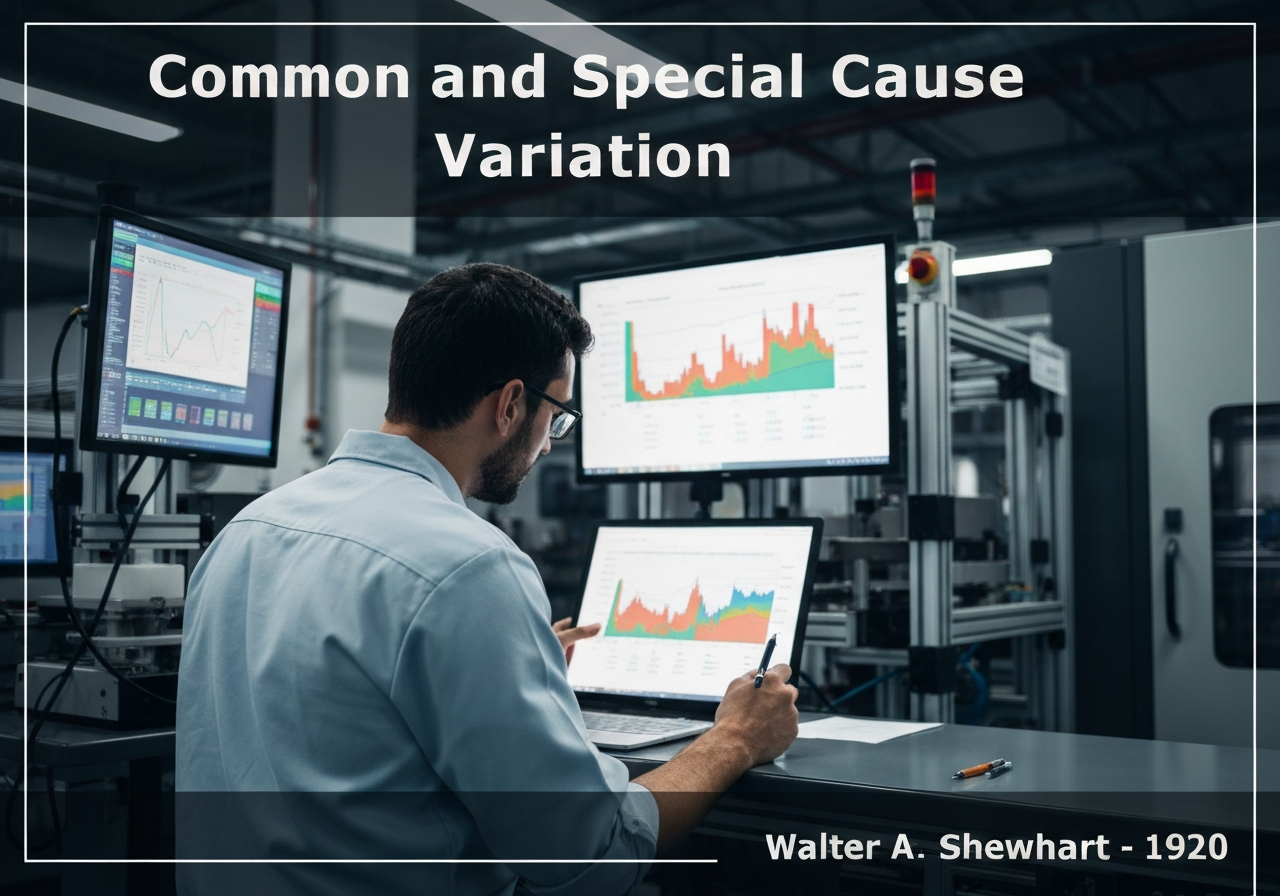
The distinction between common and special causes of variation is the bedrock upon which Statistical Process Control is built. Walter A. Shewhart, while working at Bell Labs, recognized that variation is inherent in any process, but not all variation is equal. He categorized it into two types. Common cause variation is the cumulative effect of many small, unavoidable causes. It is a natural part of the process and, when only common causes are present, the process is considered stable, in-control, and predictable within statistical limits. Examples include slight variations in material properties, ambient temperature, or machine vibration. This variation creates a distribution that is typically normal.
In contrast, special cause variation (also called assignable cause) arises from specific, identifiable circumstances that are not part of the process’s usual operation. These causes are intermittent, unpredictable, and result in a process that is out of statistical control. Examples could be a new, untrained operator, a faulty batch of raw material, a machine malfunction, or a change in measurement method. The key objective of SPC is to first detect the presence of special causes using tools like control charts. Once detected, these causes can be investigated and eliminated, bringing the process back into a state of statistical control. Only after a process is stable (i.e., free of special causes) can one meaningfully work on reducing the common cause variation to improve プロセス能力.
AI-powered predictive maintenance alerts based on special cause detection
real-time supply chain stability monitoring using variation analysis
personalized medicine dosage adjustments based on patient biological signal stability
algorithmic trading systems that differentiate market noise from specific event triggers
adaptive learning software that identifies student learning roadblocks (special causes)
smart home energy systems that detect appliance malfunctions versus normal usage patterns
automated fraud detection systems distinguishing random user behavior from targeted attacks
environmental monitoring systems that flag pollution events against background fluctuations
ウェアラブル health trackers that identify health anomalies versus daily physiological variations
dynamic traffic control systems that react to accidents (special causes) rather than normal traffic flow (common causes)
Related to: common cause, special cause, assignable cause, variation, process stability, Shewhart, quality control, statistical プロセス制御, in-control, out-of-control.