Product Design, Manufacturing & Innovation Resources
بيت » التباين في الأسباب الشائعة والخاصة

التباين في الأسباب الشائعة والخاصة

1920
  • Walter A. Shewhart
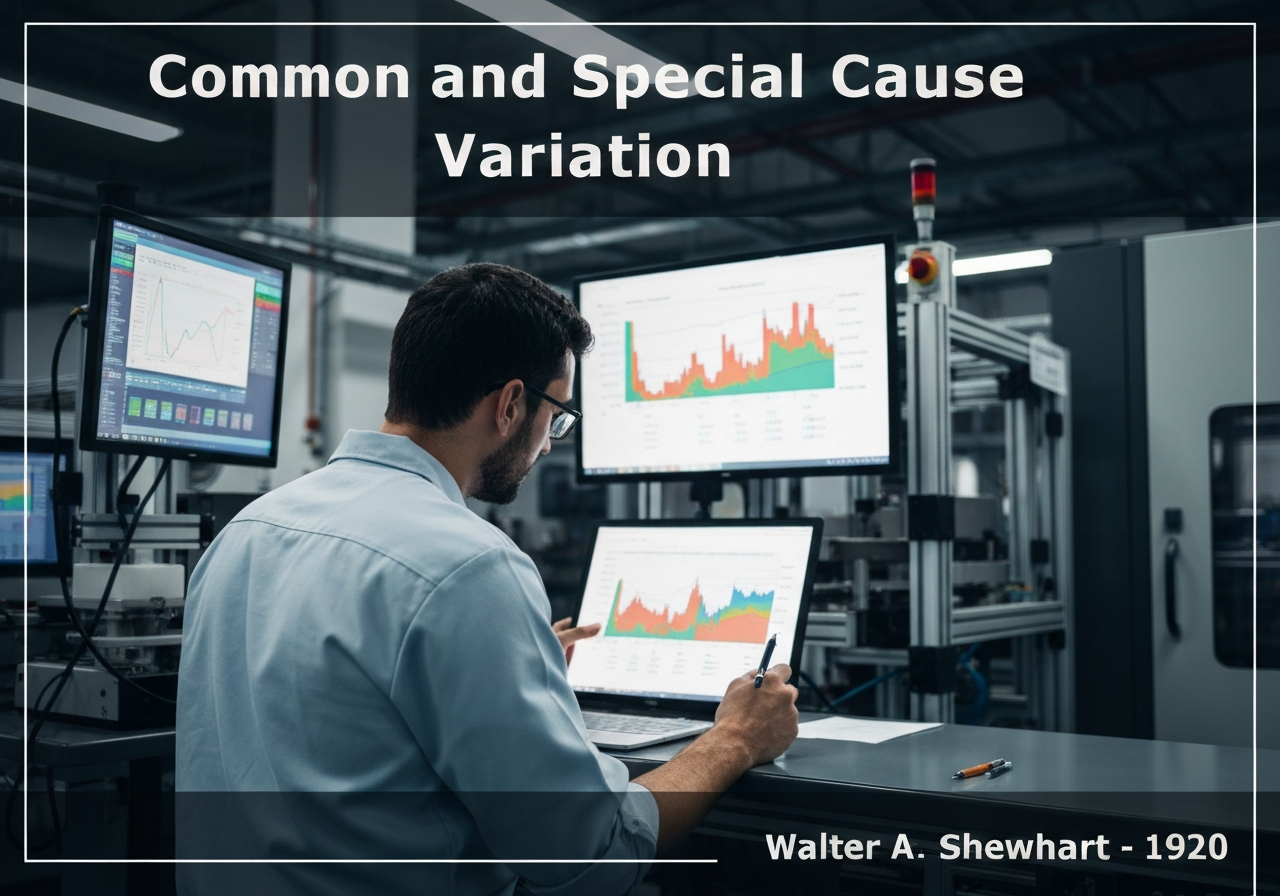
Quality control engineer analyzing process variations in manufacturing statistics.

(صورة توضيحية فقط)

مبدأ أساسي من SPC يُفرَّق بين نوعين من تباين العمليات. التباين ذو السبب الشائع هو التباين العشوائي المتأصل في العملية، والذي يتسم بالاستقرار والتوقع. أما التباين ذو السبب الخاص، أو السبب المحدد، فينشأ عن مصادر خارجية قابلة للتحديد، مما يدل على عدم استقرار العملية. والهدف هو القضاء على الأسباب الخاصة وتقليل التباين ذي السبب الشائع.


The distinction between common and special causes of variation is the bedrock upon which التحكم الإحصائي في العمليات is built. Walter A. Shewhart, while working at Bell Labs, recognized that variation is inherent in any process, but not all variation is equal. He categorized it into two types. Common cause variation is the cumulative effect of many small, unavoidable causes. It is a natural part of the process and, when only common causes are present, the process is considered stable, in-control, and predictable within statistical limits. Examples include slight variations in material properties, ambient temperature, or machine vibration. This variation creates a distribution that is typically normal.

In contrast, special cause variation (also called assignable cause) arises from specific, identifiable circumstances that are not part of the process’s usual operation. These causes are intermittent, unpredictable, and result in a process that is out of statistical control. Examples could be a new, untrained operator, a faulty batch of raw material, a machine malfunction, or a change in measurement method. The key objective of SPC is to first detect the presence of special causes using tools like control charts. Once detected, these causes can be investigated and eliminated, bringing the process back into a state of statistical control. Only after a process is stable (i.e., free of special causes) can one meaningfully work on reducing the common cause variation to improve قدرة العملية.

UNESCO Nomenclature: 1209
– Statistics

يكتب

نظام مجرد

خلل

أساسيات

الاستخدام

استخدام واسع النطاق

مقدمات

  • نظرية الاحتمالات
  • normal distribution theory (De Moivre, لابلاس, Gauss)
  • المفاهيم المبكرة لفحص الجودة الصناعية
  • مبادئ الإدارة العلمية (فريدريك وينسلو تايلور)

التطبيقات

  • منهجية ستة سيجما
  • Total Quality Management (TQM)
  • التصنيع الهزيل
  • تحسين جودة الرعاية الصحية
  • مراقبة العمليات المالية

براءات الاختراع:

NA

أفكار ابتكارية محتملة

  • AI-powered predictive maintenance alerts based on special cause detection
  • real-time supply chain stability monitoring using variation analysis
  • personalized medicine dosage adjustments based on patient biological signal stability
  • algorithmic trading systems that differentiate market noise from specific event triggers
  • adaptive learning software that identifies student learning roadblocks (special causes)
  • smart home energy systems that detect appliance malfunctions versus normal usage patterns
  • automated fraud detection systems distinguishing random user behavior from targeted attacks
  • environmental monitoring systems that flag pollution events against background fluctuations
  • wearable health trackers that identify health anomalies versus daily physiological variations
  • dynamic traffic control systems that react to accidents (special causes) rather than normal traffic flow (common causes)
Related to: common cause, special cause, assignable cause, variation, process stability, Shewhart, quality control, statistical التحكم في العملية, in-control, out-of-control.

السياق التاريخي

التباين في الأسباب الشائعة والخاصة

1899
1900
1911
1920
1924
1925
1930
1896
1900
1903
1914
1922
1925
1928
1930

(إذا كان التاريخ غير معروف أو غير ذي صلة، على سبيل المثال "ميكانيكا الموائع"، يتم توفير تقدير تقريبي لظهوره الملحوظ)

أحدث الإضافات

أهم المنشورات والمقالات

أفضل الأدوات الأصلية

السنة العاشرة عيد

الصور والتنزيلات بالحجم الكامل متاحة فقط، ومجانية تمامًا، للأعضاء المسجلين.