Product Design, Manufacturing & Innovation Resources
Maison » Biocompatibilité des matériaux

Biocompatibilité des matériaux

1980
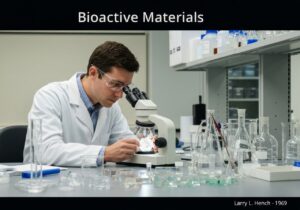
Chercheur analysant en laboratoire des matériaux biocompatibles pour implants médicaux.

(Image générée à titre d'illustration uniquement)

La biocompatibilité désigne la capacité d'un matériau à réagir de manière appropriée avec l'organisme hôte dans une application spécifique. Il ne s'agit pas d'une propriété intrinsèque du matériau, mais d'une propriété définie par le contexte. Parmi les facteurs clés figurent la chimie de surface, la topographie et les propriétés mécaniques du matériau, qui déterminent la réponse biologique, notamment la réponse protéique. adsorption, l'adhésion cellulaire, l'inflammation et l'encapsulation fibreuse.
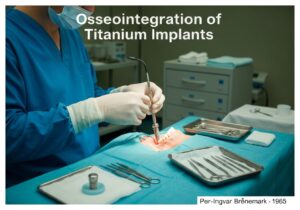

Biocompatibility is a dynamic and context-dependent concept, not a static, inherent property of a material. The ‘appropriate host response’ varies significantly with the intended function of the device. For instance, a material for a permanent hip implant should be bioinert, eliciting minimal reaction and integrating stably with bone. In contrast, a material for a biodegradable suture should elicit a controlled inflammatory response that facilitates healing and then safely degrades. The cascade of events at the biointerface begins seconds after implantation with the adsorption of a layer of host proteins (e.g., albumin, fibrinogen, fibronectin), a phenomenon known as the Vroman effect. The composition and conformation of this protein layer dictates the subsequent cellular attachment, activation, and signaling. This initial phase is followed by an inflammatory response, involving the recruitment of neutrophils and then macrophages to the implant site. If the material is perceived as foreign and cannot be phagocytosed, macrophages may fuse to form foreign body giant cells (FBGCs). This chronic inflammatory state leads to the final stage: the formation of a dense, avascular fibrous capsule that isolates the implant from the host body. While this encapsulation can be acceptable for some passive implants, it is detrimental for devices requiring biological integration, like sensors or tissue scaffolds. Understanding and controlling these interactions through surface modification—by altering wettability, charge, topography, or grafting specific biomolecules—is a central goal of biomaterials science to ensure long-term device success and patient safety.

UNESCO Nomenclature: 3201
- Sciences médicales

Taper

Système abstrait

Perturbation

Fondamentaux

Usage

Utilisation généralisée

Précurseurs

  • découverte des techniques chirurgicales aseptiques par Joseph Lister
  • développement de polymères inertes comme le pmma et le silicone
  • understanding of the foreign body response in immunology
  • avancées en science des surfaces et techniques de caractérisation (par exemple, SEM, AFM, XPS)

Applications

  • design of implants médicaux (e.g., hip replacements, dental implants)
  • développement de systèmes d'administration de médicaments
  • fabrication of tissue engineering scaffolds
  • création de biocapteurs et de dispositifs de diagnostic
  • revêtements pour stents cardiovasculaires pour prévenir la thrombose

Brevets:

NA

Idées d'innovations potentielles

  • implants intelligents dotés de capteurs pour surveiller la réponse de l'hôte en temps réel
  • biomatériaux avec des taux de dégradation réglables adaptés à la vitesse de régénération des tissus
  • surfaces immunomodulatrices qui dirigent activement la réponse immunitaire vers la guérison plutôt que vers le rejet
  • personalized implants designed based on a patient’s specific biological profile
  • revêtements anti-biofouling inspirés des organismes marins pour cathéters et shunts
  • Implants imprimés en 3D avec des géométries spécifiques au patient et des topographies de surface contrôlées
  • biomatériaux capables de séquestrer et de neutraliser les cytokines inflammatoires
  • matériaux d'implant auto-cicatrisants qui réparent les dommages mineurs in situ
  • ‘living’ biomaterials incorporating engineered cells to perform therapeutic functions
  • implants électroniques biodégradables pour la surveillance ou la stimulation temporaire
Lié à : biocompatibilité, réponse de l'hôte, implant médical, biomatériau, adsorption de protéines, inflammation, encapsulation fibreuse, biointerface, modification de surface, effet Vroman.

Contexte historique

Biocompatibilité des matériaux

1965
1970
1980
1980
1990
1960
1969
1976-05-28
1980
1990

(si la date est inconnue ou non pertinente, par exemple « mécanique des fluides », une estimation arrondie de son émergence notable est fournie)

10e année anniversaire

Les images en pleine résolution et les téléchargements sont uniquement disponibles, et 100% gratuits, pour les membres inscrits.