Product Design, Manufacturing & Innovation Resources
Heim » Biokompatibilität von Materialien

Biokompatibilität von Materialien

1980
Forscher, die in einem Labor biokompatible Materialien für medizinische Implantate analysieren.

(Abbildung dient nur zur Veranschaulichung)

Biokompatibilität bezieht sich auf die Fähigkeit eines Materials, in einer bestimmten Anwendung eine angemessene Reaktion des Wirts hervorzurufen. Sie ist keine intrinsische Eigenschaft eines Materials, sondern wird durch die jeweilige Situation bestimmt. Zu den Schlüsselfaktoren gehören die Oberflächenchemie, die Topografie und die mechanischen Eigenschaften des Materials, die die biologische Reaktion bestimmen, wie z. B. die Protein AdsorptionZelladhäsion, Entzündung und faserige Verkapselung.
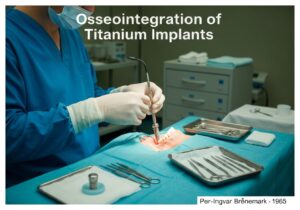

Biocompatibility is a dynamic and context-dependent concept, not a static, inherent property of a material. The ‘appropriate host response’ varies significantly with the intended function of the device. For instance, a material for a permanent hip implant should be bioinert, eliciting minimal reaction and integrating stably with bone. In contrast, a material for a biodegradable suture should elicit a controlled inflammatory response that facilitates healing and then safely degrades. The cascade of events at the biointerface begins seconds after implantation with the Adsorption of a layer of host proteins (e.g., albumin, fibrinogen, fibronectin), a phenomenon known as the Vroman effect. The composition and conformation of this protein layer dictates the subsequent cellular attachment, activation, and signaling. This initial phase is followed by an inflammatory response, involving the recruitment of neutrophils and then macrophages to the implant site. If the material is perceived as foreign and cannot be phagocytosed, macrophages may fuse to form foreign body giant cells (FBGCs). This chronic inflammatory state leads to the final stage: the formation of a dense, avascular fibrous capsule that isolates the implant from the host body. While this encapsulation can be acceptable for some passive implants, it is detrimental for devices requiring biological integration, like sensors or tissue scaffolds. Understanding and controlling these interactions through surface modification—by altering wettability, charge, topography, or grafting specific biomolecules—is a central goal of biomaterials science to ensure long-term device success and patient safety.

UNESCO Nomenclature: 3201
- Medizinische Wissenschaften

Typ

Abstraktes System

Störung

Grundlegendes

Verwendung

Weitverbreitete Verwendung

Vorläufer

  • Entdeckung aseptischer Operationstechniken durch Joseph Lister
  • Entwicklung inerter Polymere wie PMMA und Silikon
  • understanding of the foreign body response in immunology
  • Fortschritte in der Oberflächenwissenschaft und Charakterisierungstechniken (z. B. SEM, AFM, XPS)

Anwendungen

  • design of medizinische Implantate (e.g., hip replacements, dental implants)
  • Entwicklung von Drug-Delivery-Systemen
  • fabrication of tissue engineering scaffolds
  • Entwicklung von Biosensoren und Diagnosegeräten
  • Beschichtungen für kardiovaskuläre Stents zur Thromboseprävention

Patente:

NA

Potenzielle Innovationsideen

  • intelligente Implantate mit Sensoren zur Überwachung der Wirtsreaktion in Echtzeit
  • Biomaterialien mit einstellbaren Abbauraten, die auf die Geschwindigkeit der Geweberegeneration abgestimmt sind
  • immunmodulatorische Oberflächen, die die Immunantwort aktiv auf Heilung statt auf Abstoßung lenken
  • personalized implants designed based on a patient’s specific biological profile
  • Von Meeresorganismen inspirierte Anti-Biofouling-Beschichtungen für Katheter und Shunts
  • 3D-gedruckte Implantate mit patientenspezifischen Geometrien und kontrollierten Oberflächentopographien
  • Biomaterialien, die entzündliche Zytokine binden und neutralisieren können
  • selbstheilende Implantatmaterialien, die kleinere Schäden vor Ort reparieren
  • ‘living’ biomaterials incorporating engineered cells to perform therapeutic functions
  • biologisch abbaubare elektronische Implantate zur vorübergehenden Überwachung oder Stimulation
Verwandte Themen: Biokompatibilität, Wirtsreaktion, medizinisches Implantat, Biomaterial, Proteinadsorption, Entzündung, faserige Verkapselung, Bioschnittstelle, Oberflächenmodifikation, Vroman-Effekt.

Historischer Kontext

Biokompatibilität von Materialien

1965
1970
1980
1980
1990
1960
1969
1976-05-28
1980
1990

(wenn das Datum unbekannt oder nicht relevant ist, z. B. „Strömungsmechanik“, wird eine gerundete Schätzung seines bemerkenswerten Auftretens bereitgestellt)

10. Jahr Jubiläum

Bilder in voller Größe und Downloads sind nur für registrierte Mitglieder 100% kostenlos verfügbar.

> Login <